An influencer database is the foundation of every scalable creator marketing program, giving brands one searchable home for hundreds of millions of creator profiles instead of scattered spreadsheets and guesswork. Specifically, a strong database lets marketers filter by niche, location, engagement and audience quality in seconds rather than days. In this guide, you will learn what an influencer database actually does, how to vet creators inside one, and how platforms like SocialBook turn that raw data into measurable campaign results.
Most teams still build their creator lists by hand. They scroll TikTok, Instagram and YouTube one profile at a time, copy numbers into a spreadsheet, and hope the data is still accurate by the time they pitch a campaign. As a result, strong creators go unnoticed, budgets get wasted on inflated follower counts, and nobody can prove which post actually drove a sale. A reliable influencer database fixes that by keeping creator data fresh, searchable, and tied to real performance history.
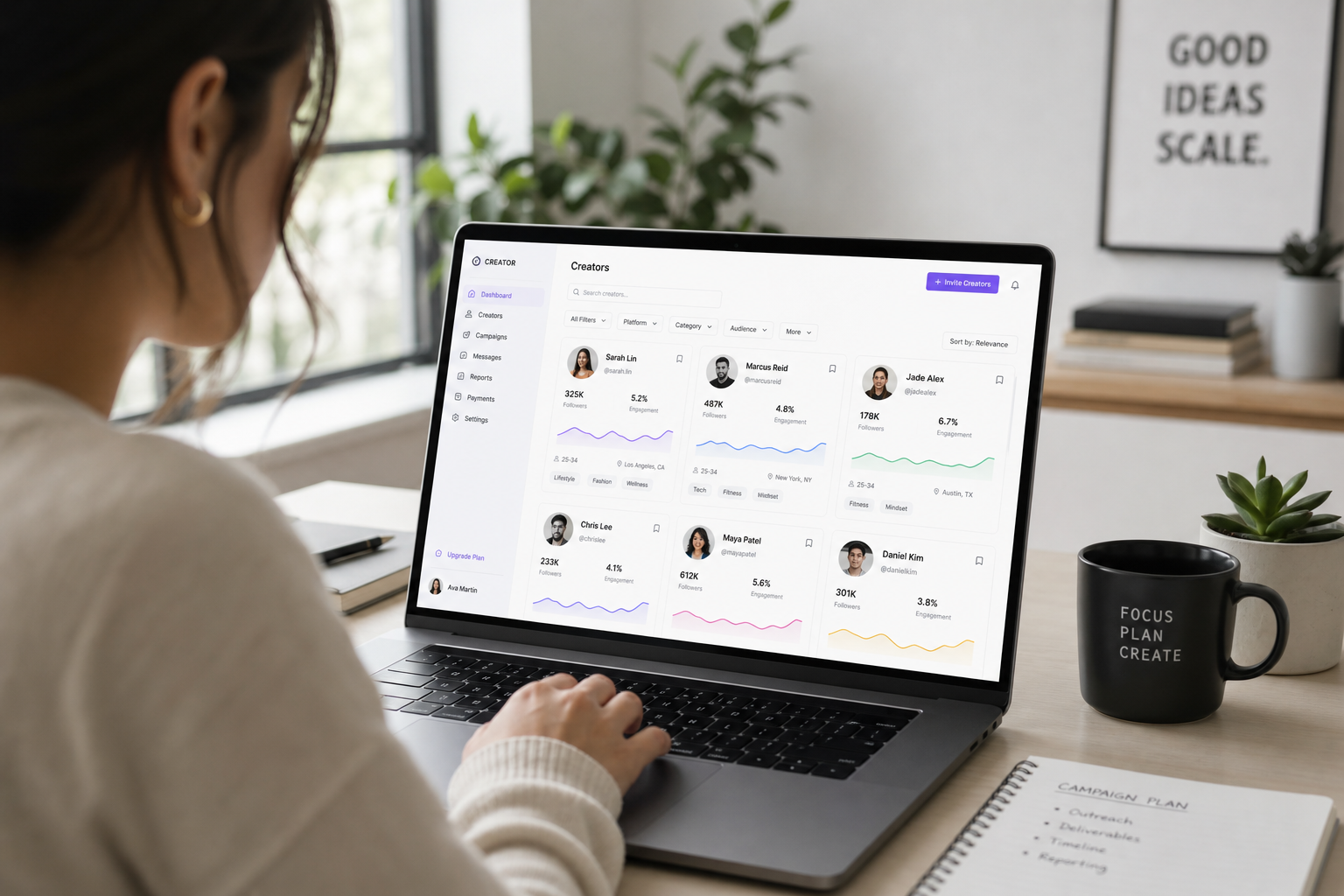
Filtering a searchable influencer database by niche, location and engagement rate.
What Is an Influencer Database?
An influencer database is a searchable collection of creator profiles — usually spanning Instagram, TikTok, YouTube and Twitch — that includes follower counts, engagement rates, audience demographics and content history in one place. Instead of researching creators manually, marketers use filters to find people who already match their niche, budget and target audience. The best databases refresh their data daily and flag signs of fake followers before a brand spends any money.
In practice, these platforms work like a specialized search engine built just for creators. For example, SocialBook's influencer database covers more than 300 million profiles, refreshed daily, with over 20 filters for niche, location, follower range and engagement rate. Consequently, a brand that once needed weeks to shortlist ten creators can now do it in an afternoon, using the same workflow described in this guide to finding and vetting creators with an influencer search engine.
Why a Creator Database Beats Manual Scouting
Manual scouting feels free, but it rarely is. Every hour spent scrolling profiles is an hour not spent negotiating deals or analyzing results. In addition, manual research almost always misses context a database shows instantly, such as a creator's past brand partnerships and how those campaigns actually performed. Similarly, static spreadsheets go stale the moment a creator's follower count or engagement rate changes, which happens constantly as creator marketing — commonly called influencer marketing — continues to grow.
Therefore, teams that rely on manual lists tend to repeat the same small pool of familiar names instead of discovering new talent. The global influencer marketing industry was valued at more than $24 billion in 2024, according to Statista's influencer marketing research, and that scale makes manual tracking nearly impossible at any serious budget level. A connected creator database solves the volume problem by doing the sorting work automatically, every day, without extra headcount.
Core Features of a Modern Influencer Search Platform
Not every influencer database offers the same depth. Specifically, look for these core capabilities before committing a budget:
- Audience authenticity scoring that flags bought followers and bot engagement before you pay a creator.
- Competitor search, so you can see which creators are already promoting a similar brand and performing well.
- Engagement and growth history, not just a single follower snapshot in time.
- Pricing estimates to benchmark what a fair rate looks like for a given creator and platform.
- Built-in outreach and relationship tools, so discovery connects directly to campaign management instead of living in a separate app.
How to Use an Influencer Database to Launch a Campaign
Finding creators is only the first step. Below is the process most marketing teams follow once they have access to a searchable influencer database.
- Define your audience and goals. Decide which platform, niche and demographic you need before searching, since a database is only useful once you know what "good fit" means for your brand.
- Filter and shortlist creators. Use filters such as location, follower range, engagement rate and niche to narrow 300 million profiles down to a focused list of realistic candidates.
- Vet audience quality. Check authenticity scores and fake follower flags on every finalist, because a large following means little if a big share of it is bots or purchased accounts.
- Send personalized outreach. Reach out at scale using templated but personalized messages, then let automated follow-up sequences handle non-responders so no opportunity is lost.
- Track performance against revenue. Assign trackable coupon codes or affiliate links to each creator so you can see which partnerships actually generated sales, not just likes.
SocialBook's influencer database supports this entire workflow from one dashboard, which removes the need to juggle separate tools for search, outreach and reporting.
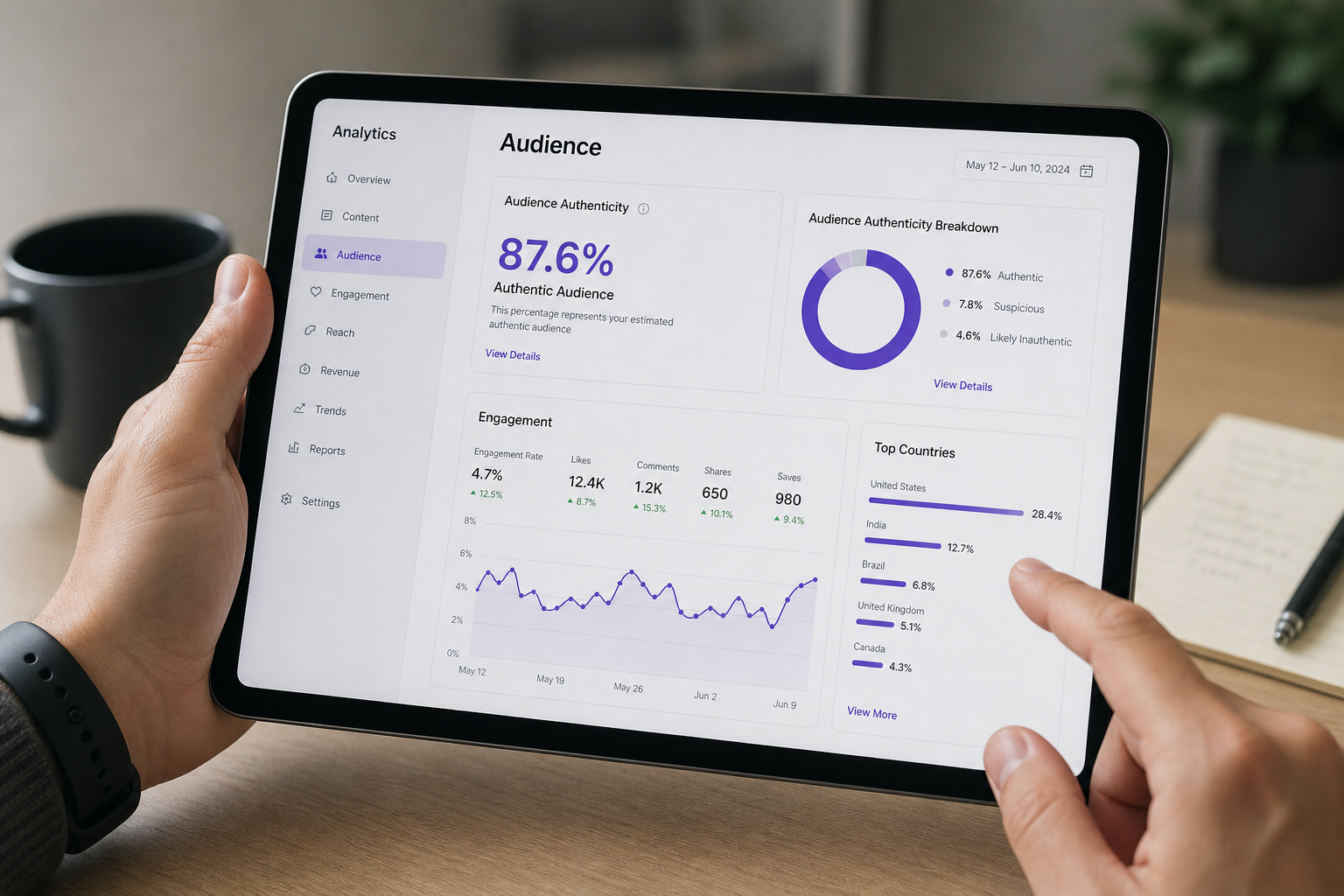
Checking audience authenticity before approving a creator partnership.
How to Vet Creators Before You Spend
Fake followers are not a minor annoyance; they are a direct financial risk. A widely cited study from Cheq and the University of Baltimore estimated that influencer fraud costs advertisers roughly $1.3 billion a year worldwide. Therefore, vetting is not optional once real budget is involved. Specifically, check three things before you commit to any creator: audience location versus your target market, engagement rate relative to follower count, and sudden follower spikes that often signal purchased growth.
In contrast, authentic creators tend to show steady engagement that tracks with their posting frequency rather than erratic jumps. Brands should also confirm that creators follow proper sponsorship disclosure rules, as outlined in the FTC's guidance on social media endorsements, to avoid regulatory risk on top of financial risk.
Influencer Database vs. Manual Scouting: Which Wins for ROI?
Manual scouting can work at a tiny scale, such as a single local business reaching out to five creators. However, it breaks down quickly once a brand runs multiple campaigns across platforms. A connected database, by contrast, turns discovery, vetting and reporting into one repeatable system rather than a one-off project.
For brands that also want to track what competitors are doing, tools like SocialBook's competitor monitoring features show which creators are already working with similar brands and how those partnerships are performing. Similarly, SocialBook's AI growth platform layers automated recommendations on top of the raw database, so teams spend less time filtering and more time closing deals.
Quick answer: an influencer database is a searchable, regularly refreshed collection of creator profiles with audience, engagement and pricing data, used to find and vet creators before any outreach or spend happens.
Choosing the Right Influencer Discovery Platform
Database size matters, but it is not the only factor. In particular, check how often profile data refreshes, whether pricing and CRM tools are built in, and how the platform handles cross-platform campaigns spanning TikTok, Instagram, YouTube and Twitch. For a wider comparison of options on the market, this roundup of influencer marketing tools for 2026 is a useful next read.
Once creators are shortlisted, the real work of managing contracts, shipping and approvals begins, which is exactly why a connected influencer relationship management system matters as much as discovery itself. For more detail on how SocialBook structures this process end-to-end, see SocialBook's platform overview.
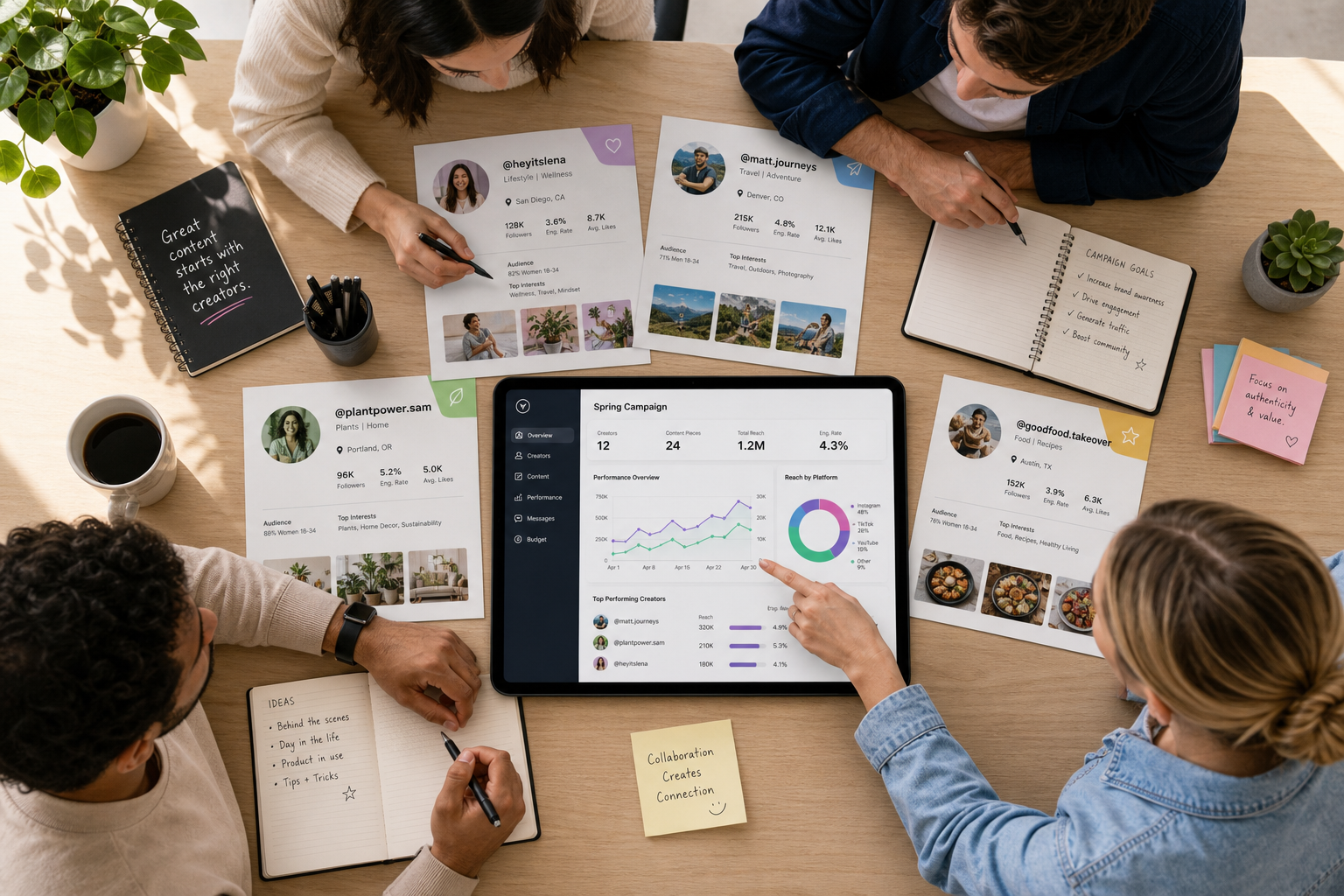
Turning influencer database search results into an organized campaign plan.
Frequently Asked Questions
What is an influencer database?
An influencer database is a searchable collection of creator profiles across platforms like Instagram, TikTok, YouTube and Twitch, showing follower counts, engagement rates, audience demographics and past brand partnerships in one place. It replaces manual scrolling and spreadsheets with filterable, regularly refreshed data.
How does an influencer database verify fake followers?
Most platforms analyze follower growth patterns, engagement-to-follower ratios and audience location data to flag accounts with bought or bot-driven followers. SocialBook's built-in fake follower checker scores authenticity before a brand ever reaches out to a creator.
Why do brands need an influencer database instead of manual research?
Manual research is slow, goes stale quickly, and rarely surfaces audience quality data. A database keeps profile information current and lets teams filter hundreds of millions of creators by niche, engagement and location in minutes instead of weeks.
How much does access to an influencer database typically cost?
Pricing varies widely, from free limited-search tools to paid platforms with monthly subscriptions based on search volume, outreach limits and CRM features. Brands should weigh cost against time saved and the risk of paying creators with fake audiences.
How long does it take to build a creator shortlist using a database?
With filters for niche, location, follower range and engagement rate, a focused shortlist of ten to twenty vetted creators can often be built in a single afternoon. Manual scouting for the same list can take days or weeks.
What is the difference between an influencer database and an influencer marketplace?
A database is primarily a search and vetting tool for discovering creators, while a marketplace lets brands post campaigns that creators apply to directly. Many modern platforms, including SocialBook, combine both functions in one dashboard.
What are common mistakes brands make when using an influencer database?
Common mistakes include judging creators by follower count alone, skipping audience authenticity checks, and failing to track performance after launch. Another frequent error is sending generic outreach that gets ignored instead of personalized, trackable messages.
Which platforms can an influencer database search across?
Leading databases search across Instagram, TikTok, YouTube and Twitch from a single interface. This cross-platform view matters because many creators maintain audiences on more than one channel with different engagement patterns on each.
How many creator profiles does SocialBook's influencer database include?
SocialBook's influencer database covers more than 300 million creator profiles, refreshed daily and searchable through more than 20 filters. That scale lets brands find niche micro-creators as easily as major platform stars.
What is the best way to vet a creator's audience quality?
Check audience location against your target market, review engagement-to-follower ratio, and look for sudden unexplained follower spikes that often signal purchased growth. Reviewing a creator's past brand partnerships and reported results adds further confidence.
Can an influencer database track campaign ROI?
Yes, when the database connects to trackable coupon codes or affiliate links, brands can see exactly which creators drove sales rather than just impressions or likes. SocialBook syncs this data with Shopify so revenue ties directly back to each creator.
Is a free influencer database worth using for a small brand?
Free tools can help a small brand test the discovery process, but they usually limit search depth, authenticity data and outreach volume. As campaigns scale past a handful of creators, a paid database with CRM and tracking tools typically pays for itself in saved time and avoided fraud.
Bringing It All Together
In the end, a dependable influencer database turns creator marketing from guesswork into a repeatable, measurable channel. Instead of scrolling platforms by hand, teams can filter 300 million-plus profiles, confirm audience authenticity, send personalized outreach at scale, and connect every partnership to real sales data. As a result, brands using SocialBook's influencer database spend less time searching and more time running campaigns that are easy to defend with numbers. Whether the goal is a single product launch or an always-on creator program, starting with a verified, searchable influencer database remains the fastest path to finding the right partners and proving what they actually deliver.

