Influencer relationship management is the system brands use to find, vet, organize, and nurture creator partnerships so every collaboration turns into measurable results instead of a one-off post. For many marketing teams, however, the reality looks less like a system and more like chaos: scattered spreadsheets, forgotten DMs, and no clear record of who actually drove sales. In particular, as creator budgets grow, the lack of a repeatable process becomes expensive fast. This guide explains what influencer relationship management actually means, why it matters now, and how brands can build a workflow that scales from five creators to five hundred without losing control of the details.
Quick answer: Influencer relationship management (sometimes called influencer CRM) is the practice of using a centralized system, typically software, to discover creators, verify their audiences, communicate at scale, and track performance from one dashboard rather than spreadsheets and inboxes. Brands that adopt it replace guesswork with data and turn creator marketing into a repeatable revenue channel.

A well-organized influencer relationship management dashboard replaces scattered spreadsheets with one connected view of every creator.
What Is Influencer Relationship Management?
In short, influencer relationship management is the discipline of treating every creator partnership like a managed relationship rather than a transaction. It covers discovery, vetting, outreach, collaboration, and performance tracking, all in one connected process.
Historically, brands have approached influencer marketing as a series of disconnected tasks: find a creator, email them, hope for a reply, ship product, and wait for a post. Consequently, nobody owns the full picture, and results get reported from memory instead of data. Influencer relationship management closes that gap by giving marketers one system of record. For example, instead of five spreadsheets tracking five campaigns, a single dashboard shows every creator's status, contract terms, content deadlines, and sales impact. As a result, teams spend less time searching for information and more time negotiating better deals and scaling what already works.
Why Creator Relationship Management Matters for ROI
According to the Influencer Marketing Hub Benchmark Report, the influencer marketing industry has grown into a multibillion-dollar channel, yet many brands still cannot tie spend directly to revenue. Therefore, creator relationship management has become less of a nice-to-have and more of a financial necessity.
Without it, budget tends to leak in three predictable places. First, teams keep paying creators with inflated or fake audiences because nobody checked the data beforehand. Second, high-performing creators go quiet because follow-up never happens, so the relationship dies before it scales. Third, leadership asks which creators drove sales, and the honest answer is "we are not sure." In contrast, brands running structured creator relationship management can point to exact coupon redemptions and affiliate sales per creator, which makes renewing or cutting a partnership a data decision rather than a guess.
Core Components of an Influencer CRM System
Above all, a working influencer CRM needs four connected pieces rather than four separate tools. Each piece feeds the next, so data never has to be re-entered by hand.
Platforms like SocialBook's AI-powered growth platform bundle these components together, which means a brand can search more than 300 million creator profiles, check audience authenticity, send personalized outreach, and track Shopify-synced sales from the same login. Similarly, agencies managing dozens of client campaigns rely on this kind of unified view to avoid losing track of who owes what content.
How to Build an Influencer Relationship Management Workflow in 5 Steps
Building this workflow does not require a massive overhaul. Instead, it comes down to five sequential steps that most teams can implement within a single week.
- Centralize creator discovery. Centralize creator discovery in one searchable database so your team stops hunting across TikTok, Instagram and YouTube manually for every new campaign.
- Vet audience quality. Vet every creator's audience for authenticity, location and engagement quality before you negotiate rates or send free product.
- Launch personalized outreach. Launch personalized bulk outreach from your own inbox, then let automated follow-up sequences re-engage creators who have not replied yet.
- Track collaborations centrally. Track every contract, shipment, content approval and payment inside one influencer CRM dashboard instead of scattered emails and spreadsheets.
- Measure revenue per creator. Measure revenue per creator using synced coupon codes and affiliate links so leadership can see exactly which partnerships paid off.
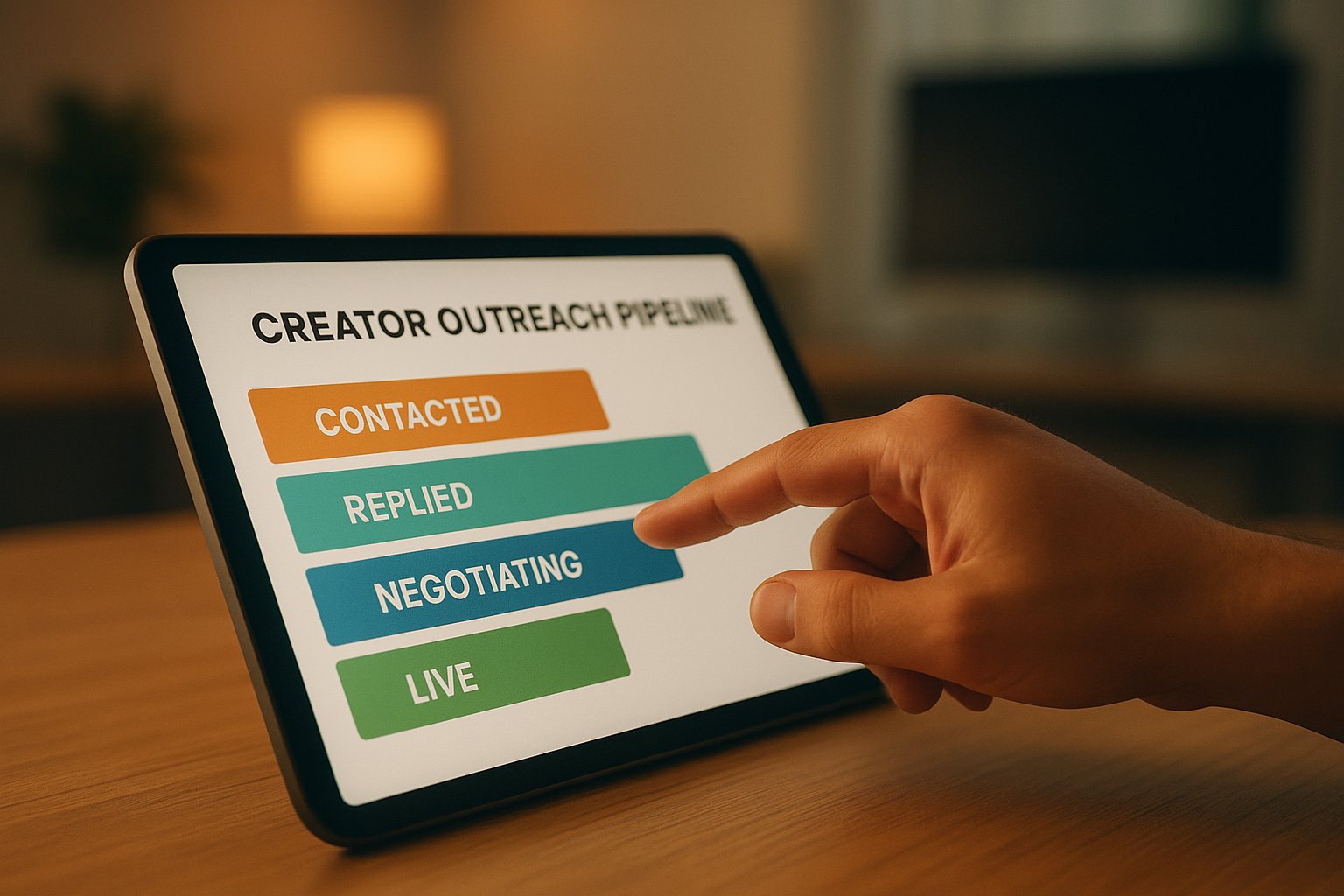
A visual outreach pipeline keeps every stage of influencer relationship management visible at a glance.
Best Practices for Managing Influencer Partnerships at Scale
Once the basic workflow exists, the next challenge is scale. Specifically, what works for ten creators breaks down at one hundred unless a few habits are built in from the start.
First, standardize outreach templates but personalize the opening line, since generic mass emails get ignored. Furthermore, set a follow-up cadence, such as three touches over two weeks, rather than leaving replies to chance. In addition, review audience data on a recurring basis, not just at the start of a partnership, because engagement quality can shift over months. Meanwhile, keep contract and payment terms visible to both marketing and finance teams so nothing slips through the cracks near a campaign deadline. Finally, always disclose paid partnerships according to FTC guidance, since compliance protects both the brand and the creator from legal risk.
Common Mistakes That Break Creator Partnerships
Even experienced teams repeat a few avoidable errors. Recognizing them early saves both budget and creator goodwill.
One common mistake is skipping audience verification entirely, which leads to paying full rate for an audience that is mostly bots. Another is treating outreach as a single email rather than a sequence, which drops reply rates significantly. Similarly, many brands fail to track which specific creator drove which sale, so performance reviews become subjective opinions instead of numbers. Above all, the biggest mistake is paying late or inconsistently, since this is one of the fastest ways to lose access to a creator's best content slots in future campaigns.
Choosing the Right Influencer Relationship Management Platform
When evaluating a platform, consider whether it covers the entire lifecycle rather than just one piece, such as discovery alone. For instance, SocialBook lets brands search creators by name, filter, or even by competitor, which helps teams find who is already promoting similar products. You can explore live examples by browsing top influencers across platforms to see how profile data and pricing estimates are presented before committing budget.
Beyond discovery, check whether the platform supports revenue attribution. SocialBook's deep link tracking tools and affiliate program tracking connect creator content directly to Shopify sales, which closes the loop between a post and actual revenue. Therefore, instead of asking creators for screenshots of performance, brands can see the numbers themselves inside one dashboard, a core promise of mature influencer relationship management software like SocialBook.
Data point: The Influencer Marketing Hub reports that more than 80% of marketers rate influencer marketing as an effective strategy, yet a majority still coordinate campaigns manually through spreadsheets and email rather than dedicated software, a gap that structured influencer relationship management is built to close.

Checking audience authenticity before outreach is a core step in effective influencer relationship management.
Frequently Asked Questions About Influencer Relationship Management
What is influencer relationship management?
Influencer relationship management is the ongoing process of discovering, vetting, communicating with, and tracking the performance of the creators a brand partners with, usually through a dedicated platform rather than spreadsheets. It covers the full lifecycle from first contact to final payment and reporting.
How does influencer relationship management differ from influencer marketing?
Influencer marketing refers to the overall strategy of using creators to promote products, while influencer relationship management is the operational system that makes that strategy repeatable. In other words, influencer marketing is the "what," and influencer relationship management is the "how."
Why is influencer relationship management important for ROI?
Without a structured system, brands often cannot tell which creators actually drove sales, so budget gets wasted on repeat deals with underperforming partners. A proper influencer relationship management process ties every post to coupon codes, affiliate links, or sales data, making ROI visible.
What tools are used for influencer relationship management?
Most teams rely on an influencer CRM, creator search database, outreach automation, and campaign analytics dashboard, often bundled into one platform such as SocialBook. Smaller teams sometimes patch together spreadsheets and email, though this rarely scales past a handful of creators.
How much does influencer relationship management software cost?
Pricing varies widely, from free trial tiers to several hundred dollars per month for agencies managing hundreds of creators, depending on seats and search credits included. Costs should be weighed against the hours saved on manual outreach and reporting.
How long does it take to set up an influencer relationship management system?
Most brands can get a basic workflow running within a day or two, since modern platforms come with ready-made search filters, outreach templates, and dashboards. Full adoption across a marketing team typically takes a few weeks as processes are refined.
What are common mistakes brands make when managing influencer relationships?
The most frequent mistakes are skipping audience verification, relying on one-time outreach with no follow-up, and failing to track which creators generate actual sales. These gaps lead to wasted budget and strained creator relationships.
How can brands verify a creator's audience before starting a partnership?
Brands should check audience authenticity scores, follower location data, and engagement quality using a fake follower checker before negotiating rates. This step protects budget from inflated or bot-driven audiences.
What is the difference between an influencer CRM and a regular CRM?
A regular CRM is built for sales leads and customer accounts, while an influencer CRM is purpose-built for creator profiles, content approvals, shipping, and performance tied to social platforms. The data fields and workflows are tailored specifically to creator partnerships.
How does influencer relationship management help with creator payments?
It centralizes contract terms, deliverables, and payment status for every creator, so finance and marketing teams always know what is owed and when. This reduces late payments, which are a leading cause of creator churn.
Can small businesses benefit from influencer relationship management tools?
Yes. Even brands working with a handful of creators save hours by replacing manual searches and email threads with a single dashboard, and they avoid costly mistakes like hiring creators with fake followings.
What metrics should brands track in influencer relationship management?
Key metrics include audience authenticity, engagement rate, cost per acquisition, affiliate or coupon code sales, and reply rate during outreach. Tracking these consistently reveals which creators and content formats actually work.
How does SocialBook support influencer relationship management?
SocialBook combines a 300-million-plus creator database, audience verification tools, bulk personalized outreach, and a built-in CRM dashboard with Shopify-synced coupon and affiliate tracking, so brands can manage the entire creator relationship in one place. This replaces the spreadsheets, inboxes and guesswork that slow most campaigns down.
Key Takeaways
Ultimately, influencer relationship management is what separates a lucky viral post from a predictable growth channel. By centralizing discovery, verifying audiences before spending, automating outreach, and tracking revenue per creator, brands replace guesswork with a repeatable process. As a result, teams can prove exactly which partnerships pay off and double down on them with confidence, rather than hoping the next campaign performs better than the last.
