
Influencer Marketing Tools: Best Platforms for 2026
Influencer marketing tools are the software platforms brands, agencies, and ecommerce teams now use to find, vet, contact, and pay the right creators without living inside a messy spreadsheet. Instead of scrolling TikTok and Instagram by hand hoping to spot a good fit, marketing teams use searchable databases, built-in messaging, and reporting dashboards to get a campaign live in days rather than weeks. Below, you'll find exactly what these platforms do, which features separate a serious tool from a glorified contact list, and how leading options — including SocialBook, Upfluence, Grin, Aspire, Heepsy, and Afluencer — actually compare.
Quick answer: Influencer marketing tools are platforms that combine creator search, audience verification, outreach automation, campaign management, and sales tracking so brands can run creator partnerships efficiently and prove exactly which ones drove revenue. The strongest options go beyond a simple contact list and function as a full operating system covering discovery through ROI.
What Are Influencer Marketing Tools?
Influencer marketing tools are software platforms that help brands discover, evaluate, and manage relationships with social media creators. In practice, they merge a searchable creator database with audience analytics, messaging automation, and campaign reporting into a single workspace, which is why many marketers now simply call them creator marketing platforms.
Before this category of software existed, marketers tracked everything in spreadsheets and direct messages. As a result, campaigns moved slowly, data went stale fast, and nobody had a reliable record of which creators were actually paid or which ones performed. In contrast, modern influencer marketing software keeps discovery, outreach, and reporting connected in one place, so a single team member can manage dozens of creator relationships at once.
Influencer marketing tools bring creator search, vetting, and reporting into one dashboard.
Why Influencer Marketing Software Matters More Than Ever
Creators now influence purchase decisions in a way paid ads struggle to match. However, the industry has also grown large enough that manual research is no longer practical. According to Influencer Marketing Hub's benchmark report, the global influencer marketing industry was valued at roughly $24 billion in 2024, and that scale has only increased the need for structured tools rather than guesswork.
Meanwhile, fake followers and inflated engagement remain a real risk. Without verification tools, brands can easily pay for reach that never existed. For this reason, audience authenticity checks have become a standard feature, not a luxury, inside any serious influencer marketing platform.
In addition, regulatory attention on creator disclosures has increased, as outlined in the FTC's endorsement guidance. Consequently, platforms that track contracts and content approvals help brands stay compliant while scaling campaigns, rather than discovering a disclosure problem after content has already gone live.
Types of Influencer Marketing Tools: Discovery, Outreach, CRM, and Analytics
Not all influencer marketing tools do the same job. Specifically, the category breaks down into five distinct types, and understanding the difference prevents you from buying a tool that solves only half the problem.
- Discovery and search platforms: Large creator databases filtered by niche, follower count, location, and engagement rate.
- Outreach and relationship tools: Bulk messaging, templates, and automated follow-up sequences that replace manual DMs and cold emails.
- Audience verification and analytics tools: Fake follower checkers and demographic breakdowns that confirm an audience is real before any money is spent.
- Affiliate and ROI attribution tools: Coupon codes, trackable links, and ecommerce integrations that tie creator content directly to sales.
- All-in-one platforms: Tools that combine every function above into one login, which is where most brands eventually land once campaign volume grows.
Similarly, it's worth noting that outreach-only tools — the kind built purely around sending messages — leave verification and ROI tracking to other software, which often means juggling two or three subscriptions instead of one.
Key Features the Best Influencer Marketing Platforms Share
Not every platform offers the same depth. Therefore, it helps to know which features actually move the needle on campaign results rather than just looking impressive in a demo.
- Large, updated creator database: Search should cover millions of profiles across TikTok, Instagram, YouTube, and Twitch, refreshed frequently so follower counts stay accurate.
- Audience verification: A fake follower checker and demographic breakdown confirm whether an audience is real and matches the target market.
- Bulk outreach with follow-up: Personalized messaging sent at scale, with automated sequences for non-responders, saves significant manual effort.
- Campaign CRM: Contracts, shipping, content approvals, and payments should live in one organized dashboard instead of scattered inboxes.
- Sales attribution: Coupon codes or affiliate links that connect directly to ecommerce platforms show exactly which creators drove revenue.
- Competitor and market monitoring: Seeing which creators a competitor already works with, through features like SocialBook's competitor monitoring tools, surfaces untapped partnership opportunities fast.
How to Choose the Right Influencer Marketing Tools
Choosing software without a clear process often leads to paying for features a team never uses. Instead, follow a short evaluation sequence before signing up for any plan.
- Define campaign goals and budget. Decide whether the priority is awareness, sales, or content assets, then set a realistic budget range so the platform's pricing tier actually fits the team.
- List the platforms your audience actually uses. Confirm whether TikTok, Instagram, YouTube, or Twitch matters most, since coverage varies considerably between individual tools.
- Shortlist tools with audience verification. Prioritize platforms with a fake follower checker and demographic reporting, so budget goes toward real, relevant audiences instead of inflated reach.
- Test outreach and workflow features in a trial. Send a small batch of real messages to see reply rates and how the CRM organizes conversations before committing further.
- Review reporting and ROI tracking before committing. Check whether the platform ties creators to sales through coupon codes or affiliate links, since that proof is what leadership will ask for later.
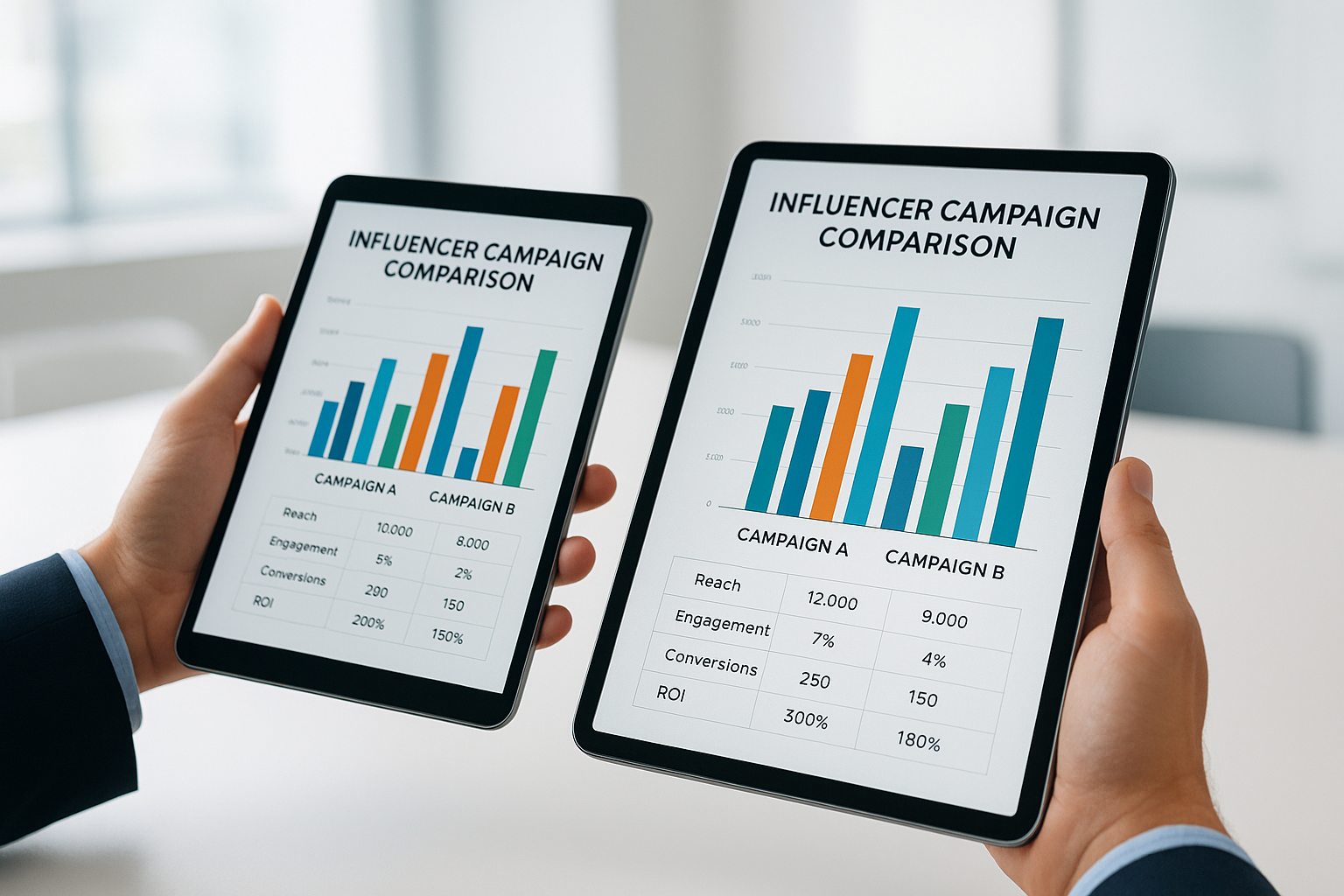
Comparing shortlisted platforms side by side helps confirm which tool fits the team's workflow.
Top Influencer Marketing Tools and Platforms to Compare in 2026
When comparing options, brands generally fall into two camps: those that need a simple creator directory, and those that need a full operating system covering discovery through revenue reporting. The table below lines up the names that come up most often in both categories.
| Platform | Best For | Standout Feature | Pricing Model |
|---|---|---|---|
| SocialBook | Brands and agencies wanting discovery-to-ROI in one login | 300M+ creator database, fake follower checker, Shopify-synced ROI tracking | Free tier plus paid plans |
| Upfluence | Mid-market and enterprise ecommerce teams | Deep Shopify and WooCommerce integration | Custom, quote-based |
| Grin | DTC ecommerce brands with in-house teams | Product seeding workflows | Custom, quote-based |
| Aspire | Larger brands running always-on ambassador programs | Marketplace of creator applicants | Custom, quote-based |
| Heepsy | Agencies needing quick search filters | Audience location and language filters | Tiered monthly plans |
| Afluencer | Small brands sourcing inbound creator applicants | Two-sided creator marketplace listings | Free plus paid listings |
SocialBook: The All-in-One Influencer Marketing Platform
For brands that need the full operating system described earlier, SocialBook is one platform built specifically around that workflow. It gives brands, ecommerce companies, and agencies a single login to search more than 300 million creator profiles across TikTok, Instagram, YouTube, and Twitch.
Audience authenticity checks and a built-in fake follower checker let teams vet creators before spending a dollar, while personalized bulk outreach with automated follow-up replaces one-at-a-time emails. Every campaign then runs from one dashboard, including contracts, shipping, and content approvals, and Shopify-synced coupon codes and affiliate links show exactly which creators drove sales. For teams specifically hunting for this kind of consolidated workflow, this all-in-one software to find, contact, and track influencers breaks the process down in more detail.
Brands exploring broader growth options can also review SocialBook's AI growth platform, browse the top influencers list for inspiration, check the deeplink tracking tools, or learn about the affiliate program for creators and partners.
Other Influencer Marketing Tools Worth Knowing
Upfluence and Grin both lean heavily into ecommerce integrations, which makes them a natural fit for established DTC brands that already run Shopify at scale. However, both typically require a sales call for pricing, which can slow down smaller teams that want to test a tool quickly.
Aspire functions more like a marketplace where creators apply to brand campaigns, which works well for always-on ambassador programs but offers less proactive discovery than a searchable database. Heepsy, in contrast, is built around fast filtering by location and language, making it a reasonable budget option for agencies running international campaigns. NinjaOutreach remains a recognizable name specifically in the outreach-automation space, though its feature set stays narrower than full campaign management suites.
Finally, Afluencer operates as a two-sided marketplace where creators apply directly to brand listings, which suits small businesses with limited outreach bandwidth. That said, smaller teams evaluating their very first platform may find it useful to read this breakdown of the best influencer marketing tools for small and mid-sized brands before committing to any single option.
Influencer Marketing Tools Pricing: What Should You Expect to Pay?
Pricing across influencer marketing tools varies dramatically, and that range alone can make budgeting confusing. Generally speaking, the market splits into three tiers.
- Free or freemium plans: Limited search volume or outreach credits, useful for testing a workflow before paying anything.
- Self-serve monthly subscriptions: Scale with the number of creator searches, seats, or outreach messages included, and are typically visible on the vendor's pricing page.
- Enterprise or quote-based plans: Common among larger platforms, these often require a sales call and are priced around managed services, dedicated support, and higher usage volume.
As a result, the smartest approach is rarely to compare sticker price alone. Instead, divide the monthly cost by the number of campaigns you realistically plan to run, then weigh that against the hours a manual process would otherwise consume.
Influencer Marketing Tools vs. Manual Outreach: Does the ROI Add Up?
Running outreach entirely by hand feels free at first, since there's no software bill. However, the hidden costs add up quickly: hours spent searching profiles, missed follow-ups, and no reliable way to confirm whether an audience is genuine.
In contrast, a dedicated platform compresses discovery and vetting into minutes, automates follow-up messaging, and connects every partnership to a trackable coupon code or affiliate link. Consequently, even a modest monthly subscription often pays for itself the first time it prevents one wasted payment to a creator with a fake audience.
Above all, the real ROI question isn't software cost versus zero cost — it's software cost versus the staff hours, missed opportunities, and unverified spend that manual outreach quietly accumulates over a full quarter.
Common Mistakes to Avoid When Using Influencer Marketing Tools
Even with the right software, teams can still get disappointing results if they skip a few basics. Specifically, four mistakes come up again and again.
First, some teams choose a platform based purely on database size while ignoring audience verification, which defeats the purpose of avoiding fake followers in the first place. Second, many skip the trial period and commit to an annual plan before confirming the outreach and CRM features actually fit daily workflows. Third, brands often forget to connect sales tracking from day one, which means they cannot prove ROI even after running a successful-looking campaign. Fourth, teams sometimes overlook compliance entirely, launching campaigns without a clear process for creator disclosures, which can create legal exposure regardless of how well the content performs. Avoiding these four issues alone resolves most of the frustration brands report with influencer marketing tools.

Clear ROI reporting turns influencer campaigns into a repeatable growth channel.
Frequently Asked Questions About Influencer Marketing Tools
What are influencer marketing tools?
Influencer marketing tools are software platforms that help brands find, vet, contact, and manage social media creators for paid partnerships. They typically combine a creator search database, audience verification, outreach automation, and performance reporting in one dashboard.
How do influencer marketing tools work?
Most tools crawl public social data from platforms like TikTok, Instagram, and YouTube to build searchable creator profiles. Brands filter by niche, location, and engagement rate, then use built-in messaging, contracts, and tracking links to run the campaign without switching tools.
Why do brands need influencer marketing software?
Brands need this software because manual creator research is slow and unreliable, and fake followers can waste budget fast. A dedicated platform speeds up discovery, confirms audience quality, and ties each creator directly to sales or conversions.
What is the difference between an influencer marketing tool and a simple creator database?
A creator database only lists names and follower counts, while influencer marketing tools add verification, outreach automation, campaign management, and ROI tracking. In short, a database answers who exists, but a full platform helps you act on that information.
How much do influencer marketing tools cost?
Pricing varies widely, from free limited-access plans to monthly subscriptions that scale with the number of creator searches, seats, or outreach emails included. Enterprise plans with managed campaign services typically cost more and are priced on request.
How long does it take to launch a campaign using influencer marketing tools?
With the right software, brands can shortlist creators, send outreach, and confirm the first partnerships within a few days instead of several weeks. Speed depends mostly on how quickly creators respond and how clear the campaign brief is.
What features should I look for in creator marketing platforms?
Look for a large, regularly updated creator database, audience authenticity checks, bulk outreach with follow-up automation, and campaign tracking tied to sales. A built-in CRM for contracts, shipping, and payments also saves significant time.
What mistakes do brands make when choosing influencer marketing tools?
The most common mistake is picking a tool based only on database size while ignoring audience verification and reporting features. Another frequent error is skipping a trial run, which leads to paying for a platform that does not fit the team's actual workflow.
Can influencer marketing tools detect fake followers?
Yes, many platforms include a fake follower checker that analyzes follower growth patterns, engagement ratios, and audience location to flag suspicious accounts. This helps brands avoid paying for inflated reach before any money changes hands.
Are influencer marketing tools suitable for small businesses?
Yes, many platforms offer scaled-down plans built for smaller teams and limited budgets, with access to micro and nano creators who often deliver strong engagement at lower cost. Small businesses can start with a narrow niche search before expanding.
How do influencer marketing tools track ROI?
Most platforms track ROI using unique coupon codes, trackable affiliate links, or ecommerce integrations such as Shopify that attribute sales directly to each creator. This replaces guesswork with a clear record of which partnerships actually drove revenue.
What is the best influencer marketing tool for ecommerce brands?
Ecommerce brands generally benefit most from platforms with Shopify-synced tracking, affiliate link management, and performance prediction, since these features connect creator content directly to sales. SocialBook is one example built specifically around that discovery-to-revenue workflow.
Do influencer marketing tools work across multiple social platforms?
Most modern platforms cover TikTok, Instagram, YouTube, and increasingly Twitch, allowing brands to compare creators across channels in one search. This cross-platform view makes it easier to find the right fit regardless of where a brand's audience spends time.
What is the best influencer marketing tool for agencies managing multiple client campaigns?
Agencies generally need separate workspaces per client, bulk outreach, and consolidated reporting they can hand off to each account. Platforms with a large creator database plus a built-in CRM, such as SocialBook, tend to handle multi-client workloads without requiring extra software.
Do influencer marketing tools replace the need for a dedicated influencer marketing manager?
No, software speeds up discovery, outreach, and reporting, but it does not replace strategic judgment about brand fit, creative direction, or negotiation. Most teams still benefit from a person who interprets the data the tool provides and makes the final creator decisions.
Final Thoughts on Choosing Influencer Marketing Tools
Choosing the right influencer marketing tools ultimately comes down to matching platform features to real campaign needs rather than chasing the biggest database alone. As outlined throughout this guide, verification, outreach automation, and sales attribution matter more than raw creator counts once a campaign actually launches.
Consequently, brands that evaluate tools step by step, test workflows during a trial, and insist on ROI tracking from day one tend to see influencer marketing become a dependable growth channel instead of a guessing game. For more background on how this space evolved, the Wikipedia overview of influencer marketing and the Influencer Marketing Hub benchmark report are useful starting points, alongside a direct look at platforms such as SocialBook to see these features in action.