How a One-Product Brand Turned Pimple Patches into a $100M Business
The beauty and personal care industry is one of the most competitive markets in the world. Every niche is crowded, every category is saturated, and even something as small as pimple patches has long been overlooked.
For years, pimple patches were treated as an afterthought. They were either overpriced add-ons from major brands or generic, low-cost products with no real identity. Consumers didn’t feel attached to them, and brands didn’t treat them as anything worth building around.
That’s exactly why the rise of Hero Cosmetics feels so counterintuitive.
Founded in 2017, the company made a decision most brands would never consider: it focused almost entirely on a single product. Within just five years, that decision turned a small Amazon seller into a brand generating over $100 million in annual revenue, eventually leading to a $630 million acquisition by Church & Dwight.
At first glance, it doesn’t make sense. Why would anyone bet everything on such a narrow category? And more importantly, how did it work in a market dominated by giants?
The answer starts with something deceptively simple: changing where the product belongs in the consumer’s mind.
Before Hero Cosmetics entered the scene, pimple patches in the U.S. were almost always positioned as medical products. If you walked into stores like CVS Pharmacy or Walgreens, you would find them sitting next to bandages and wound care supplies. The packaging felt clinical, the messaging felt cold, and the implication was clear—acne was a problem that needed treatment.
Hero Cosmetics didn’t change the formula. It changed the context.
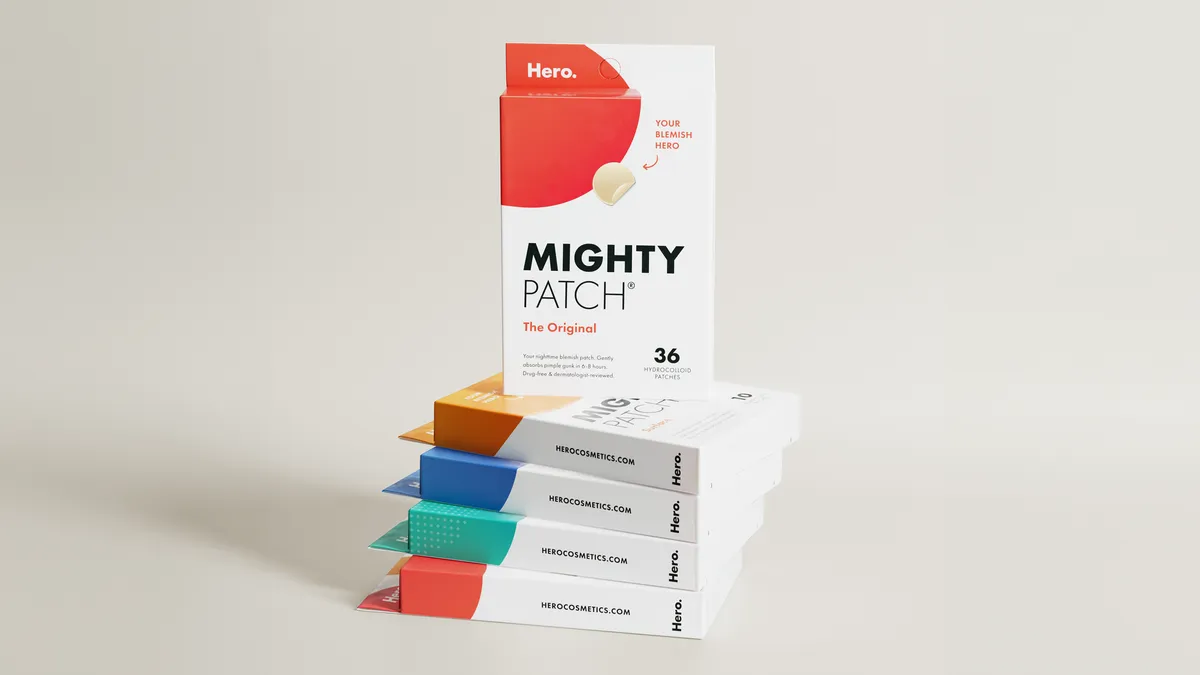
Instead of living in the medicine cabinet, pimple patches were repositioned into the beauty routine. Their flagship product, Mighty Patch, didn’t sound like a treatment at all. It sounded empowering, almost playful, as if it were helping you rather than fixing you. The branding followed the same logic. Bright colors, modern typography, and clean packaging made it feel closer to a beauty product than something you’d find in a first aid kit.
This shift may seem subtle, but it fundamentally lowered the psychological barrier. Using a pimple patch no longer felt like dealing with a problem—it felt like taking care of yourself.
At the same time, the pricing strategy quietly reinforced this positioning. A typical pack of Mighty Patch sells for around $12.99, sitting in a carefully chosen middle ground. It’s slightly more expensive than generic alternatives, which helps justify a premium perception, but still affordable enough to feel like an impulse buy. For many consumers, especially those used to shopping on Amazon, it’s a “no-thinking-required” purchase.
But positioning alone doesn’t explain the speed of growth. What really accelerated Hero Cosmetics was its understanding of content—specifically, the kind of content that thrives on platforms like TikTok.
While traditional beauty marketing tends to focus on perfection, TikTok rewards authenticity. Sometimes, it even rewards things that are slightly uncomfortable to watch. Hero Cosmetics leaned into that dynamic in a way most brands wouldn’t dare.
Instead of hiding the less glamorous side of their product, they embraced it. Users were encouraged to share videos of peeling off their patches, revealing the visible results left behind by the hydrocolloid. In a traditional advertising context, this would be considered unappealing. On TikTok, it became oddly satisfying. The visual contrast, the sense of instant results, and the rawness of the moment made the content highly shareable.
The product didn’t just solve a problem—it created a visual experience people wanted to watch.
This approach became even more powerful when combined with the right creators. Influencers like Alix Earle didn’t present the product as a polished advertisement. Instead, they integrated it naturally into their daily routines. In her “Get Ready With Me” videos, she openly talks about her skin, shows real breakouts, and casually uses the patch without over-explaining it. That level of honesty builds a kind of trust that scripted campaigns rarely achieve.
What Hero Cosmetics did particularly well was understanding that creators are not just distribution channels—they are carriers of belief. By aligning with voices that already embraced authenticity, the brand reinforced its own message: skin doesn’t need to be perfect to be accepted.
Over time, this created a powerful growth loop. Authentic content reduced skepticism, viral visuals drove reach, accessible pricing encouraged conversion, and product effectiveness led to repeat purchases. Each piece reinforced the next, allowing the brand to scale rapidly without relying heavily on traditional advertising channels.
For brands looking to expand globally, especially those coming from highly competitive manufacturing environments, this story offers a different perspective on growth. It suggests that success doesn’t always come from doing more. In many cases, it comes from doing less, but with far greater clarity.
Hero Cosmetics didn’t try to build a complete skincare system. It focused on a single, specific problem and solved it in a way that felt emotionally and culturally relevant. It didn’t chase perfection in its marketing but instead embraced reality, even when that reality was slightly messy. And rather than relying on broad, unfocused influencer campaigns, it benefited from working with creators who genuinely reflected its values—something platforms like SocialBook are increasingly helping brands do at scale through data-driven discovery and analysis.
In the end, the most surprising part of this story isn’t that a pimple patch brand reached $100 million in revenue. It’s that it did so by resisting the instinct to expand too quickly.
One product, clearly positioned, consistently communicated—that was enough to redefine an entire category.
