Best Influencer Marketing Platforms for Shopify Brands in 2026
Running a Shopify store in 2026 is harder than ever.
Customer acquisition costs keep rising. Paid ads are getting more competitive. And consumers trust creators more than traditional advertising.
That’s why influencer marketing has become one of the most effective growth channels for ecommerce brands.
But there’s a catch:
managing influencer campaigns manually quickly turns into chaos.
Spreadsheets everywhere. Endless DMs. Fake followers. Lost emails. Poor tracking. No idea which creator actually drove sales.
As brands scale, influencer marketing without software becomes nearly impossible to manage efficiently.
The good news? A new generation of influencer marketing platforms is helping Shopify brands automate creator discovery, outreach, campaign management, and ROI tracking.
In this guide, we’ll break down the best influencer marketing platforms for Shopify brands in 2026 — including their strengths, ideal use cases, and what kind of ecommerce teams they work best for.
Why Shopify Brands Need Influencer Marketing Software
Many small ecommerce brands start influencer marketing manually.
At first, it works:
you DM creators on Instagram or TikTok, negotiate rates, send products, and hope for conversions.
But once campaigns grow, the process becomes difficult to scale.
Common problems Shopify brands face include:
- Finding relevant influencers consistently
- Identifying fake followers or inflated engagement
- Managing hundreds of creator conversations
- Tracking coupon codes and affiliate sales
- Measuring ROI across platforms
- Organizing creator relationships long-term
This is where influencer marketing software becomes valuable.
Instead of juggling spreadsheets and screenshots, brands can centralize everything in one system.
The best platforms now combine:
- AI-powered creator discovery
- Influencer analytics
- Automated outreach
- Campaign management
- Shopify integration
- Affiliate tracking
- Performance reporting
For fast-growing ecommerce brands, these tools can save dozens of hours every week.
1. SocialBook
Best for: AI-powered influencer discovery and Shopify brand growth
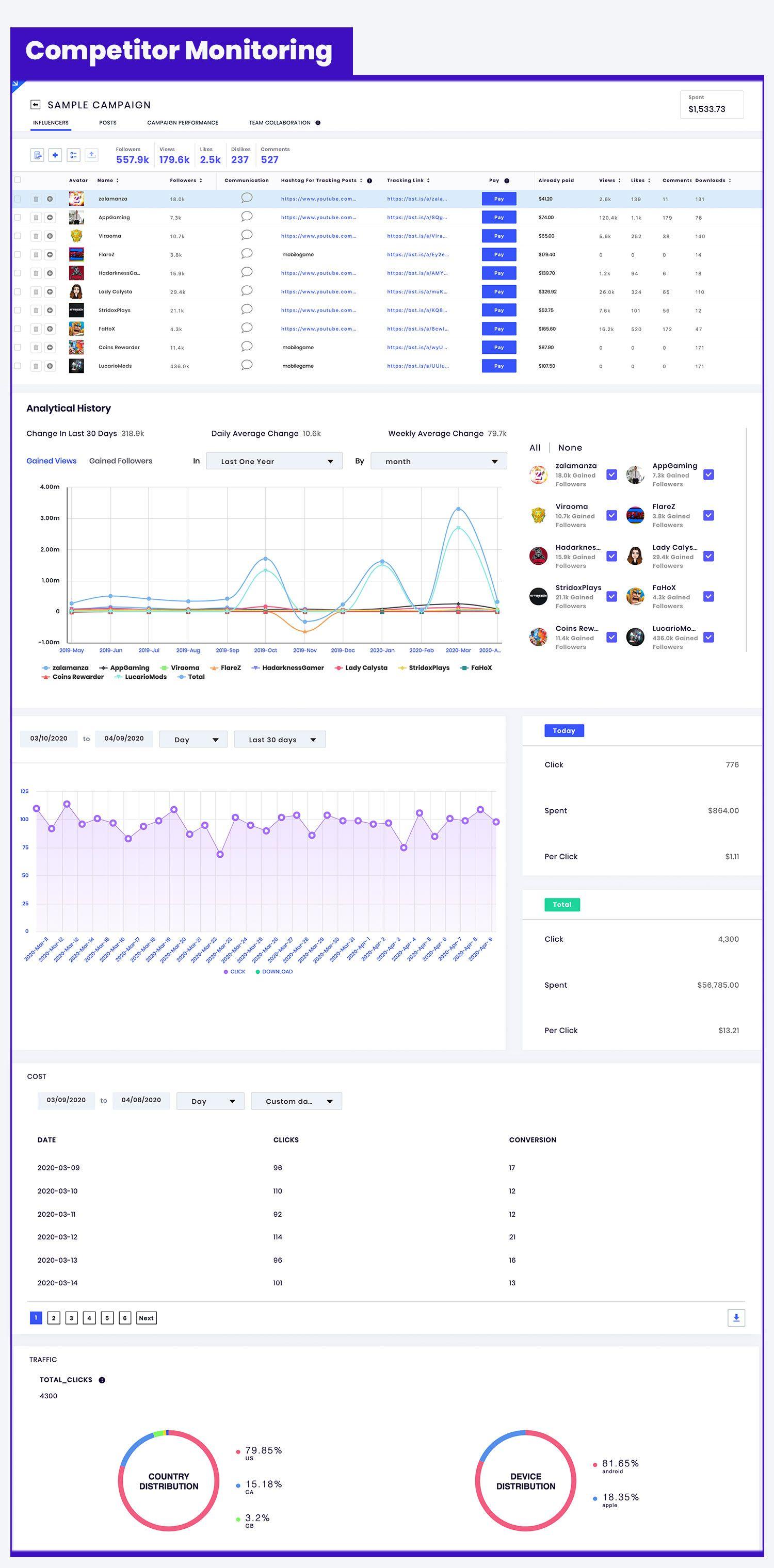
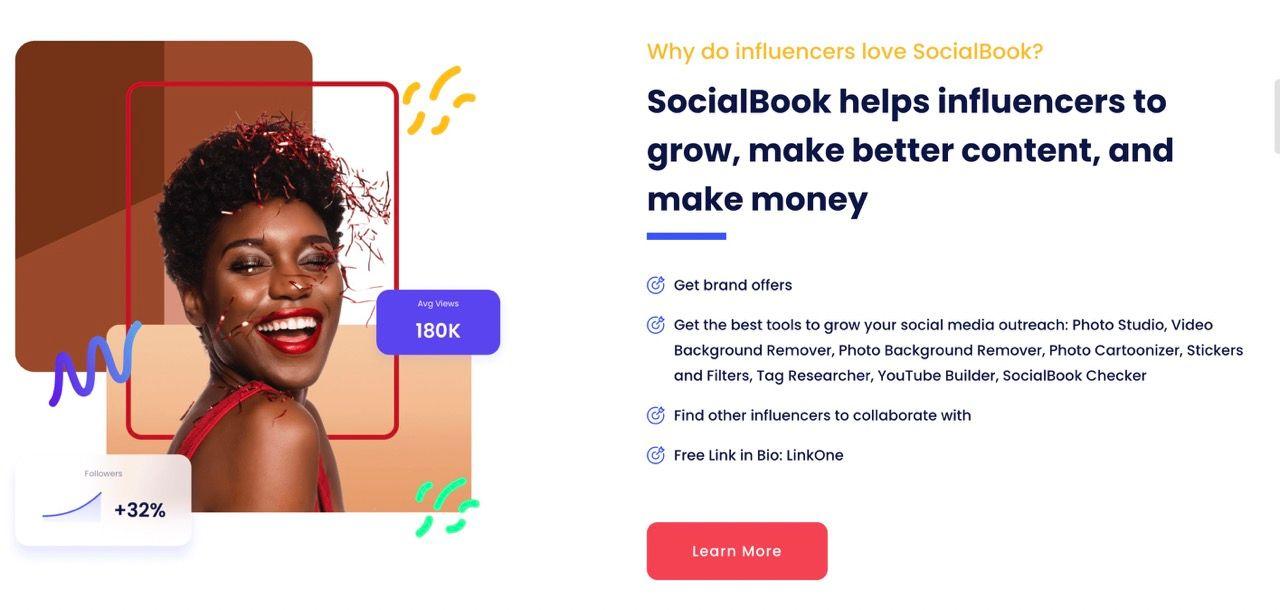
SocialBook is one of the most creator-focused influencer marketing platforms for ecommerce brands.
The platform helps Shopify stores discover creators across TikTok, YouTube, and Instagram while using AI to simplify outreach and campaign management.
One standout feature is its AI-powered influencer search system, which helps brands identify creators based on niche, audience demographics, engagement quality, and performance potential.
For smaller ecommerce teams, this can dramatically reduce the time spent researching influencers manually.
Key features include:
- AI influencer discovery
- Creator contact database
- Audience analytics
- Fake follower detection
- Campaign management
- Shopify-friendly workflows
- Outreach automation
Why Shopify brands like it:
- Easier creator sourcing
- Strong TikTok creator coverage
- Helpful for micro-influencer campaigns
- Good balance between automation and usability
Best for:
- DTC brands
- Shopify stores scaling influencer campaigns
- Agencies managing multiple ecommerce clients
2. GRIN
Best for: Large ecommerce brands managing creator relationships at scale
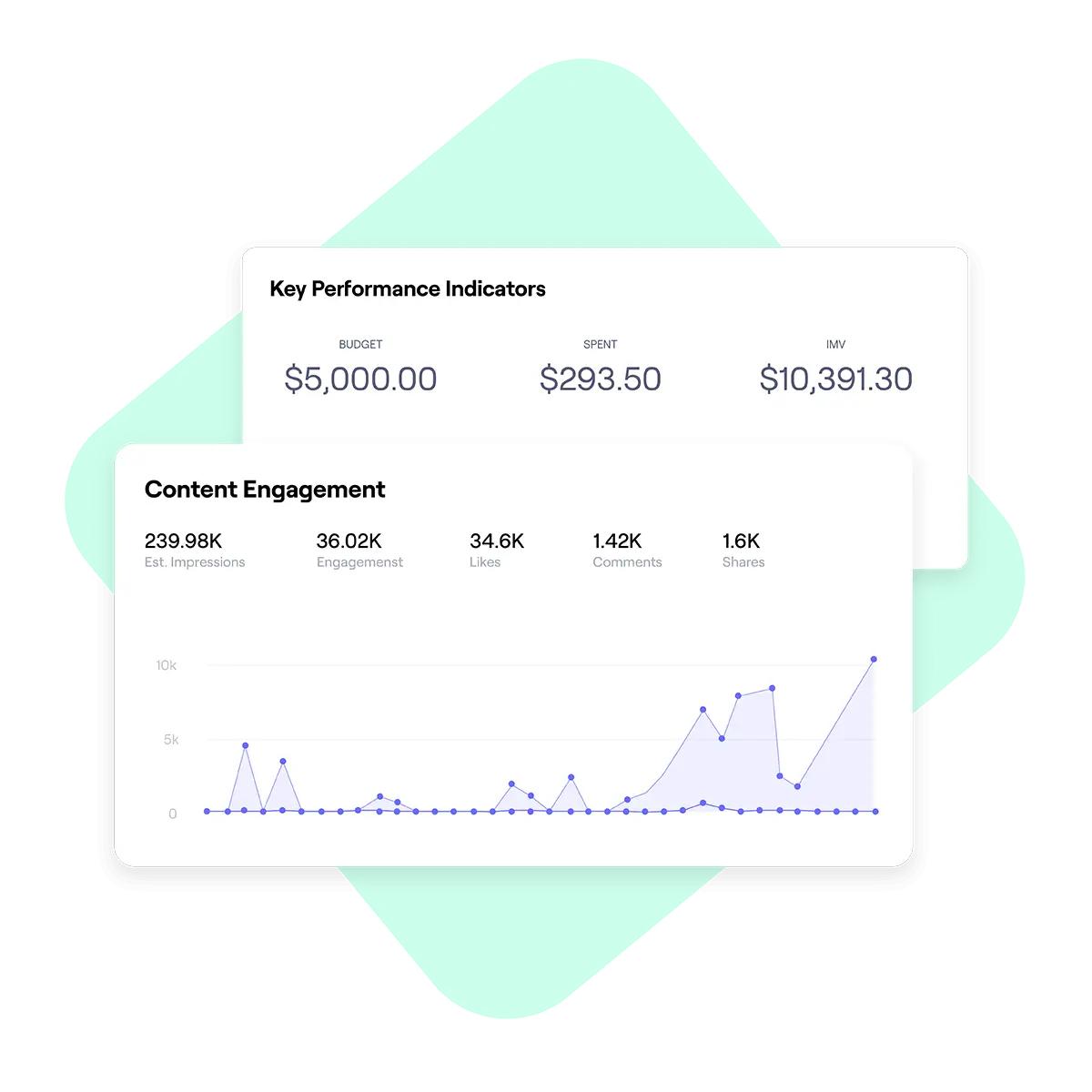
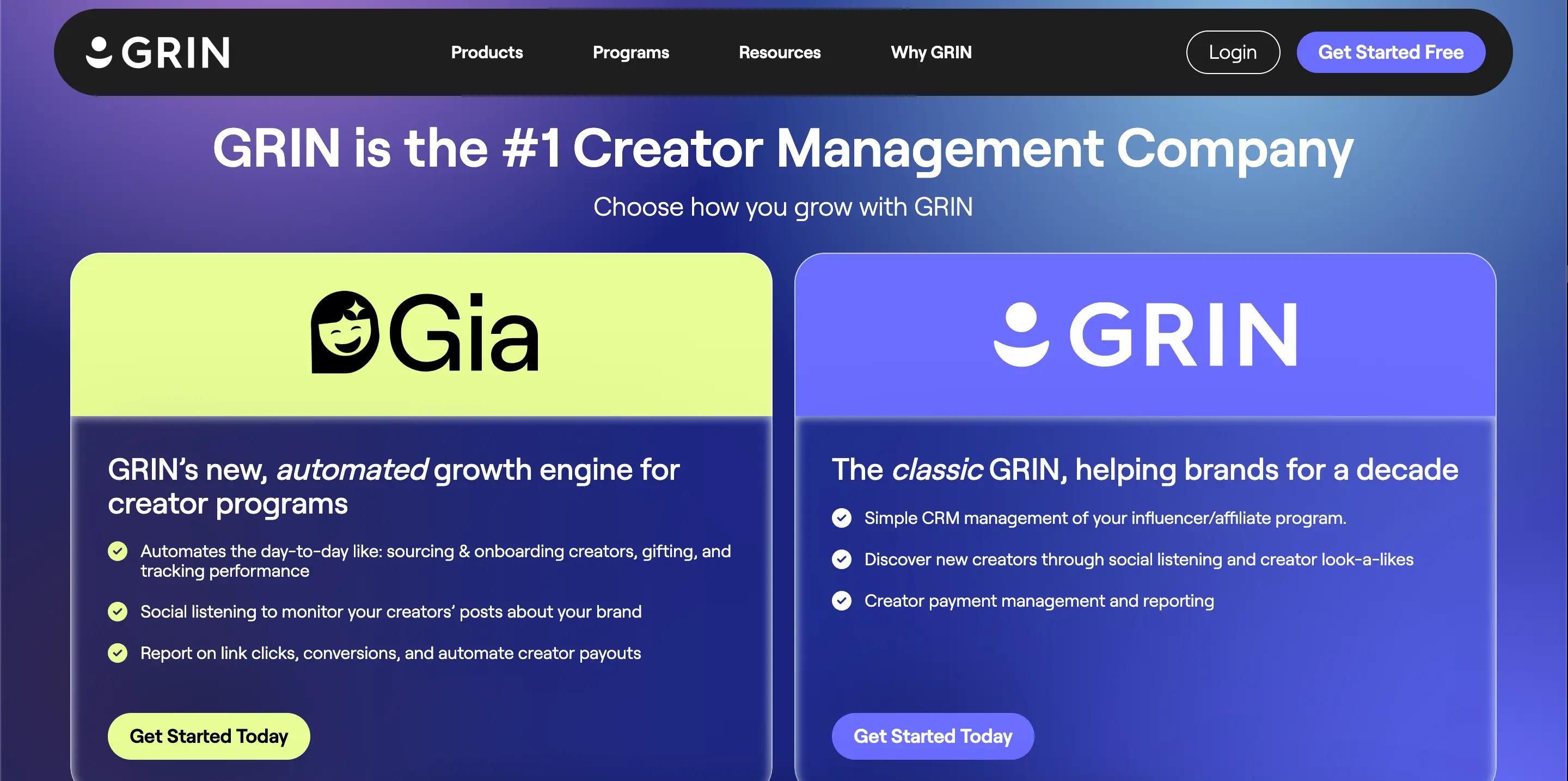
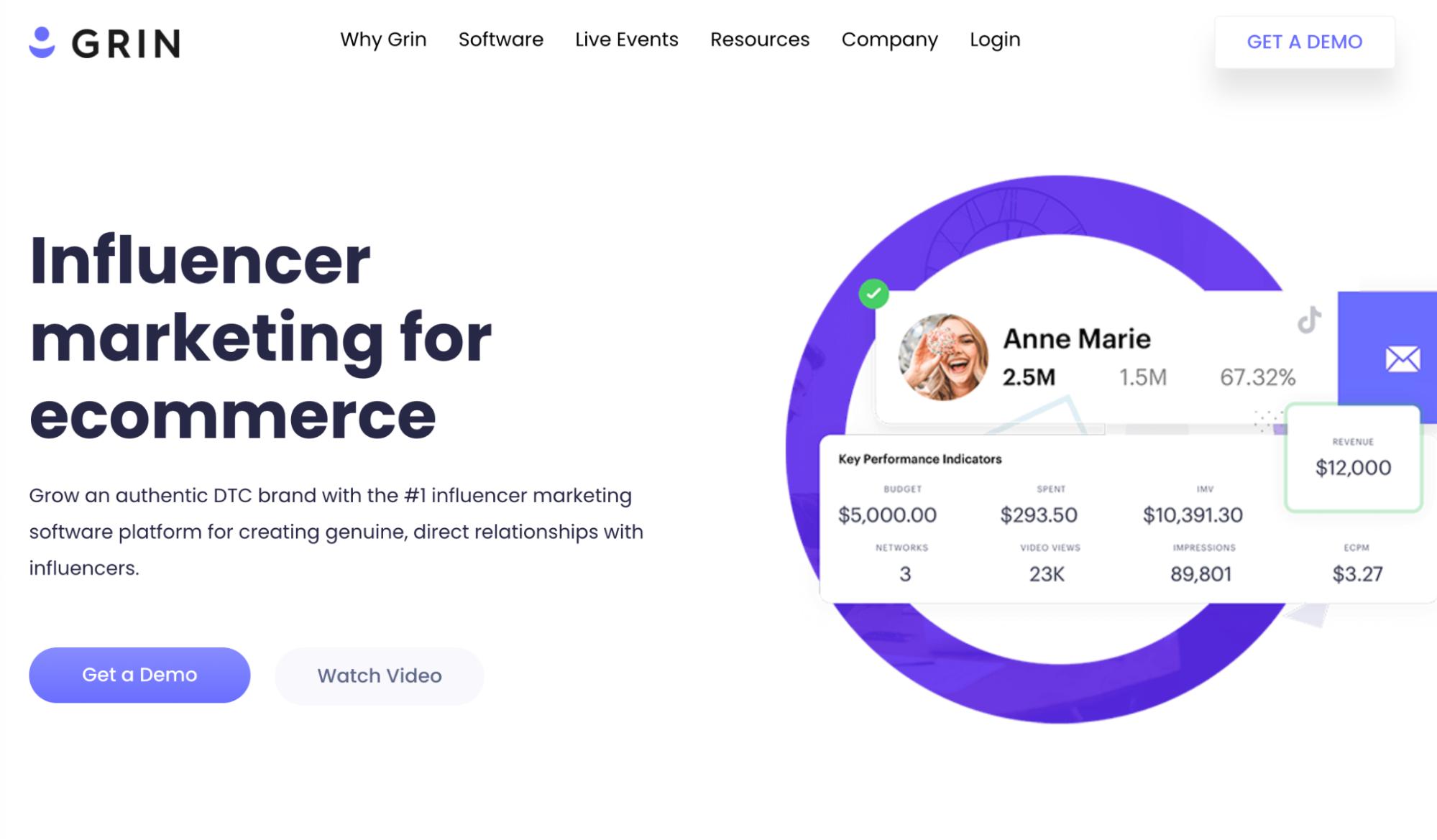
GRIN is widely known as an enterprise-level influencer CRM platform.
Instead of focusing only on creator discovery, GRIN emphasizes long-term creator relationship management.
This makes it particularly useful for established Shopify brands running ongoing ambassador programs or managing hundreds of creators simultaneously.
Its ecommerce integrations are especially strong, allowing brands to connect influencer performance directly with revenue attribution.
Key features:
- Influencer CRM
- Affiliate management
- Product seeding
- Shopify integration
- Email workflows
- Revenue attribution
- Campaign reporting
Best for:
- Mid-size to enterprise ecommerce brands
- Large creator programs
- Long-term influencer partnerships
Potential downside:
GRIN can feel expensive and complex for smaller Shopify stores just starting out.
3. Upfluence
Best for: Ecommerce brands focused on influencer analytics
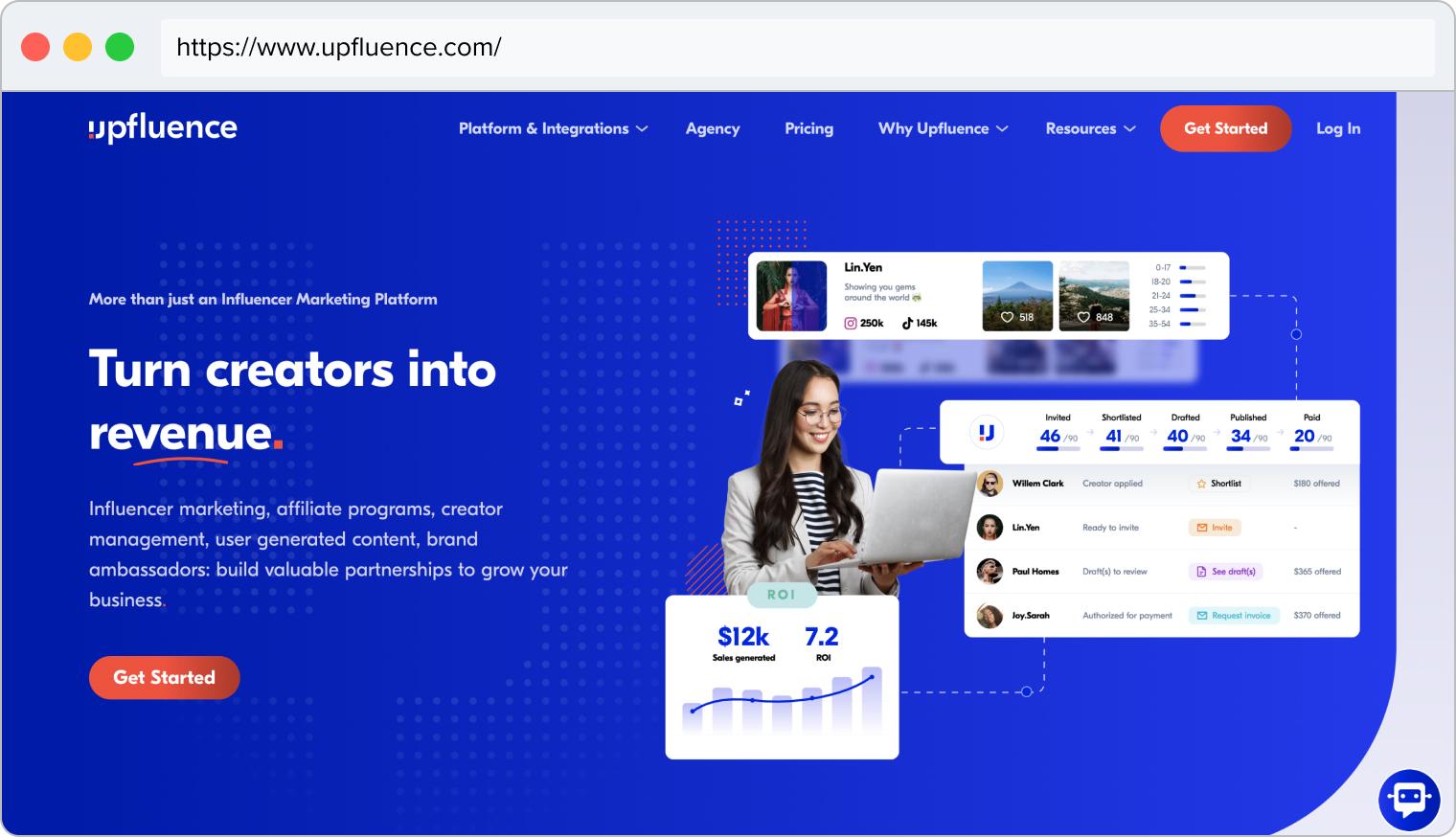
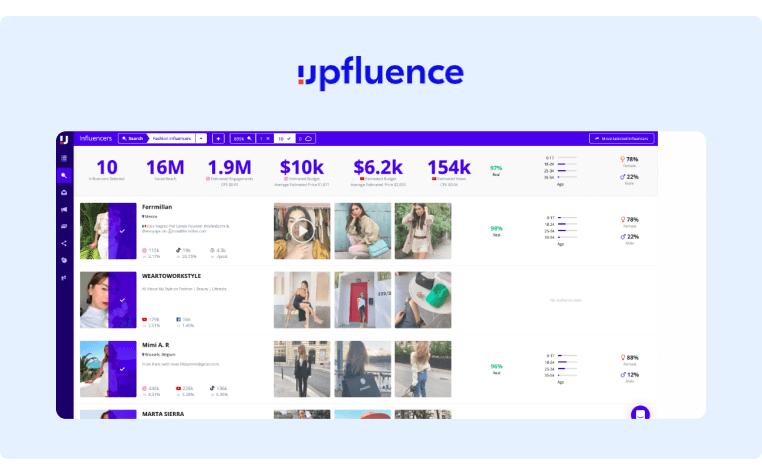
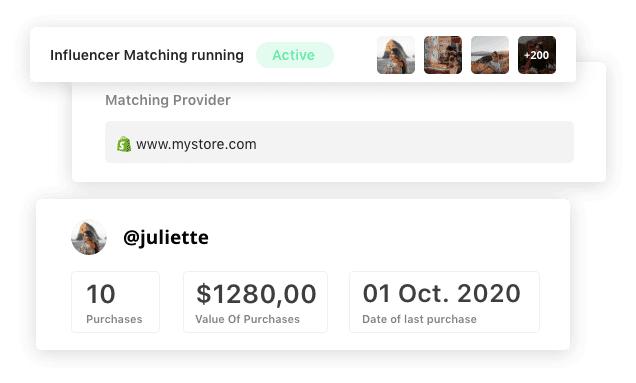
Upfluence combines influencer discovery with deep analytics capabilities.
The platform helps Shopify brands analyze creator audiences, engagement quality, and campaign performance before investing in partnerships.
One major advantage is its influencer filtering system, which allows brands to search creators using highly specific audience criteria.
This is particularly useful for niche ecommerce categories.
Key features:
- Advanced influencer filtering
- Audience demographics
- Ecommerce integrations
- Campaign tracking
- Affiliate tools
- Influencer payments
Best for:
- Data-driven ecommerce brands
- Teams prioritizing audience quality
- Shopify stores optimizing ROI
4. Modash
Best for: Shopify brands focused on TikTok and micro influencers
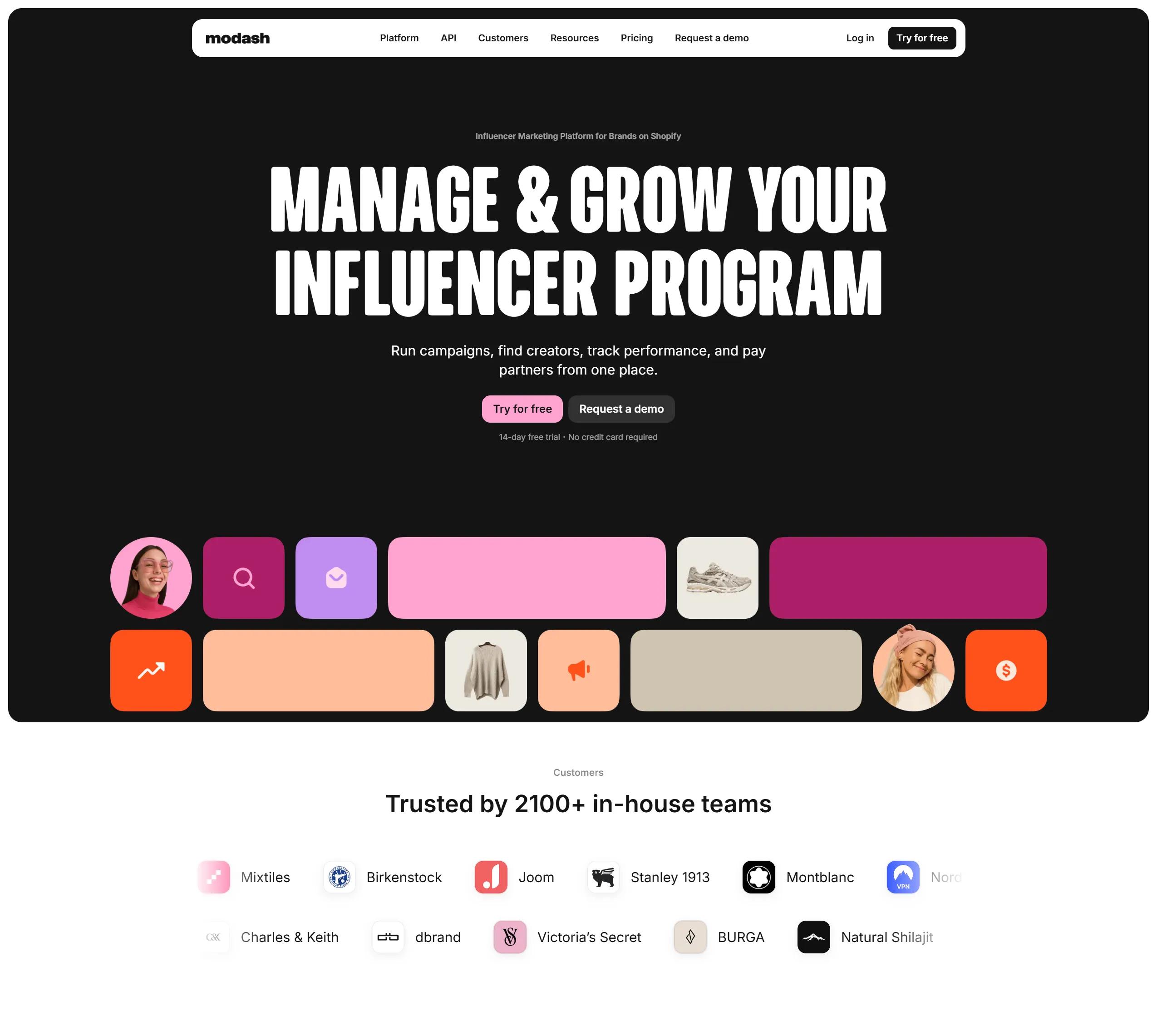
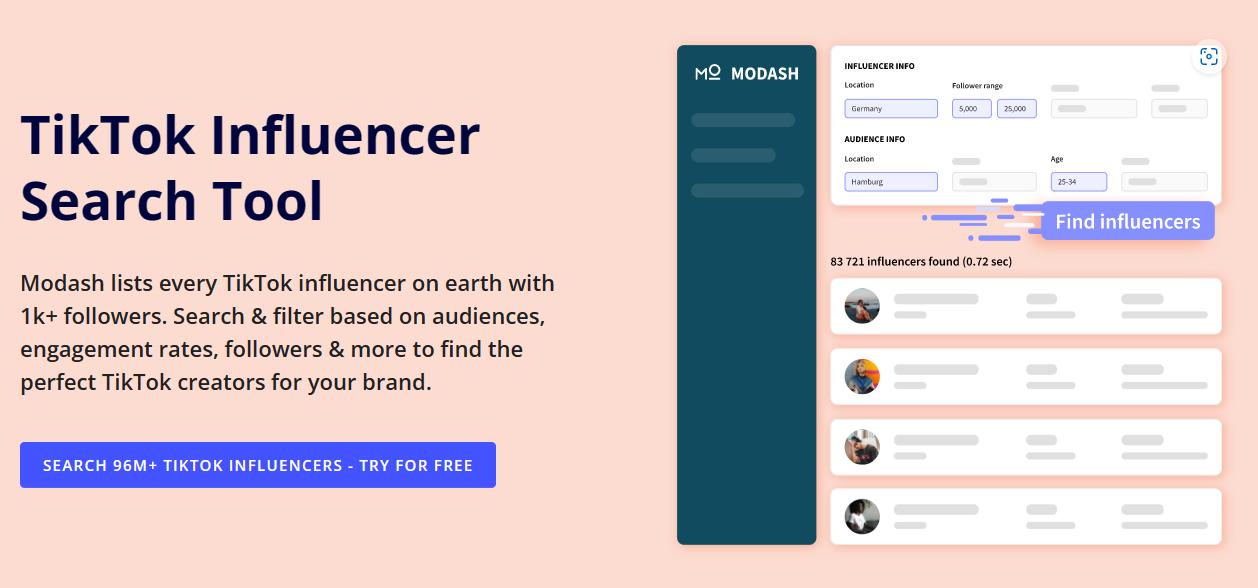
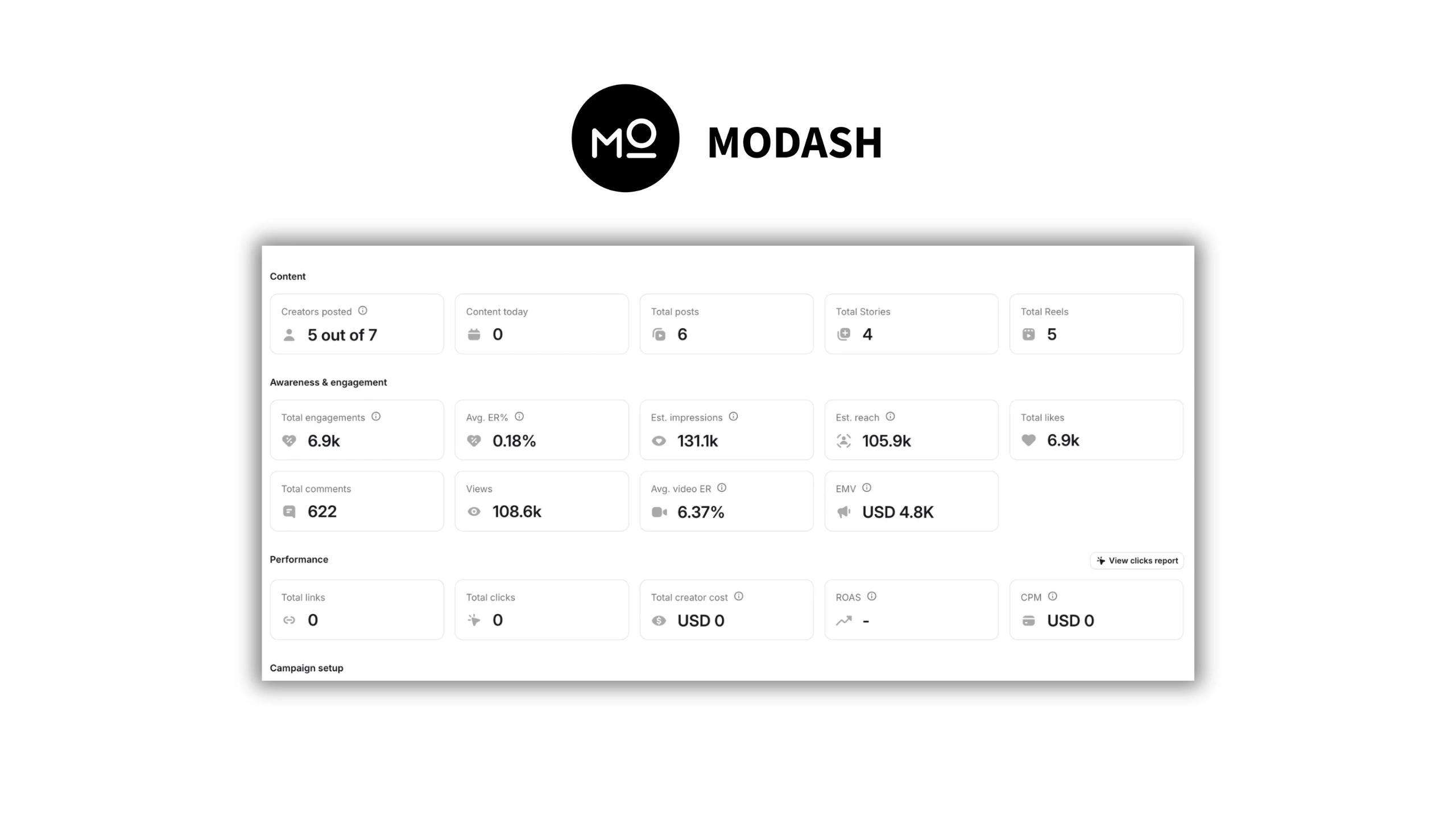
Modash has become increasingly popular among ecommerce brands looking for influencer discovery simplicity.
The platform is especially strong in TikTok creator search and micro-influencer campaigns.
Compared to larger enterprise tools, Modash feels lighter and easier to use, making it attractive for lean Shopify teams.
Key features:
- TikTok influencer discovery
- Audience analysis
- Influencer lookalikes
- Campaign tracking
- Shopify workflows
- Creator monitoring
Best for:
- Small to mid-size Shopify brands
- TikTok-heavy campaigns
- Micro-influencer marketing
5. CreatorIQ
Best for: Enterprise-level influencer marketing operations

CreatorIQ is designed for large global brands running sophisticated influencer programs.
The platform offers advanced workflows, integrations, and large-scale campaign management capabilities.
While powerful, it’s generally more suitable for enterprise organizations than smaller Shopify startups.
Key features:
- Enterprise influencer workflows
- Large creator databases
- Multi-team collaboration
- Campaign analytics
- Brand safety tools
- API integrations
Best for:
- Enterprise ecommerce brands
- Global campaigns
- Large marketing teams
How to Choose the Right Influencer Platform for Your Shopify Brand
Not every platform fits every ecommerce business.
The best choice depends on:
- your team size
- campaign volume
- budget
- preferred creator platforms
- automation needs
Here’s a simple breakdown:
| Brand Type | Recommended Platform |
|---|---|
| Small Shopify store | Modash |
| Fast-growing DTC brand | SocialBook |
| Data-heavy ecommerce team | Upfluence |
| Enterprise creator programs | GRIN |
| Global enterprise brands | CreatorIQ |
What Features Matter Most for Shopify Brands?
Before choosing an influencer platform, Shopify brands should prioritize a few critical features.
Shopify Integration
The ability to connect creator campaigns directly with ecommerce sales is essential.
Without attribution, it becomes difficult to measure ROI accurately.
TikTok Creator Coverage
TikTok continues to dominate ecommerce discovery.
Platforms with strong TikTok databases often provide better creator sourcing opportunities.
Fake Follower Detection
Influencer fraud remains a major issue.
Good platforms help brands identify suspicious engagement patterns before wasting marketing budgets.
Outreach Automation
Managing creator communication manually doesn’t scale well.
Automated outreach workflows save significant time for ecommerce teams.
Affiliate & Discount Tracking
Many Shopify brands rely on creator discount codes and affiliate commissions.
Integrated tracking simplifies reporting and performance analysis.
Final Thoughts
Influencer marketing is no longer optional for Shopify brands.
As ecommerce competition grows, creators are becoming one of the most effective customer acquisition channels available.
But scaling influencer marketing manually is extremely difficult.
The right platform can help brands:
- discover better creators
- automate workflows
- improve campaign ROI
- track ecommerce sales more accurately
- build long-term creator partnerships
For fast-growing Shopify brands, investing in influencer marketing software is increasingly becoming a competitive advantage rather than just a marketing tool.
Whether you’re launching your first creator campaign or managing hundreds of influencers globally, choosing the right platform can dramatically improve both efficiency and revenue growth.
