U.S. Q4 Marketing Calendar: From Halloween to Black Friday and Christmas
Strong q4 marketing is about much more than Black Friday. For brands selling in the U.S., the fourth quarter is one long consumer journey that runs from Halloween to New Year. Shoppers' motivations shift every few weeks, so your content, offers and channels should shift with them. This guide gives you a month-by-month plan, a preparation checklist and answers to the most common questions.
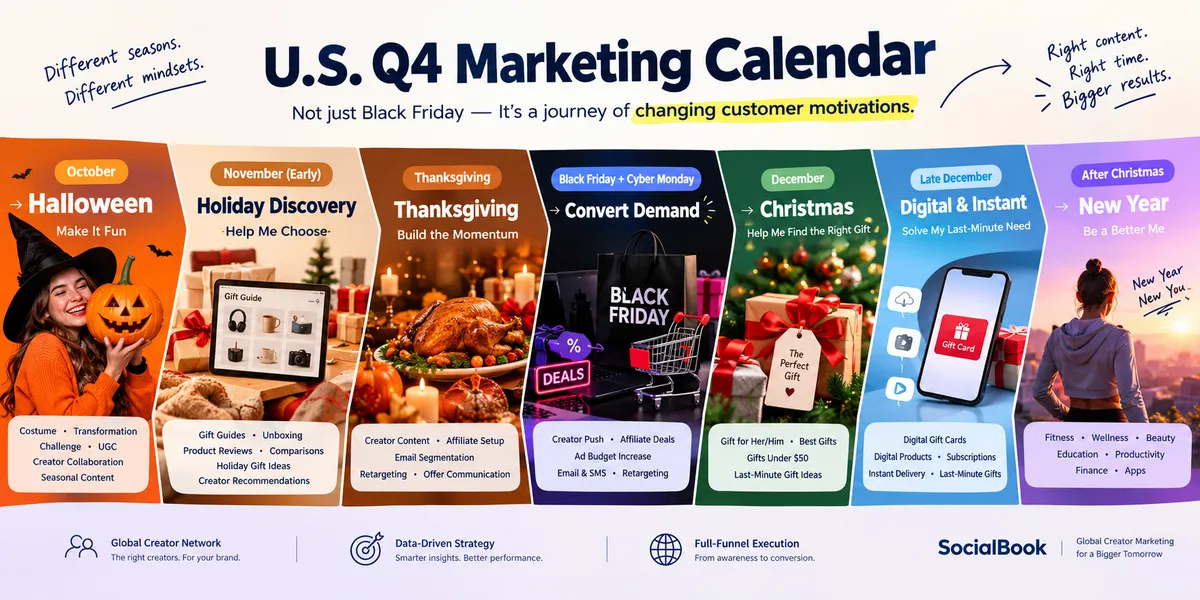
Halloween sells fun. Holiday discovery helps people choose. Black Friday sells deals. Christmas sells gifts. New Year sells a fresh start. The product may stay the same. However, the reason to buy it changes.
Why Q4 Marketing Deserves Its Own Plan
Q4 is the last big push toward your yearly revenue goals. It also builds momentum for January. Consumers shop more, compare more and expect more from brands. As a result, a slow site, a late campaign or a mistimed email costs more now than at any other point in the year.
Competition rises too. Many brands bid for the same attention, so ad costs and inbox crowding tend to climb as the holidays approach. Because of this, your fourth quarter marketing plan should be finished before the quarter starts. For context on the scale of U.S. online retail, see the U.S. Census Bureau's quarterly e-commerce data.
Your Q4 Marketing Calendar at a Glance
Think of the quarter as a series of phases. Each one answers a different question in the shopper's head.
- October (Halloween): "Can I have fun with this?"
- Early November (discovery): "Help me choose."
- Thanksgiving week: "Is this worth buying?"
- Black Friday and Cyber Monday: "Where is the best deal?"
- December: "What should I buy this person?"
- After Christmas: "What do I want to change about myself?"
Q3 Prep: Get Ready Before the Quarter Starts
Get Your Website Ready for Holiday Traffic
A slow site wastes every dollar you spend on promotion. It frustrates shoppers and can hurt both conversions and search visibility. Therefore, run speed tests with free tools such as PageSpeed Insights, GTmetrix or Pingdom before traffic grows.
Then walk through the paths a customer might take. Test search, product pages, cart, checkout, discount codes and mobile layouts. Also confirm that your hosting can handle a traffic spike and that tracking tags fire correctly. In short, remove every hurdle you can find.
Clean Up and Segment Your Email Lists
Start with a re-engagement campaign in Q3. This is an email or ad sequence aimed at people who once opened, clicked, bought or visited but have gone quiet. Subscribers who stay silent can be suppressed, which protects your sender reputation when volume rises.
Next, segment the remaining list so each message feels relevant. Useful segments include:
- Engagement level: high, medium, low and unengaged
- Past purchase behavior and order value
- Loyalty program membership
- Subscriber location and shipping cutoffs
- Demographics and stated interests
Review Last Year's Results
Q4 is a poor time to test wild new ideas. Instead, use last year's data. Ask which creative worked, which audiences engaged, which promotions drove the most revenue and which campaigns deserve a repeat. Repeat what worked. Drop what did not. If you want to experiment, do it in small tests with a capped budget.
October: Halloween Marketing
Halloween is one of the most social-friendly moments in Q4. It suits fashion, beauty, food and beverage, home, gaming and entertainment especially well. Rather than leading with discounts, build content people want to join: transformations, costumes, challenges, user-generated content (UGC), creator collaborations and seasonal posts.
A useful question is: can consumers use our product to create something they want to post? For Halloween, participation can be worth more than another promo code. It also fills your content library cheaply before the expensive weeks begin.
Early November: Switch to Holiday Gift Discovery
When Halloween ends, change the content quickly. Shoppers start researching gifts, so help them choose. Strong formats include gift guides, unboxings, product reviews, comparisons and creator recommendations.
Specific topics win here. Examples are Best Gifts for Gamers, Gifts for Mom, Best Tech Gifts and Holiday Gifts Under $50. These formats work across creators, Google, TikTok, YouTube and AI-powered search because they answer real shopping questions.
Use the Holidays to Stock Up on Content
You already know the dates, so a content calendar is easy to build. Mix promotional posts with non-promotional holiday cheer. That mix humanizes your brand. Timing matters as well. Many people travel or take time off, so avoid sending emails at moments when nobody is reading, such as New Year's Eve just before midnight.
Thanksgiving: Get Ready to Convert
Thanksgiving is the bridge to the biggest promotional period. By now, creator content should be ready, affiliates activated, email audiences segmented and retargeting campaigns built. Earlier in the quarter you created awareness and desire. Now you prepare to capture it.
For a deeper launch checklist, read our Black Friday marketing checklist.
Black Friday and Cyber Monday: Sell
By Black Friday, consumers already expect deals. This is not the time to introduce your whole brand story from scratch. Instead, everything should push toward purchase:
- Creators publish their prepared content.
- Affiliates push offers.
- Paid media scales.
- Email and SMS accelerate.
- Retargeting follows high-intent shoppers.
The objective is simple: convert the demand you have already built.
December: Move From Deals to Gifts
Cyber Monday ends, but holiday shopping does not. The question in the shopper's head changes from "Where can I get the best deal?" to "What should I buy this person?" Content should follow with themes such as Gifts for Her, Gifts for Him, Gifts for Gamers, Gifts for Travelers, Gifts Under $50 and Last-Minute Christmas Gifts.
The product may be identical. The story around the product needs to change.
Late December: Watch the Shipping Deadline
As Christmas nears, delivery becomes part of your strategy. Publish clear cutoff dates early, and update them on the site, in emails and in ads. If a product can no longer arrive on time, shift attention to digital gift cards, subscriptions, digital products, instant-delivery offers and last-minute gifts. Good seasonal marketing responds to the shopper's current problem, not to a calendar written three months earlier.
After Christmas: Start Selling the New Year
December 25 is not the end of the opportunity. Consumer psychology shifts again. Before Christmas, people ask, "What should I buy for someone else?" Afterward, they ask, "What do I want to change about myself?"
That opens the door to a New Year, New Me message. Fitness, wellness, beauty, education, productivity and many consumer apps can position around goals, habits and fresh starts. Gift card redemptions and year-end promotions also keep revenue moving.
What Is the Best Q4 Marketing Strategy?
The best approach is to avoid treating each holiday as a disconnected campaign. Think of Q4 as one changing consumer journey:
Holiday discovery → Help me choose
Black Friday → Give me a reason to buy now
Christmas → Help me find the right gift
New Year → Help me become better
Brands that understand these transitions keep the same product relevant for several buying moments. In addition, they spend less on rework because every asset has a clear job.
Where Creators Fit Into Your Q4 Plan
Creator selection, negotiation, product shipping, production and approvals all take time. Therefore, outreach should begin well before each sales window. Plan Halloween creators in late summer and Black Friday creators by early fall.
Tools matter here. Our guide to influencer marketing software with cross-platform campaign analytics explains how to compare results across channels. Likewise, creator collaboration management covers briefs, approvals and payments. Remember to follow the disclosure rules in the Federal Trade Commission's endorsement guidance.
How to Build Your Q4 Marketing Plan in 6 Steps
Organization is a basic skill, yet it pays back many times over. Q4 moves faster than any other quarter, so create everything beforehand. Follow these steps.
- Set goals and budget. Define revenue, margin and new-customer targets, then split the budget across phases from Halloween to New Year.
- Audit last year. Review which creative, audiences, channels and promotions produced the best return, and note what to repeat or cut.
- Fix your site and lists. Run speed tests, check checkout paths, run a re-engagement campaign and segment email subscribers by behavior.
- Map the calendar. Assign a theme, offer, channel and owner to each phase, including shipping deadlines and post-Christmas content.
- Produce assets early. Write emails, build ads, brief creators and schedule posts before the quarter begins, using automation wherever possible.
- Track and adjust weekly. Watch conversion rate, return on ad spend, email revenue and inventory, then shift budget toward what performs.
Common Q4 Marketing Mistakes to Avoid
- Starting too late. Creator and ad approvals slow down as everyone rushes.
- Running discounts all quarter. Constant deals train shoppers to wait.
- Ignoring inventory. Promoting a sold-out product wastes spend.
- Sending the same email to everyone. Segmentation is cheap and effective.
- Forgetting quality. Volume alone rarely wins; see quantity or quality when creating content.
U.S. Q4 Marketing FAQ
What are the biggest U.S. Q4 marketing dates?
Major periods include Halloween, Thanksgiving, Black Friday, Cyber Monday, Christmas, year-end promotions and New Year. Each needs its own message.
Is Black Friday the most important Q4 marketing opportunity?
It is a major conversion period. Even so, brands can build demand before it and keep selling through Christmas and New Year.
When should Q4 marketing planning start?
Start in Q3 at the latest. That gives you time to fix your site, clean your email lists, brief creators and produce assets before the quarter begins.
When should influencer marketing start for Q4?
Begin before the relevant sales window. Creator selection, negotiation, product shipping, content production and approvals all require time.
What creator content works for Christmas marketing?
Gift guides, reviews, unboxings, "Best Gifts" lists, gifts by audience and price-point content all support holiday discovery.
What is a re-engagement campaign?
It is an email or ad campaign aimed at people who previously opened, clicked, bought, visited your site or engaged with an ad. Running one before Q4 marketing begins cleans your list and wakes up lapsed customers.
How should marketing change throughout Q4?
Content and offers should follow changing consumer intent. Think entertainment around Halloween, deals around Black Friday, gifting around Christmas and self-improvement around New Year.
Conclusion: Win the Whole Quarter, Not Just One Weekend
Successful q4 marketing comes down to three ideas. Prepare early by fixing your site, cleaning your lists and reviewing last year's data. Follow the shopper's changing intent from Halloween fun to Black Friday deals, Christmas gifts and New Year goals. Finally, produce your assets ahead of time so you can adjust weekly instead of scrambling. At SocialBook, we help global brands identify, reach and activate creators across major cultural and shopping moments through creator intelligence and global campaign execution. Start your plan now, and the busiest quarter becomes your most profitable one.