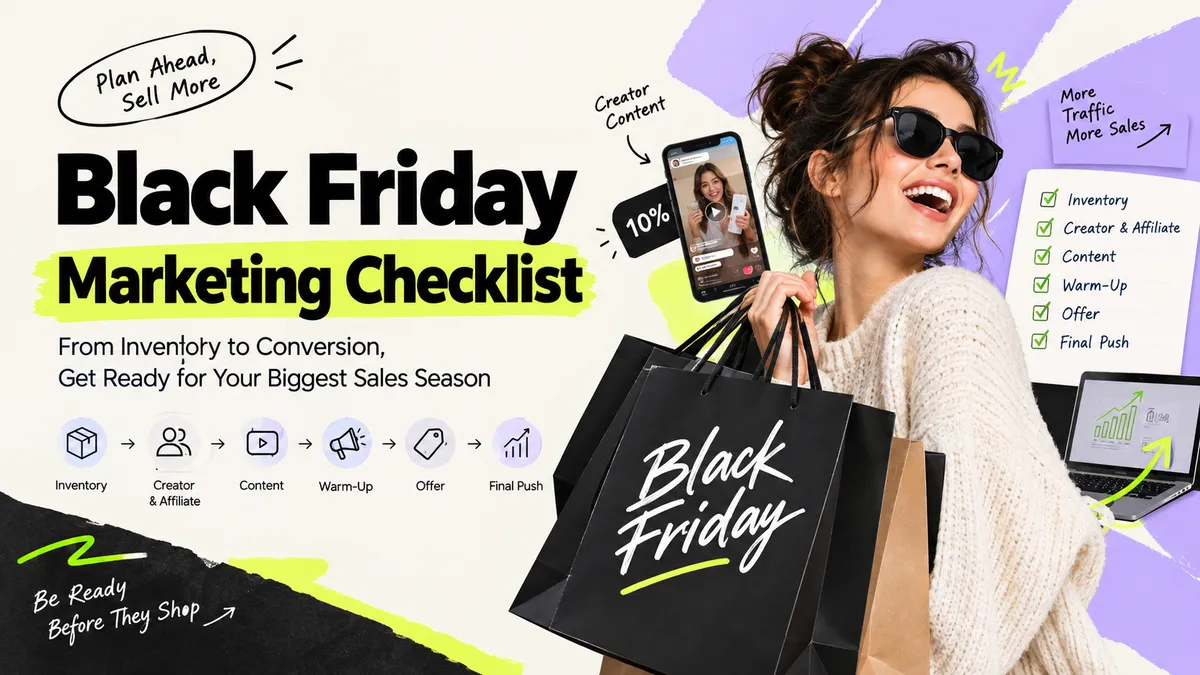
Black Friday Marketing Checklist: 6 Things Brands Should Prepare Before the Rush
Black Friday marketing should not start on Black Friday.
For ecommerce and consumer brands selling in the U.S., the biggest shopping days should be when months of product planning, creator content, audience building and offer strategy finally turn into sales.
A practical Black Friday marketing plan should cover six areas:
Inventory, Creators & Affiliates, Content, Audience Warm-Up, Offers, and Conversion.
Here is the checklist.
1.Inventory: Decide What You Actually Want to Sell
Start with the product, not the promotion.
Which SKUs will be your hero products?
How much inventory do you have?
How deep can you discount while protecting margin?
Which products can become bundles?
Your creator, affiliate and paid-media strategy should all be built around products you can actually scale.
Traffic isn't particularly useful when your hero SKU sells out too early.
2.Creators and Affiliates: Lock Them In Early
Black Friday is one of the busiest periods of the year for creators.
Waiting until your promotion is live to start outreach creates predictable problems:
Creators are booked.
Rates increase.
There isn't enough time to ship products, produce content and get approvals.
And don't automatically spend the entire budget on the largest influencers.
A network of relevant micro and mid-tier creators can put the product in front of multiple niche audiences and buying situations.
For Black Friday, creator fit can matter more than creator size.
3.Content: Make It Before You Need It
A Black Friday content strategy needs more than:
“20% OFF. BUY NOW.”
Build a content library around:
Unboxings, reviews, comparisons, tutorials, UGC, product demonstrations and Gift Guides.
Gift content becomes particularly useful during the holiday season because consumers aren't only shopping for themselves.
They're searching for answers to questions like:
“What's a good gift for my husband?”
“Best gifts for gamers?”
“Holiday gifts under $100?”
Being part of that discovery process can happen well before the final purchase.
4.Warm Up the Audience Before the Sale
Don't make Black Friday the first time someone sees your product.
Creator content, social media, email and retargeting can introduce the product before the biggest discounts arrive.
The goal is simple:
Create the desire first. Introduce the deal second.
Then, when the offer goes live, the consumer isn't deciding whether they like an unfamiliar product.
They're deciding whether now is finally the right time to buy something they already want.
5.Build a Better Offer Than “20% Off Everything”
Discount percentage is only one lever.
Brands can also test:
Early Access, Bundles, VIP Offers, Limited-Time Deals, Gifts With Purchase and Creator-Specific Codes.
Different offers can serve different audiences.
Loyal customers may respond to Early Access.
Creator audiences may respond to exclusive codes.
Bundles can increase perceived value without relying entirely on deeper discounts.
The question behind every offer should be:
Why should this customer buy now?
6.When Black Friday Arrives, Focus on Conversion
Once the peak shopping window arrives, the work changes.
Creators publish.
Affiliates push offers.
Paid media scales.
Email frequency increases.
Retargeting follows shoppers who showed intent but haven't purchased.
Inventory is monitored constantly.
This is the moment to capture demand—not begin creating it.
When Should Brands Start Black Friday Marketing?
There isn't one universal number.
A consumer electronics product requiring reviews and consideration has a different buying journey from an inexpensive beauty or fashion item.
Shipping products to creators also takes time. So do negotiations, content production and approvals.
A more useful framework is:
Product & Inventory → Creators & Affiliates → Content → Audience Warm-Up → Offers → Conversion
Think of Black Friday as a marketing cycle rather than a single date.
When other brands are beginning their marketing on Black Friday, your customers should already be waiting to check out.
Black Friday Marketing FAQ
When should brands start preparing for Black Friday?
Preparation should begin early enough to finalize inventory, secure creators and affiliates, produce content and warm up potential customers before peak promotional activity begins.
Should brands use influencers for Black Friday?
Yes. Creators can support product discovery and education before Black Friday, then help drive conversion through offers, affiliate links and creator codes during the promotional period.
Are micro-influencers useful for Black Friday campaigns?
They can be particularly useful when brands need relevant audiences, authentic product demonstrations and broader coverage across multiple consumer niches.
What content works for Black Friday marketing?
Reviews, comparisons, unboxings, tutorials, UGC, Gift Guides and real-life product demonstrations can all support holiday purchase decisions.
What should a Black Friday marketing checklist include?
At minimum: inventory planning, creator and affiliate partnerships, content production, audience warm-up, promotional offers and conversion-focused execution.
At SocialBook, we help brands find, reach and activate creators at scale through creator intelligence, influencer outreach and global campaign execution.
