Influencer campaign analytics is the practice of measuring how creator partnerships perform, from reach and engagement to clicks, coupon redemptions, and actual sales. Without it, brands are simply guessing at which creators deserve another dollar of budget. In this guide, you will learn what to track, how to calculate real ROI, and which mistakes quietly ruin otherwise promising campaigns.
Direct answer: Influencer campaign analytics means tracking engagement, clicks, conversions, and ROI from creator content so you can see exactly which partnerships drove revenue. The strongest programs connect every post to a unique tracking link or coupon code and review results weekly, not just at the end of a campaign.
What Is Influencer Campaign Analytics?
Influencer campaign analytics is the measurement layer that sits underneath every creator partnership. Specifically, it covers the data gathered before, during, and after a post goes live: who saw it, who engaged with it, who clicked through, and who actually bought something. In contrast to simply counting likes, true campaign analytics ties creator activity to business outcomes.
Above all, this discipline exists to answer one question leadership always asks: which creators drove revenue? Therefore, a mature analytics process treats every campaign as a data source, not just a content calendar item. As a result, brands can stop guessing and start reinvesting budget in the partnerships that actually work.

Reviewing influencer campaign analytics regularly helps teams catch underperforming creators early.
Why Influencer Marketing Analytics Matter for Modern Brands
Influencer marketing works, but only when teams can prove it. For example, a widely cited industry benchmark report found that businesses historically earned several dollars in revenue for every dollar spent on creator partnerships, yet that return depended almost entirely on choosing the right creators and tracking results correctly. Without analytics, that same spend becomes a gamble.
In addition, regulatory expectations add another layer of accountability. The FTC's disclosure guidance requires clear sponsorship labeling, and brands that track performance closely are also better positioned to confirm creators are complying. Consequently, analytics protects both the budget and the brand's reputation at the same time.
Furthermore, teams that treat influencer campaign management as a connected workflow, rather than a series of one-off emails and spreadsheets, consistently report faster decision-making and fewer wasted creator fees.
Key Metrics Every Influencer Campaign Analytics Dashboard Should Track
Not every number deserves equal attention. Specifically, the metrics below separate creators who genuinely move the business forward from those who merely look impressive on paper.
| Metric | What It Reveals |
|---|---|
| Engagement rate | How actively an audience interacts with a post relative to its size |
| Audience authenticity | Whether followers are real people likely to buy, not bots |
| Click-through rate | How many viewers took action on a link or code |
| Conversion rate | How many clicks turned into actual purchases |
| Cost per acquisition | How much it costs to generate one customer through this creator |
| Return on investment (ROI) | Overall profitability of the partnership |
Similarly, understanding return on investment as a concept helps teams frame creator performance in the same language used for every other marketing channel. For a deeper breakdown of each metric, see this guide on how to analyze influencer metrics.
How to Analyze Creator Campaign Performance in 5 Steps
Turning raw posting data into a usable report does not have to be complicated. Below is the process most analytics-driven brands follow from the moment a campaign launches to the final report.
- Set clear campaign goals before launch. Decide whether the priority is awareness, traffic, or direct sales, since the metrics worth watching shift depending on that answer.
- Verify creator audiences before spending. Run an authenticity and fake follower check on every shortlisted creator so reported reach reflects real people.
- Standardize tracking links and codes. Give each creator a unique coupon code or affiliate link so every sale is traceable back to them.
- Monitor performance throughout the campaign. Review engagement and early conversion data weekly rather than waiting until the campaign ends.
- Compile a post-campaign ROI report. Combine total spend against attributed revenue to decide which creators earn a renewed contract.
Teams that automate steps three and four tend to save the most time. For instance, this walkthrough on automating influencer content tracking shows how to remove most of the manual spreadsheet work from the process.

Weekly check-ins keep teams ahead of underperforming creator content before budgets run out.
Common Mistakes That Skew Influencer Performance Data
Even well-intentioned teams make avoidable errors when reviewing creator results. In particular, these four mistakes show up again and again.
Relying on follower count alone. A large audience means little if most of it is inactive or fake. However, pairing follower count with an authenticity score gives a far more honest picture.
Skipping fake follower checks. Bought engagement inflates every early metric, which then makes a poor-fit creator look like a top performer until the sales numbers come in flat.
Using inconsistent tracking links. When some creators get unique codes and others share a generic link, attribution becomes impossible to trust. Consequently, reporting ends up full of guesswork rather than data.
Waiting until the campaign ends to look at results. By the time a final report is pulled together, the budget is already spent and underperforming creators cannot be adjusted mid-flight.
Choosing Tools for Influencer Campaign Analytics
The right software turns scattered data into one clear view. When evaluating options, look for a platform that combines creator discovery, audience verification, outreach, and revenue tracking in a single dashboard rather than four disconnected tools.
SocialBook, for example, searches more than 300 million creator profiles across TikTok, Instagram, YouTube, and Twitch, flags fake followers before a brand spends a dollar, and syncs coupon codes and affiliate links directly with Shopify so every sale maps back to a specific creator. This kind of connected approach is especially useful for brands still relying on spreadsheets. If your team is also sourcing creators, this guide to finding micro-influencers pairs well with an analytics-first strategy.
Likewise, once campaigns scale past a handful of creators, a dedicated system for managing contracts, shipping, and approvals becomes essential. This overview of how an influencer CRM keeps creator relationships organized explains what that looks like in practice.
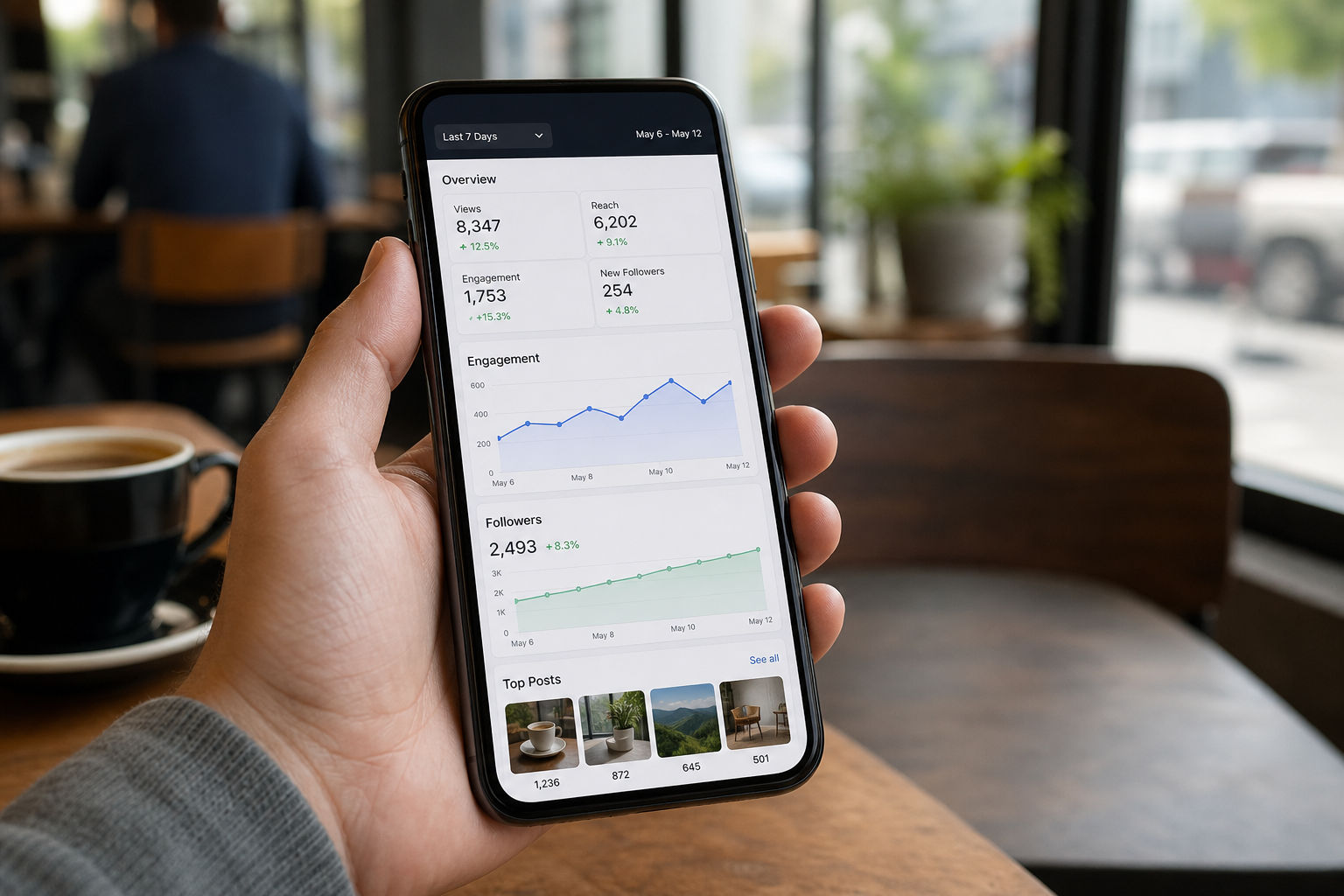
Mobile dashboards make it easy to check influencer campaign analytics between meetings.
Frequently Asked Questions About Influencer Campaign Analytics
What is influencer campaign analytics?
Influencer campaign analytics is the process of collecting and analyzing data from creator partnerships, including reach, engagement, clicks, and sales, to measure performance and guide future spending decisions.
Why is influencer campaign analytics important for brands?
It shows which creators actually drive revenue instead of just views. As a result, brands can justify budget, renew the right partnerships, and avoid wasting money on audiences that never convert.
What metrics matter most in creator campaign tracking?
Engagement rate, audience authenticity, click-through rate, conversion rate, cost per acquisition, and overall ROI matter most because they tie creator activity directly to business results.
How do I calculate influencer marketing ROI?
Subtract total campaign cost from revenue generated through trackable links or coupon codes, then divide that figure by the cost and multiply by 100 to get a percentage return.
How much does influencer campaign analytics software typically cost?
Pricing varies widely, from free basic tracking tools to platform subscriptions that scale with the number of creators and campaigns managed. Most mid-size brands budget a recurring software fee separate from creator fees.
How long does it take to see measurable campaign results?
Engagement signals typically appear within 48 to 72 hours of a post going live. However, sales and affiliate data usually need two to four weeks to show a reliable trend.
What is the difference between vanity metrics and performance metrics?
Vanity metrics like follower count or likes show popularity, while performance metrics like conversion rate and cost per acquisition show actual business impact, which matters far more for budget decisions.
Can small brands use influencer campaign analytics effectively?
Yes, small brands often benefit the most. In particular, analytics prevents wasted spend on the wrong creators and helps them find micro-influencers whose smaller, highly engaged audiences convert well.
What common mistakes hurt influencer campaign tracking?
The most common mistakes are relying on follower count alone, skipping fake follower checks, using inconsistent tracking links across creators, and not reviewing data until a campaign has already ended.
How does audience authenticity affect campaign analytics?
An inflated or fake audience skews every downstream metric, since clicks and engagement from bot accounts never convert to sales. Therefore, real performance data becomes impossible to trust without a verification step.
Should analytics differ across TikTok, Instagram, and YouTube?
The core metrics stay similar, but benchmarks differ by platform. For example, YouTube favors longer watch time and search discovery, while TikTok and Instagram reward fast engagement and shares.
What is the best way to track influencer-driven sales?
Unique coupon codes and affiliate links synced to an ecommerce platform like Shopify give the cleanest attribution, since every sale is automatically tied back to the specific creator who generated it.
How often should brands review campaign analytics?
Weekly check-ins during an active campaign catch underperforming creators early. In addition, a full post-campaign report should happen within a week of the campaign ending to inform the next round of outreach.
Final Thoughts on Influencer Campaign Analytics
Influencer campaign analytics is what separates a guessing game from a repeatable growth channel. By setting clear goals, verifying audiences, standardizing tracking, and reviewing performance throughout a campaign rather than only at the end, brands can finally answer the question leadership keeps asking: which creators drove revenue? Above all, the brands that treat analytics as a core part of every campaign, not an afterthought, are the ones that keep turning creator partnerships into measurable sales.

