What if a plush toy could sell for $40–50, and rare editions could fetch over $1,000 on the resale market?
That's exactly what Jellycat has achieved.
If you've spent any time on TikTok or Instagram recently, you've probably come across videos from Jellycat stores. Instead of simply handing customers a stuffed toy, employees perform elaborate "pretend play" routines—carefully piping invisible cream onto a plush cake, adding realistic sound effects, wrapping it beautifully, and presenting it as if it were a freshly baked dessert.
To some people, it's adorable.
To others, it's completely absurd.
Either way, people keep watching, filming, and sharing.
Without relying on licensed characters or constant discounts, Jellycat has transformed itself into one of the world's most desirable plush toy brands, generating over RMB 1.3 billion (around $180 million) in annual revenue and approximately RMB 800 million ($110 million) in profit.
So what makes Jellycat so successful?
The answer lies in three powerful business strategies.
1. Selling Personalities, Not Plush Toys
Jellycat doesn't just design stuffed animals—it creates characters.
Almost every plush toy comes with its own identity.
Some are described as shy, others as adventurous or cheerful. Many even have names, such as Brooke the Otter or Jack the Cat. New product launches are often accompanied by short animations and storytelling that further develop each character's personality.
This transforms a simple plush toy into something much more personal.
Customers aren't just buying a rabbit or a turtle—they're bringing home a companion.
That emotional connection has become increasingly valuable in today's fast-paced world, where loneliness, anxiety, and emotional burnout are common.
Many Jellycat fans take their plush toys on vacations, photograph them at cafés, celebrate birthdays with them, and even create miniature bedrooms for them.
For many adults, Jellycat isn't a toy.
It's comfort.
And that's exactly what they're paying for.
2. Endless Product Innovation with Instant Brand Recognition
One of Jellycat's greatest strengths is its product strategy.
The company has built an enormous product catalog.
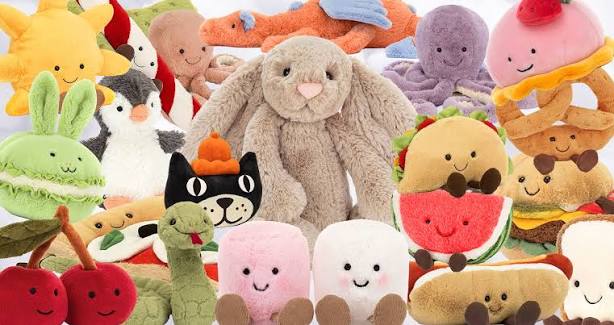
Beyond traditional animals, Jellycat creates plush versions of fruits, vegetables, cakes, coffee cups, flowers, sports equipment, and countless everyday objects.
The brand reportedly introduces more than 200 new designs every year, ensuring customers always have something new to discover.
Yet despite offering hundreds of different products, everything still looks unmistakably like Jellycat.
Every plush follows a recognizable design language:
- Small bead eyes
- Tiny dangling legs
- A simple smiling face
These visual elements have become the brand's signature.
Customers often recognize a Jellycat product instantly—even without seeing the logo.
Equally important was the company's strategic repositioning.
Originally, Jellycat focused primarily on baby comfort toys.
Around 2014, the brand deliberately expanded beyond children's products and repositioned itself as a premium gift brand for all ages.
That single shift dramatically broadened its customer base while significantly increasing its pricing power.
Today, Jellycat is often viewed as the luxury brand of the plush toy industry.
3. Turning Social Media into a Growth Engine
Jellycat's explosive popularity wouldn't have happened without social media.
Rather than relying heavily on traditional advertising, the brand built momentum through influencer marketing and user-generated content.
TikTok creators regularly showcase their Jellycat collections, shopping trips, and store experiences.
One notable example is creator Emilie, who has nearly 3 million TikTok followers.
A simple video featuring her Jellycat collection—with almost no dialogue or promotional messaging—generated more than 2.3 million views.
The partnership evolved into a long-term collaboration, with Jellycat-related content consistently performing well.
As awareness grew, thousands of customers began creating content on their own.
Store visits became social media events.
Product unboxings turned into viral videos.
Collectors proudly shared their growing collections.
Meanwhile, Jellycat continued producing engaging content across its own social channels, including character animations, seasonal campaigns, and behind-the-scenes store experiences.
The result is a powerful flywheel:
Brand content inspires customers.
Customers create viral content.
That content attracts even more customers.
Today, there are more than 150,000 Jellycat-related videos on TikTok and over 770,000 posts on Instagram, giving the brand a level of organic visibility that many companies can only dream of.
Jellycat Isn't Selling Toys—It's Selling Emotional Value
While many brands compete on price, features, or functionality, Jellycat competes on emotion.
Consumers aren't simply purchasing plush toys.
They're buying comfort after a stressful day.
They're buying companionship.
They're buying nostalgia.
They're buying a moment of happiness.
This emotional positioning has allowed Jellycat to command premium prices while building one of the most loyal fan communities in the toy industry.
Its real competitors aren't other plush toy companies—they're any brands competing for consumers' emotional attention.
Final Thoughts
Jellycat's success reflects a much larger shift in consumer behavior.
As emotional well-being becomes increasingly important, consumers are willing to spend more on products that make them feel happier, calmer, or more connected.
For brands across industries—from home décor and beauty to food, pets, and lifestyle products—the lesson is clear:
People rarely pay premium prices for products alone. They pay for how those products make them feel.
Jellycat understood that better than almost anyone—and built a global business around it.