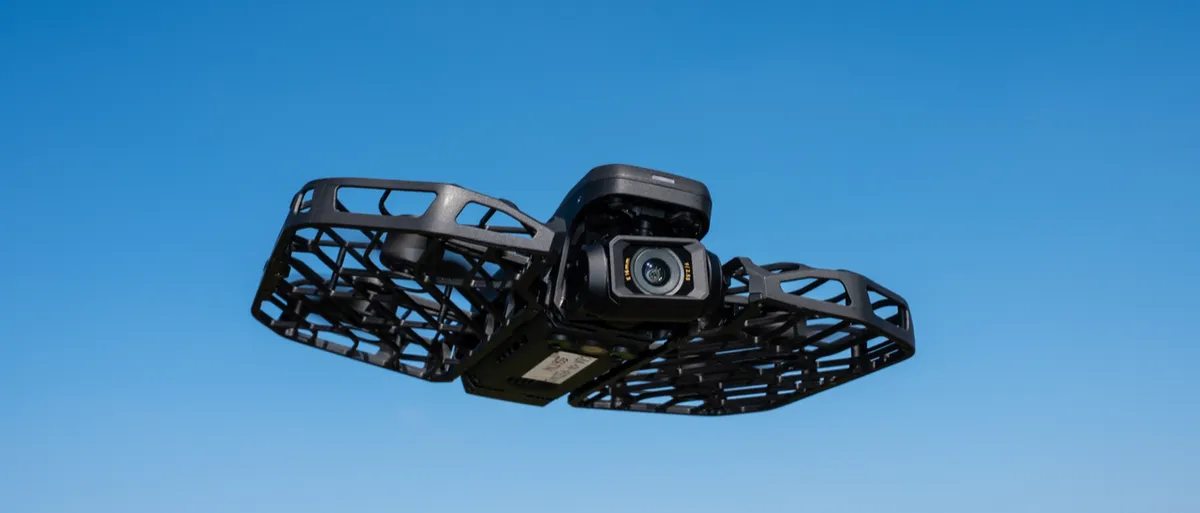
How HOVERAir Found a New Path in a Market Dominated by DJI
For more than a decade, DJI has defined what a consumer drone should be.
Since the launch of the Phantom 1 in 2013, DJI has become almost synonymous with drones. It dominates both technology and consumer mindshare, making it difficult for new brands to compete head-on.
Yet here's an interesting question:
How many people in your social circle actually own a drone?
And among those who do, how many use it regularly?
The answer is probably fewer than you expect.
For most consumers, drones still come with significant barriers. They require learning complicated controls, understanding aviation rules, registering devices, and navigating local regulations. For casual users who simply want to capture memories, that's often enough to stop the purchase altogether.
HOVERAir looked at the same market and asked a different question.
Instead of building a better drone, what if they built a better camera?
That simple shift has allowed HOVERAir to carve out its own category in one of consumer electronics' most competitive industries.
Redefining Who Drones Are Actually For
The biggest mistake many drone brands make is assuming their customers are drone enthusiasts.
HOVERAir never did.
From the beginning, the company focused on three much larger audiences:
- Everyday consumers who want to capture memories
- Content creators producing social media videos
- Outdoor enthusiasts, including runners, cyclists, hikers, skiers, and travelers
This customer-first approach completely changed how the product was designed.
Unlike traditional drones that rely on remote controllers and manual flying skills, HOVERAir's X1 series emphasizes fully automated flight.
Users simply unfold the device, press a button, and let it take off.
The drone automatically follows the subject, captures footage, and returns when finished.
There's no need to learn flight controls, camera settings, or complicated menus.
The experience feels much closer to using a flying GoPro than piloting a miniature aircraft.
Instead of selling technology, HOVERAir sells convenience.
Designing Around Regulations Instead of Fighting Them
Another major obstacle to consumer drone adoption isn't technology.
It's regulation.
Many countries require drone registration, pilot certification, or flight approval once a drone exceeds certain weight limits.
HOVERAir turned this challenge into a product advantage.
In Japan, drones weighing over 100 grams require registration and additional compliance before flying.
Rather than asking consumers to deal with that process, HOVERAir developed the X1 Smart, weighing just 99 grams.
That single design decision dramatically lowered the barrier to entry.
The result?
The product became one of Japan's biggest crowdfunding successes, raising more than ¥200 million and setting new records on local crowdfunding platforms.
The company followed the same philosophy globally.
Most HOVERAir models weigh under 250 grams, allowing users in markets like the United States and Europe to avoid many of the more restrictive registration requirements.
Instead of forcing customers to learn regulations, HOVERAir designed products that naturally fit within them.
Competing Through Positioning, Not Price
One of HOVERAir's smartest strategic decisions is that it never tries to beat DJI at DJI's own game.
DJI remains the choice for professional aerial photography, advanced controls, and filmmaking.
HOVERAir doesn't challenge that position.
Instead, it occupies an entirely different space.
Its products are marketed less as drones and more as portable content creation tools.
Consumers aren't paying for maximum flight distance or advanced manual controls.
They're paying for effortless filming.
They're paying for convenience.
They're paying for footage that looks cinematic without requiring another person behind the camera.
This positioning allows HOVERAir to avoid competing purely on specifications or pricing.
Instead, it competes on experience.
Product-Led Content Marketing Instead of Traditional Advertising
Once a product becomes a content creation tool, the marketing strategy naturally changes as well.
Browse HOVERAir's social media channels, and you'll notice something unusual.
The company rarely publishes long technical explanations or feature breakdowns.
Instead, nearly every piece of content focuses on experiences.
Cyclists riding through mountain roads.
Skiers carving down snowy slopes.
Travelers walking along coastlines.
Trail runners crossing forests.
The product almost disappears.
The audience isn't watching because they care about drones.
They're watching because they wonder:
"How was this shot filmed?"
Only after that curiosity appears does HOVERAir enter the conversation.
This is a classic example of letting the product create the marketing.
Why Lifestyle Creators Often Outperform Tech Reviewers
HOVERAir applies the same philosophy to influencer marketing.
While professional tech reviewers still play an important role in educating consumers, they aren't always the most effective partners for driving purchases.
Tech reviews often feel like advertisements.
Lifestyle content feels authentic.
Instead of focusing exclusively on large technology creators, HOVERAir collaborates extensively with mid-sized outdoor athletes, fitness creators, travel influencers, and everyday content creators.
These creators naturally integrate the product into real situations where people can immediately imagine themselves using it.
That makes the recommendation far more persuasive.
A Great Example: Kaydi Bolos
One campaign perfectly demonstrates this strategy.
Kaydi Bolos is an ultramarathon runner and trail athlete who regularly documents her training.
Her videos already feature beautiful outdoor environments, making them an ideal fit for HOVERAir.
Rather than creating a product review, Kaydi simply filmed one of her normal training sessions.
Throughout the run, viewers noticed something unusual.
The camera stayed perfectly centered.
The footage remained incredibly stable.
There was no selfie stick.
No second cameraperson.
No obvious filming equipment.
Naturally, viewers began asking how the footage had been captured.
Only then did Kaydi reveal the answer.
Near the end of the video, she visited Costco and introduced the HOVERAir device she had been using.
Instead of interrupting the story with a sales pitch, the product became the solution to a question the audience had already asked themselves.
The results were impressive.
For a creator with roughly 120,000 followers, the video generated:
- More than 700,000 views
- Over 17,000 likes
- Hundreds of comments
Combined with direct purchase links and brand mentions, the campaign delivered both engagement and conversion without feeling like a traditional advertisement.
Building a Content Flywheel
HOVERAir's success isn't simply the result of product innovation.
It's the result of aligning product design with modern content consumption.
The company has built a marketing flywheel where every part reinforces the next.
The product makes content easier to create.
Creators naturally produce engaging videos.
Social platforms amplify compelling content.
More consumers discover the product through authentic recommendations.
Those new users create even more content.
The cycle continues.
Instead of relying solely on paid advertising, HOVERAir built a product that people genuinely enjoy filming with—and filming about.
What Global Brands Can Learn from HOVERAir
The most valuable lesson isn't about drones.
It's about positioning.
Many brands ask:
"How can we advertise our product on social media?"
HOVERAir asks a better question:
"How can we build a product people naturally want to feature in their content?"
That shift changes everything.
In today's creator economy, influencers are no longer just distribution channels.
They're an extension of a brand's content strategy.
Finding the right creators, understanding platform-specific content trends, evaluating long-term partnerships, and measuring campaign performance have become essential parts of international brand growth.
Brands that treat influencer marketing as a strategic system—not a one-time campaign—are the ones most likely to build sustainable competitive advantages.
How SocialBook Helps Brands Scale Influencer Marketing
Building a successful influencer marketing strategy requires more than simply finding creators.
It requires the right data, the right partnerships, and the right technology.
At SocialBook, we help global brands connect with the creators who drive real business results.
Our platform provides access to more than 200 million creators worldwide, covering virtually every niche and market. From leading technology creators like Linus Tech Tips and Unbox Therapy to beauty icons like Jeffree Star, we've helped brands execute successful influencer campaigns across multiple industries.
Beyond creator discovery, our all-in-one influencer marketing platform supports every stage of the collaboration process, including:
- Influencer search and audience filtering
- Outreach and relationship management
- Content performance analysis
- Campaign tracking and ROI measurement
- Fake follower detection and audience quality analysis
- Affiliate and commission management
Whether you're launching a new product or expanding into international markets, influencer marketing is no longer optional—it's one of the most effective ways to build trust at scale.
The brands that win tomorrow won't simply create better products.
They'll create products that inspire people to create content today.
