How BREEO Turned “Campfire Vibes” Into a $100M+ Outdoor Business
When winter temperatures drop below freezing and backyards disappear under snow, most people assume outdoor life goes into hibernation.
Camping slows down. Hiking traffic drops. Lakes freeze over.
On paper, winter should be the dead season for outdoor brands in North America.
But consumer behavior over the last few years tells a completely different story.
According to a report from Grand View Research, the North American fire pit and outdoor heating market surpassed $3 billion in 2024. At the same time, more than 30% of active campers now say they actively pursue “four-season camping,” with winter campfires ranking as one of the most emotionally rewarding outdoor experiences.
In other words: people aren’t abandoning the outdoors in winter anymore.
They’re redesigning it around fire.
And among all the brands competing in this growing “campfire economy,” one company carved out an especially powerful position: BREEO.
Most consumers probably think of Solo Stove when they hear the phrase “smokeless fire pit.” The brand exploded online thanks to viral TikToks, sleek design, and aggressive digital marketing.
But inside premium outdoor communities, backyard design circles, and outdoor cooking culture, another name carries serious weight.
That name is BREEO.
BREEO Didn’t Build a Fire Pit. It Built a Lifestyle Ritual.
To understand why BREEO works, you first need to understand what kind of customer it’s targeting.
The company was founded in Lancaster County, Pennsylvania — an area famous for Amish craftsmanship and traditional metalworking culture.
That heritage matters because BREEO products feel radically different from most modern outdoor products.
Instead of chasing lightweight materials, flat-pack shipping, and mass affordability, BREEO went in the exact opposite direction.
Its fire pits are made from thick Corten steel — the same weathering steel commonly used in bridges and industrial architecture. Over time, the material develops a rich rust-colored protective layer that gives the product a rugged, almost cinematic look.
The choice of material itself communicates something important:
This is not a disposable backyard accessory.
This is a permanent object.
While many brands optimize for “easy to ship,” BREEO optimizes for emotional durability. The company intentionally appeals to homeowners who value craftsmanship, permanence, and outdoor living as part of their identity.
That’s why BREEO products typically range from $399 to over $1,800, far above the average smokeless fire pit market.
But the higher pricing isn’t a weakness.
It’s a filter.
BREEO isn’t trying to attract casual buyers looking for the cheapest option on Amazon. It’s targeting high-intent consumers who see their backyard as an extension of their lifestyle — people willing to pay premium prices for products that feel timeless.
And then BREEO made an even smarter move.
The Real Innovation Wasn’t Heat — It Was Cooking
Most fire pits solve one problem: warmth.
BREEO expanded the product into an entire social experience.
Its patented Outpost™ grilling system transformed the fire pit from a heating device into a fully functional outdoor cooking station. Suddenly, users weren’t just sitting around the fire.
They were grilling steaks. Cooking vegetables. Roasting marshmallows. Hosting backyard dinners in the middle of winter.
That shift completely changes the psychology of the product.
Instead of selling “warmth,” BREEO started selling:
- family bonding
- outdoor rituals
- masculine craftsmanship
- backyard entertaining
- analog experiences in a digital world
And that emotional repositioning is incredibly powerful in North America, especially among suburban homeowners and middle-aged consumers who increasingly crave offline, tactile experiences.
A regular fire pit keeps you warm.
A BREEO creates memories.
That’s the difference.
BREEO’s Marketing Feels More Like Cinema Than Advertising
One of the smartest things BREEO understands is that modern outdoor marketing is no longer about specifications.
It’s about atmosphere.
If you scroll through the brand’s social media, you’ll notice something interesting: it rarely feels like traditional ecommerce content.
There are no loud sales graphics. No aggressive discounts. No overwhelming feature lists.
Instead, BREEO invests heavily in sensory storytelling.
Its videos focus on:
- slow-motion flames
- crackling wood sounds
- snow-covered backyards glowing orange at night
- sizzling steak ASMR
- close-up cinematic fire textures
The brand essentially weaponizes “campfire aesthetics.”
For urban consumers trapped in fast-paced digital lifestyles, these visuals act almost like therapy. They create a feeling of calm, warmth, control, and nostalgia.
That’s why BREEO content performs so well.
People aren’t just watching a product demo.
They’re mentally projecting themselves into a better version of life.
And once a brand successfully sells aspiration instead of utility, pricing becomes far less important.
Why BREEO Works With Lifestyle Influencers Instead of Hardcore Outdoor Creators
Another underrated part of BREEO’s strategy is influencer selection.
Most outdoor brands instinctively partner with niche camping creators or survival experts.
BREEO does some of that too — but interestingly, many of its strongest collaborations come from lifestyle and family creators instead.
Why?
Because niche outdoor influencers provide credibility.
Lifestyle creators provide scale.
Outdoor creators often attract highly specific audiences with limited reach beyond hardcore enthusiasts. They’re excellent for building trust with consumers already considering a purchase.
But lifestyle creators introduce the brand to entirely new customer segments.
That’s where future growth comes from.
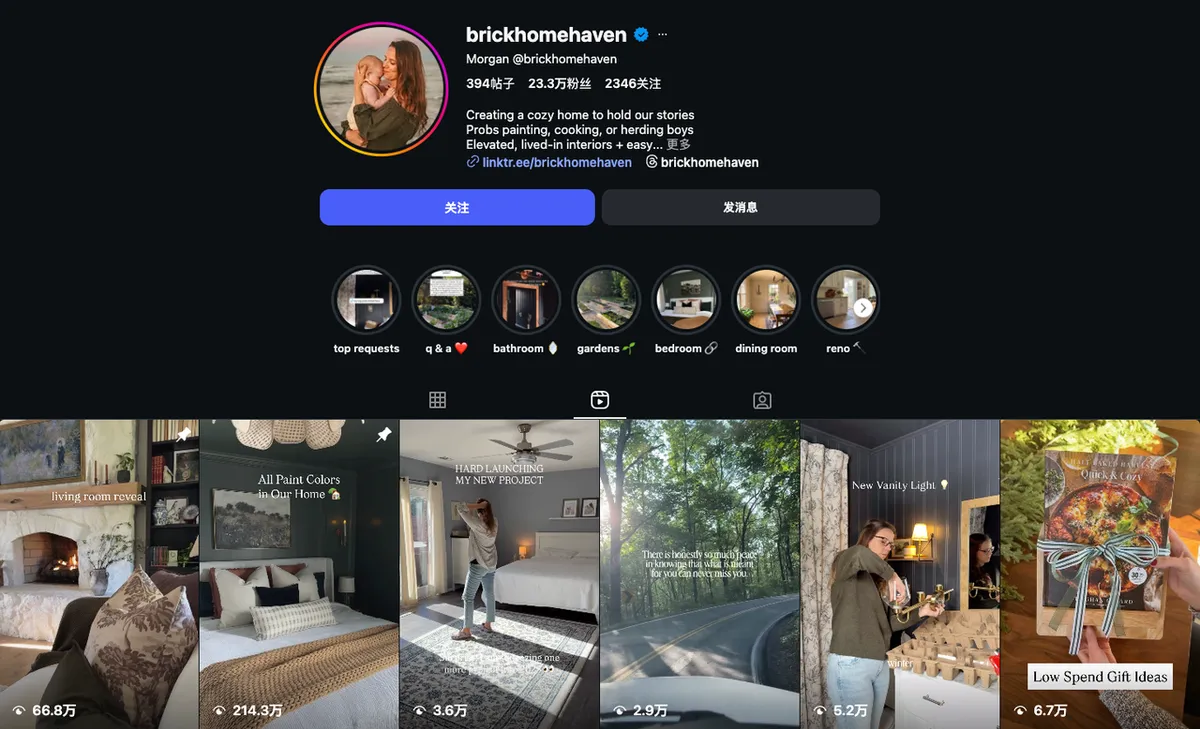
One great example is BREEO’s collaboration with the family-focused creator account @brickhomehaven.
The account centers around family life, home aesthetics, and cozy everyday moments — exactly the kind of emotional environment where BREEO naturally fits.
In one sponsored video, the family uses a BREEO fire pit to roast marshmallows together outdoors.
That sounds simple, but culturally, it’s incredibly effective.
For many Americans, roasting marshmallows is tied directly to childhood nostalgia, warmth, happiness, and togetherness. By integrating the product into that emotional ritual, BREEO subtly transfers those same emotional associations onto the brand itself.
The result?
The video generated strong engagement through a giveaway campaign, authentic storytelling, and highly relatable family-focused content.
More importantly, it didn’t feel like an ad.
It felt like a moment people wanted to recreate in their own lives.
That distinction matters enormously in modern influencer marketing.
The Bigger Lesson for DTC and Cross-Border Brands
BREEO’s rise offers an important lesson for global ecommerce brands — especially Chinese brands trying to move beyond price competition.
For years, many cross-border sellers focused heavily on:
- cheaper pricing
- better specs
- feature comparisons
- manufacturing efficiency
But eventually every category becomes saturated.
And once that happens, features alone stop creating defensibility.
BREEO proves that premium brands win differently.
They don’t just sell products.
They sell upgraded life scenarios.
While competitors were selling “a smokeless metal fire pit,” BREEO was selling:
- father-son bonding time
- winter backyard gatherings
- outdoor cooking mastery
- cozy family rituals
- a slower, more intentional lifestyle
That emotional positioning is what creates real brand equity.
And increasingly, that’s what consumers are willing to pay for.
Why Influencer Discovery Is Still the Hardest Part
Of course, understanding influencer marketing strategy is one thing.
Actually finding the right creators is another.
This is where many brands struggle.
Cold emailing large creators usually gets ignored. Random influencer marketplaces often lead to fake engagement, weak conversions, or audiences that don’t match the product.
The hardest part is identifying creators who simultaneously have:
- audience trust
- the right demographic
- authentic storytelling ability
- strong content quality
- real conversion potential
That’s exactly why platforms like SocialBook exist.
With access to over 200 million global creators, SocialBook helps brands discover, analyze, and collaborate with influencers across nearly every vertical — from tech and beauty to outdoor lifestyle and family content.
The platform also provides a full influencer marketing SaaS workflow, including:
- influencer discovery
- audience analysis
- outreach management
- campaign tracking
- fake follower detection
- performance analytics
- affiliate commission management
As influencer marketing becomes more competitive, the brands that win won’t necessarily be the ones spending the most money.
They’ll be the ones telling the most emotionally resonant stories — through the right creators, in the right environments, to the right audiences.
