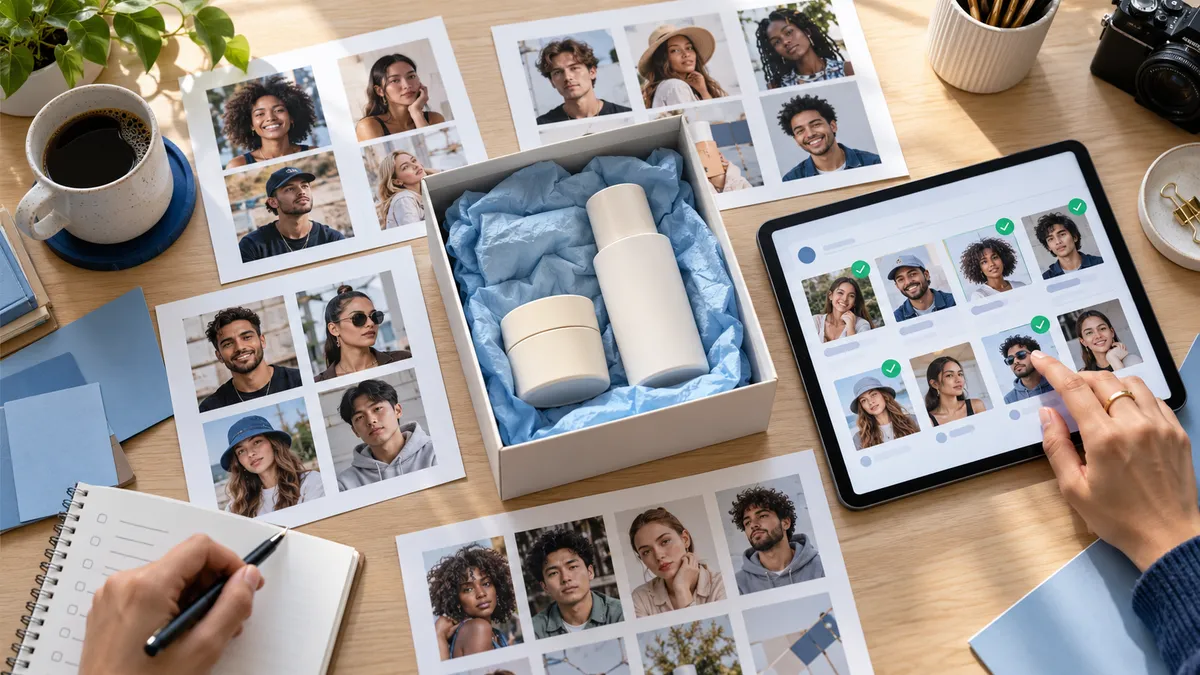
What Is the Fastest Way to Build a List of 100 Relevant Creators for a Product Launch?
The fastest way to build a list of 100 relevant creators for a product launch is to search a verified creator database with niche, location, and engagement filters instead of scrolling TikTok, Instagram, and YouTube by hand. This research step, usually called creator discovery, is how modern marketing teams go from zero to a working shortlist in hours rather than weeks. In practice, building a list of 100 relevant creators for a product launch means combining filtered search, audience and fake-follower verification, and bulk personalized outreach into one workflow, so strong fits surface fast and weak matches get filtered out before any product ships or any budget moves. Platforms such as SocialBook were built specifically to compress this early research phase into something a single marketer can finish before lunch.
Key Takeaways
- Searching a verified database beats manual scrolling for both speed and accuracy when sourcing creators.
- Filters for niche, location, engagement, and audience demographics narrow 300 million+ profiles down to 100 real fits fast.
- Checking for fake followers before outreach protects launch budget; bot-driven fraud has cost advertisers over a billion dollars industry-wide.
- Personalized bulk outreach with automated follow-up gets more replies than one-by-one emails.
- Searching by competitor surfaces creators who already promote similar products, which shortens vetting time considerably.
What Is the Fastest Way to Build a List of 100 Relevant Creators for a Product Launch?
In short, the fastest route runs through a creator search platform with built-in filters and verification, not manual browsing of individual profiles. A single search session, narrowed by niche and audience fit, typically replaces days of scattered research.
For example, a database covering 300 million creator profiles across TikTok, Instagram, YouTube, and Twitch lets a marketer apply more than 20 filters at once, including follower range, engagement rate, location, and audience age. As a result, a pool that would take weeks to find by hand shrinks to a shortlist of 100 names within an afternoon. In addition, an AI-powered creator recommendation engine can surface high-fit names automatically based on a product category, which further cuts manual guesswork. Therefore, speed here does not come from working faster at the same manual task; it comes from removing the manual task altogether.
Why Manual Creator Research Slows Down a Launch Timeline
Manual creator sourcing feels thorough, but it rarely is. A marketer scrolling hashtags on TikTok and Instagram sees only what the algorithm surfaces that day, not the creators who actually match a product's audience. Consequently, the resulting list skews toward whoever is already trending rather than whoever is genuinely relevant.
Spreadsheets compound the problem. A follower count copied today is often stale within days, since accounts gain and lose audience constantly. Similarly, engagement numbers pulled by hand rarely account for bought likes or bot comments, which is a known issue documented in research on influencer marketing practices. In particular, teams that skip authenticity checks tend to discover the problem only after payment, which is the most expensive time to find out a creator's audience was never real. Above all, one-by-one outreach emails make the slowdown worse: low reply rates mean a marketer has to contact three or four times as many creators as they actually need, just to land 100 real conversations.
How to Build a 100-Creator Shortlist in 5 Steps
The process below follows the same sequence used by brand and agency teams running launch campaigns at scale.
- Define your audience and campaign niche. Write down the product category, the ideal buyer persona, and the platform where that buyer spends the most time, since this framing guides every filter used afterward.
- Search a verified creator database with niche, location, and follower-range filters. Narrowing a pool of 300 million profiles this way typically produces a workable list of a few hundred candidates within minutes.
- Vet each shortlisted creator for audience authenticity and engagement quality. Review demographic breakdowns, fake-follower percentages, and prior brand-partnership performance before any name moves to the outreach list.
- Check which creators already promote similar products from competitors. This step, often called competitor creator search, surfaces proven partners who understand the category and convert for comparable brands already.
- Export, tag, and prioritize the final shortlist inside a CRM or campaign dashboard. Keeping notes, pricing, and contact status in one place prevents duplicate outreach and speeds up follow-up later.
You can browse top influencers by platform and niche as a starting point before narrowing further with custom filters.
Tools That Speed Up Creator Discovery
Software built specifically for creator sourcing removes most of the manual steps described above. SocialBook, for instance, pairs its 300 million+ profile database with a free Chrome extension that pulls audience analytics directly while browsing YouTube or Instagram, so a marketer never has to leave the platform to check a number.
In addition, a built-in pricing estimator shows roughly what a creator should charge for a post, which shortens negotiation later. For brands running commission-based campaigns, trackable deeplinks and an affiliate link program make it possible to see which of the 100 creators on a list actually drove a sale, instead of guessing after the fact.
What Makes a Creator Relevant for a Product Launch?
A relevant creator is one whose real audience overlaps with the launch's target buyer, not simply one with a large follower count. Relevance depends on niche fit, audience location and age, and a history of content that resembles the product being launched.
For example, a skincare brand launching in the United States gets little value from a creator with a large but mostly international audience, even if that creator's follower count looks impressive on paper. Consequently, audience demographic data matters more than raw reach when building a shortlist of 100 names.
"A shortlist built on verified audience data beats a spreadsheet built on guesswork — every single time a campaign launches on a deadline."
Comparing Methods for Finding 100 Creators
The table below compares the three most common approaches teams use when sourcing creators for a launch.
| Method | Time to Reach 100 Creators | Fake-Follower Risk | Scalability |
|---|---|---|---|
| Manual platform scrolling | 2–3 weeks | High | Low |
| Spreadsheet + cold email | 1–2 weeks | Medium | Low |
| Verified creator database (e.g., SocialBook) | A few hours | Low, verified pre-outreach | High |
Avoiding Fake Followers and Wasted Launch Budget
Fake followers are not a rare edge case; they are a persistent cost across the influencer economy. Research referenced by industry trade groups, including analysis discussed by the Federal Trade Commission, has repeatedly flagged inflated engagement as a disclosure and trust problem for brands. Separately, a widely cited "Bot Baseline" study estimated that bot-driven influencer fraud could cost advertisers more than one billion dollars annually, underscoring why authenticity checks matter before, not after, a contract is signed.
A fake-follower checker that screens TikTok and Instagram accounts before outreach catches most of this risk early. As a result, budget gets spent on creators who can actually move product, rather than accounts that only look influential on a dashboard.
Common Mistakes That Slow Down Creator List Building
Several recurring mistakes stretch a one-afternoon task into a multi-week project. Recognizing them early prevents the most common delays.
- Prioritizing follower count over audience location and engagement quality.
- Skipping authenticity checks and discovering fake followers only after payment.
- Sending one-off outreach emails with no automated follow-up sequence.
- Tracking creators across scattered spreadsheets instead of one CRM.
- Ignoring competitor creator partnerships that already signal proven category fit.
Frequently Asked Questions
What is the fastest way to build a list of 100 relevant creators for a product launch?
The fastest way is to search a verified creator database using niche, location, and engagement filters rather than browsing social platforms manually. This approach typically compresses days of research into a single afternoon.
How long does it normally take to build a 100-creator shortlist manually?
Manual sourcing by scrolling platforms and copying data into spreadsheets usually takes two to three weeks. In contrast, a filtered database search can finish the same task in a few hours.
What filters matter most when sourcing creators for a launch?
Niche, location, follower range, engagement rate, and audience demographics matter most. Together, these filters narrow a massive creator pool down to names that genuinely match the buyer persona.
Why is checking for fake followers important before outreach?
Fake followers inflate reach without delivering real buyers, which wastes product samples and campaign fees. Checking authenticity before outreach prevents spending budget on accounts that cannot drive sales.
How does competitor creator search help speed up list building?
Searching by competitor surfaces creators already promoting similar products in the same category. Since these creators understand the niche, vetting time and negotiation time both tend to shrink.
What is the difference between reach and relevance when choosing creators?
Reach measures audience size, while relevance measures how closely that audience matches the target buyer. A smaller, relevant audience usually converts better than a large, mismatched one.
How much does it cost to source 100 creators for a launch?
Sourcing itself costs little beyond a database subscription, often a monthly fee; the larger expense is creator fees and product cost. Platforms with built-in pricing estimators help teams budget each creator before negotiations start.
Should outreach be sent one creator at a time or in bulk?
Personalized bulk outreach, sent from a connected email account with automated follow-up, gets more replies than sending messages one by one. It also keeps every conversation logged against the right creator automatically.
What is the most common mistake brands make when building a creator list?
The most common mistake is prioritizing follower count over audience authenticity and fit. This leads to a list that looks strong on paper but underperforms during the actual campaign.
Can a spreadsheet replace a creator database for this task?
A spreadsheet can store a shortlist, but it cannot refresh follower counts, flag fake audiences, or surface new creators automatically. For sourcing itself, a live database is faster and more accurate.
How do you know which creators actually drove sales after the launch?
Unique coupon codes or trackable affiliate links assigned to each creator reveal exactly which posts generated purchases. Without this tracking, it is nearly impossible to prove which of the 100 creators were worth the spend.
What platforms should a creator list cover for most product launches?
Most launches benefit from coverage across TikTok, Instagram, and YouTube at minimum, since each platform reaches audiences at different stages of discovery. Twitch is worth adding for gaming or livestream-friendly products specifically.
Is it better to work with fewer large creators or more small ones?
A mix usually performs best: a handful of larger creators for awareness and a broader set of smaller, highly relevant creators for trust and conversion. This is exactly why building a list of 100 names, rather than ten, gives a launch more flexibility.
In the end, the fastest way to build a list of 100 relevant creators for a product launch comes down to replacing manual guesswork with filtered search, authenticity checks, and organized outreach. Teams that search a verified database, vet for fake followers, check competitor partnerships, and track results through coupon codes or affiliate links consistently move from idea to launch-ready shortlist in hours instead of weeks. Above all, speed without verification simply moves the risk further down the funnel, so the two have to work together. Starting from a platform like SocialBook gives marketers that combination in one workflow, from the first search to the final sale.
