An influencer marketplace for e-commerce brands is an online platform where stores post campaigns and creators apply to promote their products. Instead of chasing creators one by one, you let qualified people come to you. This guide explains how it works, what to check, and how to launch your first campaign.
Quick answer: Choose a marketplace that lets you post a clear brief, vet audience quality, and tie every creator to sales through coupon codes or affiliate links. Start small, measure revenue per creator, and rebook the winners.
What Is an Influencer Marketplace for E-Commerce Brands?
It is a two-sided platform. Brands publish campaigns, and creators apply with their profiles and rates. The platform then handles communication, content review, and often payment.
For online stores, the value is speed and proof. You can fill a campaign with interested creators quickly. You can also link each creator to actual orders. Platforms such as the SocialBook influencer marketplace follow this model, with brands posting campaigns and influencers applying.
Marketplace vs. Creator Database
The two approaches solve different problems. A marketplace is inbound: creators raise their hands. A database is outbound: you search and pitch.
| Factor | Marketplace | Creator database |
|---|---|---|
| Who starts contact | Creator applies | Brand reaches out |
| Best for | Fast, product-seeding campaigns | Targeted, niche or high-profile picks |
| Effort | Review applications | Search and send outreach |
Many teams use both. SocialBook, for instance, also offers search across more than 300 million creator profiles on TikTok, Instagram, YouTube, and Twitch.

A marketer reviewing creator applications, a core step in any influencer marketplace for e-commerce brands.
Why Online Stores Use Creator Marketplaces
First, they cut sourcing time. Scrolling social feeds by hand and tracking creators in spreadsheets is slow, and the data goes stale quickly.
Second, they make small tests easy. You can work with several creators at once and compare results. In addition, content from creators often works as social proof on product pages and in ads, provided your agreement allows that use.
Finally, they improve accountability. When each creator has a unique code or link, you can see who drives revenue. As a result, budget decisions rest on sales, not guesses.
What to Look For in a Creator Marketplace
- Audience vetting: audience location, engagement quality, and fake follower checks.
- Platform coverage: the networks where your buyers spend time.
- Sales tracking: coupon codes, affiliate links, and Shopify integration.
- Workflow tools: messaging, contracts, shipping, content approval, and payments.
- Pricing clarity: estimated creator rates and transparent platform fees.
For a broader comparison, see this roundup of influencer marketplace software and this guide to the best influencer marketing platform for ecommerce brands.
How SocialBook Fits
SocialBook is an AI-powered influencer marketing platform founded in 2014 and based in San Francisco. It combines a marketplace with creator search, an Instagram and TikTok fake follower checker, bulk outreach through Gmail or Outlook, an influencer CRM, and Shopify-synced coupon codes and affiliate links. It also offers fully managed campaigns for teams that prefer to outsource execution.
Smaller teams can also review influencer marketing tools for small and mid-sized brands before choosing.
How to Launch Your First Campaign
- Set a goal and budget. Pick one goal, such as first-time orders, and budget for product, fees, and shipping.
- Post your campaign brief. List the product, deliverables, content rules, timeline, and compensation.
- Vet applicants. Check audience location, engagement quality, and fake follower percentage.
- Ship product and approve content. Review drafts against your brief before anything goes live.
- Track sales and iterate. Compare revenue per creator and rebook the strongest performers.
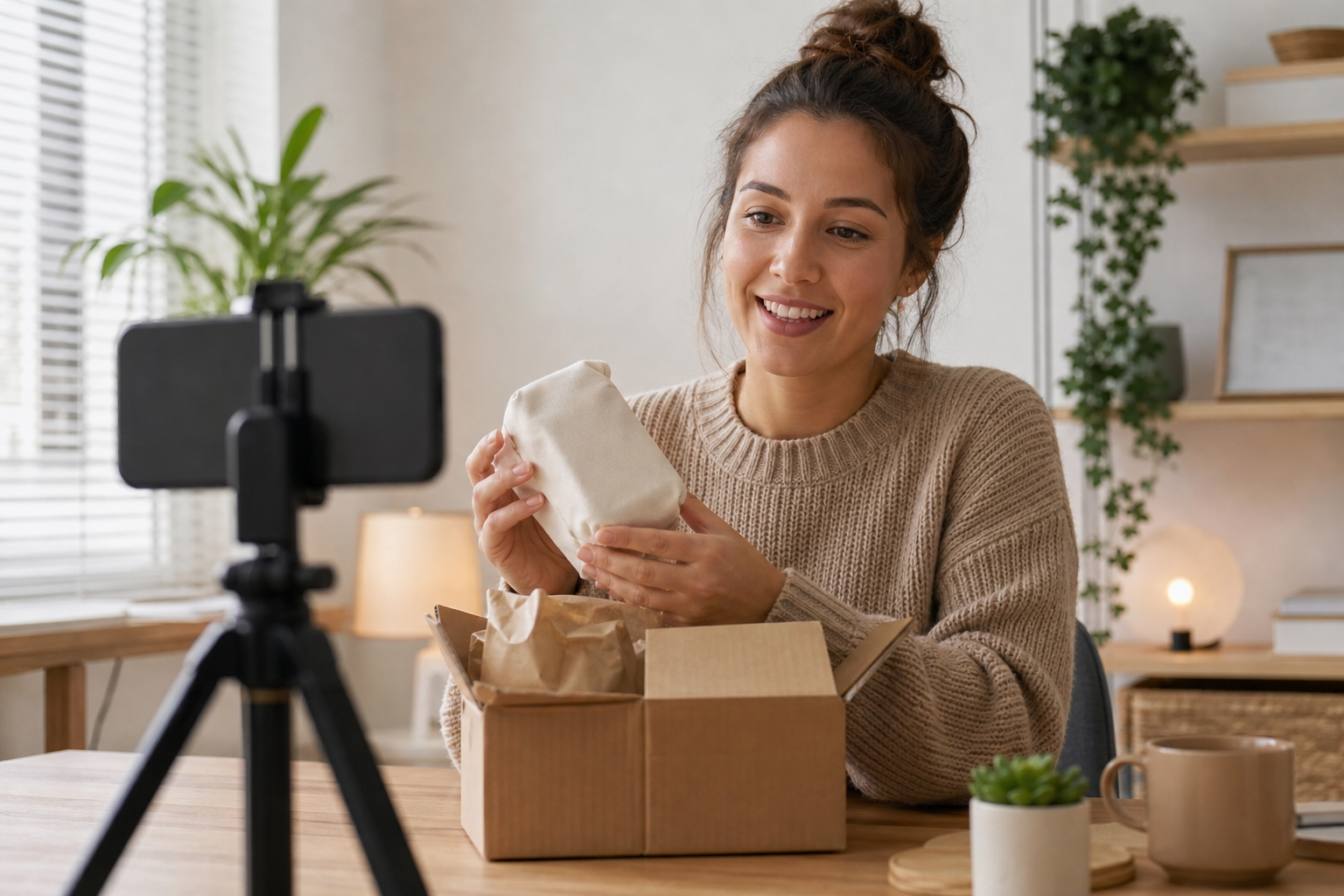
Creator-made unboxing content is a common deliverable in marketplace campaigns.
Compliance and Common Mistakes
Creators must disclose material connections, such as free products or payment. The US Federal Trade Commission publishes guidance on endorsements, so build disclosure into your brief.
Avoid vague briefs, skipped vetting, and untracked results. Also avoid judging a campaign too early, since content and purchases often lag behind posting. Background on the field is available in this overview of influencer marketing.
Frequently Asked Questions
What is an influencer marketplace for e-commerce brands?
It is an online platform where online stores post campaigns and creators apply to promote products. It centralizes discovery, vetting, communication, and payment.
How is a marketplace different from an influencer database?
A marketplace lets creators come to you by applying to your campaign. A database lets you search and contact creators yourself. Many platforms offer both.
Why do e-commerce brands use influencer marketplaces?
They save time on sourcing and make it easier to run many small collaborations. They also connect creator content to sales through codes and links.
How much does influencer marketing cost?
Costs vary widely by platform, niche, audience size, and deliverables. Some creators accept free product, while others charge flat fees or commission.
How do I avoid creators with fake followers?
Check audience authenticity, engagement quality, and audience location before approving a creator. A fake follower checker automates part of this review.
Should I pay creators a flat fee or commission?
Flat fees give predictable content delivery, while commission ties cost to sales. Many brands combine free product, a smaller fee, and a commission.
How do I track sales from influencers?
Give each creator a unique coupon code or affiliate link. Platforms synced with Shopify can attribute orders to specific creators.
How long does it take to launch a campaign?
Posting a brief can take under an hour. Applications, shipping, and content creation usually take several weeks.
Are micro-influencers better for small online stores?
Often yes, because they cost less and have niche audiences. Test several small creators before committing a large budget to one.
Do influencers have to disclose partnerships?
Yes. The US Federal Trade Commission expects clear disclosure of material connections, such as free products or payment. Brands should include this in their brief.
What are common mistakes when using a marketplace?
Common mistakes include vague briefs, skipping audience vetting, and not tracking sales per creator. Brands also often judge results too early.
Can a marketplace support multiple social platforms?
Many do. SocialBook, for example, covers creators on TikTok, Instagram, YouTube, and Twitch.
Conclusion
An influencer marketplace for e-commerce brands saves sourcing time, invites qualified creators to apply, and links content to revenue. To get the most from one, write a clear brief, vet every audience, and track sales per creator. Start with a small campaign, learn what converts, and scale the partnerships that prove their value.