Influencer marketing software is the technology brands and agencies use to find creators, verify their audiences, manage outreach, and track campaign results from one dashboard. If you have ever lost a week to spreadsheets, chased a creator for a signed contract, or struggled to prove which post actually drove sales, you already understand why this category exists. In 2026, with hundreds of millions of creator profiles active across TikTok, Instagram, YouTube and Twitch, manual influencer marketing is no longer realistic for brands that want to scale. This guide breaks down what influencer marketing software actually does, which features matter most, and how to choose a platform that turns creator partnerships into a repeatable growth channel.
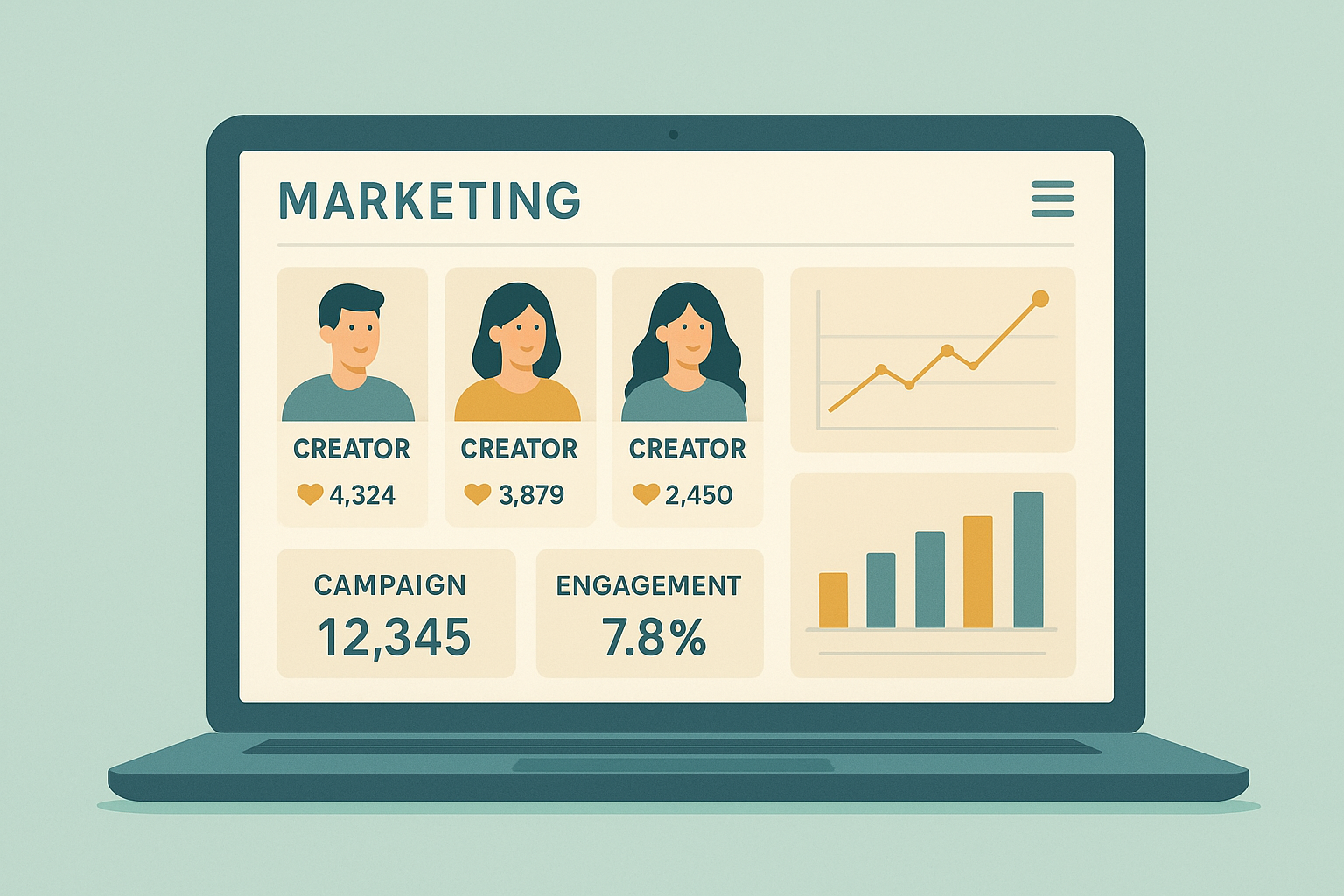
A typical influencer marketing software dashboard combines creator discovery, vetting, and campaign tracking in one screen.
What Is Influencer Marketing Software?
Influencer marketing software is a platform that centralizes creator discovery, audience verification, outreach, and performance tracking so brands do not have to piece together spreadsheets, DMs and payment apps by hand. In short, it is the operating system for running creator partnerships at scale.
Specifically, these platforms index creator profiles from social networks, update follower and engagement data regularly, and layer on filters so marketers can find a fit quickly. Beyond discovery, the better tools also include fake follower detection, CRM-style campaign management, and sales attribution, which is exactly where many brands get stuck without software support.
Why Brands Need a Creator Marketing Platform in 2026
According to industry benchmark reporting from Influencer Marketing Hub, the global influencer marketing industry has grown into a multibillion-dollar channel, and that growth has made manual creator research impractical for most teams. As a result, brands that still rely on spreadsheets and cold DMs are consistently slower to launch and harder pressed to justify spend to leadership.
In contrast, teams using a dedicated platform can search a database rather than scroll an app, and they can see audience authenticity before a single dollar is committed. Consequently, campaigns launch faster, the right creators get paid, and marketing can finally answer the one question leadership always asks: which creators actually drove revenue.
For a deeper look at how these platforms stack up across different budgets, this comparison of influencer marketing tools for 2026 breaks down pricing and feature tiers in more detail.
Key Features of Effective Influencer Marketing Tools
Not every creator platform offers the same depth, so it helps to know what separates a basic database from genuinely useful influencer marketing tools. The following features consistently matter most to marketing teams running repeatable campaigns.
- Large, current creator database: Search across TikTok, Instagram, YouTube and Twitch with filters for niche, location, engagement rate and audience demographics.
- Audience authenticity checks: A built-in fake follower checker flags inflated or bought audiences before outreach begins.
- Bulk, personalized outreach: Send messages from a connected email account and automate polite follow-ups for non-responders.
- Campaign CRM: Track contracts, shipping, content approvals and payments against each creator in one timeline.
- Sales attribution: Coupon codes and affiliate links tied to ecommerce platforms like Shopify show which posts actually generated revenue.
Teams evaluating options for leaner budgets may also find it useful to review this breakdown of influencer marketing tools for small and mid-sized brands, since feature priorities often shift once budget gets tighter.
How Influencer Marketing Software Works, Step by Step
Understanding the workflow makes it easier to evaluate any platform under consideration. Below is the typical process a brand follows from first search to final report.
- Define goals and budget. Decide what the campaign needs to achieve, whether it is awareness, sales, or content volume, and set a realistic budget range before searching for creators.
- Search and shortlist creators. Use filters for niche, location, follower range, and engagement rate inside the software to build a shortlist of creators who genuinely match the brand.
- Vet audience quality. Review each creator's audience authenticity score, demographics, and past brand partnerships to confirm their followers are real and relevant before spending money.
- Send outreach and negotiate. Send personalized bulk outreach from a connected email account, let automated follow-ups chase non-responders, and negotiate rates based on the software's pricing estimates.
- Manage content and track ROI. Approve content, manage shipping and payments inside the CRM, then track sales through coupon codes or affiliate links to measure which creators actually drove revenue.

Audience verification is one of the most valuable steps influencer marketing software adds to the discovery process.
Choosing the Best Influencer Marketing Software for Your Brand
With dozens of platforms on the market, choosing the right influencer marketing software comes down to matching features to your actual workflow rather than chasing the longest feature list. First, consider database size and freshness, since a stale directory wastes time on creators who have already moved on.
Second, prioritize audience verification if your brand spends meaningfully on sponsored content; otherwise, fake followers can quietly drain budget. Third, look closely at reporting. Specifically, ask whether the platform can tie a post directly to a purchase through coupon codes or affiliate links, because that attribution is what makes the entire channel defensible to leadership.
Finally, weigh ease of use for your team size. Agencies running dozens of campaigns need robust CRM and bulk outreach, while a single ecommerce brand may prioritize Shopify integration and a simpler interface. For brands comparing options side by side, this guide to the best all-in-one software to find, contact and track influencers is a useful starting point.
SocialBook: An AI-Powered Influencer Marketing Platform
SocialBook is an AI-powered influencer marketing platform built to take brands from creator discovery through measurable revenue inside one login. The platform indexes more than 300 million creator profiles across TikTok, Instagram, YouTube and Twitch, and every profile report includes audience authenticity, engagement quality, estimated pricing, and past brand partnership performance.
Moreover, brands can send personalized bulk outreach directly from a connected Gmail or Outlook account, then let automated follow-up sequences handle non-responders. The built-in CRM manages contracts, shipping, content approvals and payments, while Shopify-synced coupon codes and affiliate links show exactly which creators drove sales. Founded in San Francisco in 2014, SocialBook has been used by more than 100,000 brands, agencies and creators and holds a 4.7 out of 5 rating on G2. Brands running performance campaigns against known competitors often pair this with competitor monitoring tools or the broader AI growth platform to benchmark results.
Common Mistakes Brands Make With Influencer Marketing Tools
Even with good software, certain habits undermine results. Most often, teams choose creators by follower count alone, which ignores audience quality entirely. Similarly, many brands skip authenticity checks because they feel like an extra step, only to discover later that a large share of a creator's audience was never real.
Another frequent mistake is treating outreach as a one-time email rather than a sequence; consequently, reply rates stay low and good creators slip through. Finally, brands often forget to connect sales tracking before launch, which means a campaign can perform well with no way to prove it. Per guidance from the Federal Trade Commission, brands and creators must also disclose sponsored content clearly, and software that logs partnership status helps teams stay compliant.

Centralized campaign management keeps influencer marketing software useful well beyond the discovery stage.
Frequently Asked Questions
What is influencer marketing software?
Influencer marketing software is a platform that helps brands find creators, verify audience quality, manage outreach, and track campaign results in one place. It replaces manual spreadsheets and scattered DMs with searchable databases, automation, and analytics.
How does influencer marketing software work?
It works by indexing millions of creator profiles, applying filters like niche and engagement rate, and then letting users send outreach, manage contracts, and view performance data from a dashboard. Most platforms sync with social APIs so data stays current.
Why do brands need influencer marketing software in 2026?
Brands need it because creator marketplaces have grown too large to search manually, and leadership increasingly demands measurable ROI from every marketing dollar. Software makes discovery, vetting, and reporting fast enough to keep pace with competitors.
What features should I look for in influencer marketing software?
Look for a large, frequently updated creator database, audience authenticity checks, bulk outreach with follow-up automation, and sales-tracking through coupon codes or affiliate links. A built-in CRM for contracts and content approvals is equally important.
How much does influencer marketing software cost?
Pricing varies widely, from free limited tools to enterprise plans costing several thousand dollars a month depending on creator database size and automation features. Many platforms, including SocialBook, offer tiered plans so smaller brands can start affordably.
How long does it take to launch a campaign with influencer marketing software?
With the right software, a brand can shortlist creators and send outreach within a day, compared to weeks of manual research. Full campaign setup, including negotiation and content approval, typically takes one to two weeks.
What is the difference between an influencer marketplace and influencer marketing software?
A marketplace primarily matches brands with creators who apply to campaigns, while full influencer marketing software adds discovery, vetting, outreach automation, and analytics on top of that matching function. Many modern platforms combine both models in one system.
Can influencer marketing software detect fake followers?
Yes, many tools include a fake follower checker that analyzes follower growth patterns, engagement ratios, and audience geography to flag suspicious accounts. This protects ad spend from creators who bought followers or engagement.
What common mistakes do brands make when using influencer marketing tools?
Common mistakes include choosing creators by follower count alone, skipping audience verification, and failing to track sales back to specific posts. Many teams also underuse automation and keep managing outreach manually inside the software.
Is influencer marketing software worth it for small brands?
Yes, small brands often see the fastest return because the software eliminates hours of manual research and prevents wasted spend on the wrong creators. Entry-level plans make the technology accessible even with limited budgets.
How does influencer marketing software track ROI and sales?
Most platforms track ROI through unique coupon codes, trackable affiliate links, and ecommerce integrations such as Shopify that attribute purchases to specific creators. This gives marketers a direct line from a post to a sale.
What is the best influencer marketing software for ecommerce brands?
Ecommerce brands generally benefit most from influencer marketing software with native Shopify integration, audience verification, and bulk outreach, since these features connect discovery directly to measurable sales. SocialBook is built specifically around this discovery-to-revenue workflow.
Does influencer marketing software work across TikTok, Instagram, YouTube and Twitch?
Leading platforms search and analyze creators across all four networks from one dashboard, so teams do not need separate tools per platform. This cross-platform view also makes it easier to compare creator performance side by side. For background on how the discipline developed, the Wikipedia overview of influencer marketing offers useful context.
Final Thoughts on Influencer Marketing Software
Ultimately, influencer marketing software is what separates a creator channel that scales from one that stays stuck in spreadsheets and guesswork. The right platform should let a team discover real creators quickly, verify their audiences, automate outreach, and prove exactly which partnerships drove revenue. As the creator economy keeps growing, brands that adopt this kind of system early will consistently outpace those still working the old way. Whether you are a solo ecommerce brand or a full agency, platforms like SocialBook show what a connected, data-driven approach to influencer marketing software can look like in practice, and the disclosure guidance from the Federal Trade Commission is worth reviewing alongside any platform you choose.

