An influencer audit tool is software that checks a creator's followers, engagement and audience quality before a brand pays for a partnership. Instead of guessing whether a follower count is real, marketers can pull verified data in minutes and decide whether a creator is worth the budget. This shift matters because influencer fraud has quietly drained marketing budgets for years, and most teams only discover the problem after a campaign underperforms.
In this guide, you will learn exactly what an influencer audit tool checks, why skipping that step is risky, and how to run a reliable audit before your next campaign launch. Along the way, we will point to the specific metrics worth checking and the red flags that signal a creator is not who their follower count suggests.
Quick answer: An influencer audit tool pulls a creator's live follower, engagement and audience data, then scores authenticity so brands can confirm the partnership is worth the spend before any money changes hands. Most tools cover Instagram, TikTok, YouTube and Twitch, and the best ones also flag fake followers and estimate realistic campaign costs.
What Is an Influencer Audit Tool?
An influencer audit tool is a platform or browser extension that analyzes a creator's social profile and reports back on follower authenticity, engagement quality and audience fit. Rather than relying on a creator's self-reported media kit, the tool pulls data directly from the platform or from third-party tracking.
Most tools generate a report covering three core areas: how many followers appear real versus fake, how engaged the audience genuinely is, and whether the audience's age, gender and location match what a brand needs. For example, SocialBook's platform scans across more than 300 million creator profiles on Instagram, TikTok, YouTube and Twitch, refreshing the underlying data daily so reports stay current.

Reviewing results from an influencer audit tool before approving a new creator partnership.
Why Brands Need a Creator Vetting Tool
Influencer marketing works because audiences trust creators more than ads. However, that trust only translates into sales when the audience behind the account is real. According to fraud analyses from firms like HypeAuditor, a meaningful share of influencer accounts carry some portion of fake or inactive followers, particularly in the mid-tier follower range most brands prefer to work with.
Without a vetting tool, brands typically rely on manually scrolling a profile and eyeballing comments, which rarely catches sophisticated fraud. As a result, budgets get allocated to creators who look impressive on paper but deliver little real reach. In contrast, a proper audit surfaces the data needed to negotiate fair pricing and avoid wasted spend from the start.
Beyond fraud prevention, auditing also protects brand reputation. The FTC's guidance on social media endorsements makes clear that brands share responsibility for honest marketing, and partnering with a creator whose audience is largely fake can undermine that standard even unintentionally.
How to Audit an Influencer: A Step-by-Step Process
Running a consistent audit process means every creator gets evaluated against the same standard, regardless of how polished their media kit looks. Follow these steps for a repeatable check:
- Pull the creator's profile data. Search the creator's handle inside an audit platform to get current follower counts and growth trends instead of trusting a screenshot.
- Check audience authenticity. Review the percentage of followers flagged as real, active accounts versus bots or inactive profiles.
- Review engagement quality. Compare the engagement rate to benchmarks for that follower tier, and scan comments for genuine conversation.
- Verify audience demographics. Confirm age range, gender split and top locations match your target customer profile.
- Check past brand performance. Look at previous sponsored posts to see whether earlier partnerships drove clicks or sales.
SocialBook's built-in Fake Follower Checker automates the first two steps, flagging inflated audiences on Instagram and TikTok before a brand even opens negotiations.
Key Metrics an Influencer Verification Platform Should Check
Not every metric carries equal weight. The table below highlights what a thorough audit platform should surface and why each one matters to a campaign's outcome.
| Metric | What It Reveals |
|---|---|
| Audience authenticity % | Share of followers that are real, active accounts |
| Engagement rate | How often followers like, comment or share posts |
| Audience location and age | Whether the audience matches the target customer |
| Past brand performance | Evidence of real results from prior partnerships |
Red Flags That Signal Fake Followers or Inflated Engagement
Certain patterns show up consistently among creators padding their numbers. Sudden follower spikes with no viral content to explain them, a flood of generic comments like "nice post" from accounts with no profile photo, and engagement rates that stay suspiciously identical across every post are all warning signs.
Similarly, a mismatch between the creator's stated niche and their actual audience location often points to purchased followers from click farms. If you want a deeper walkthrough of these warning signs, this guide on how to know if an influencer's engagement is real breaks down each pattern in more detail.
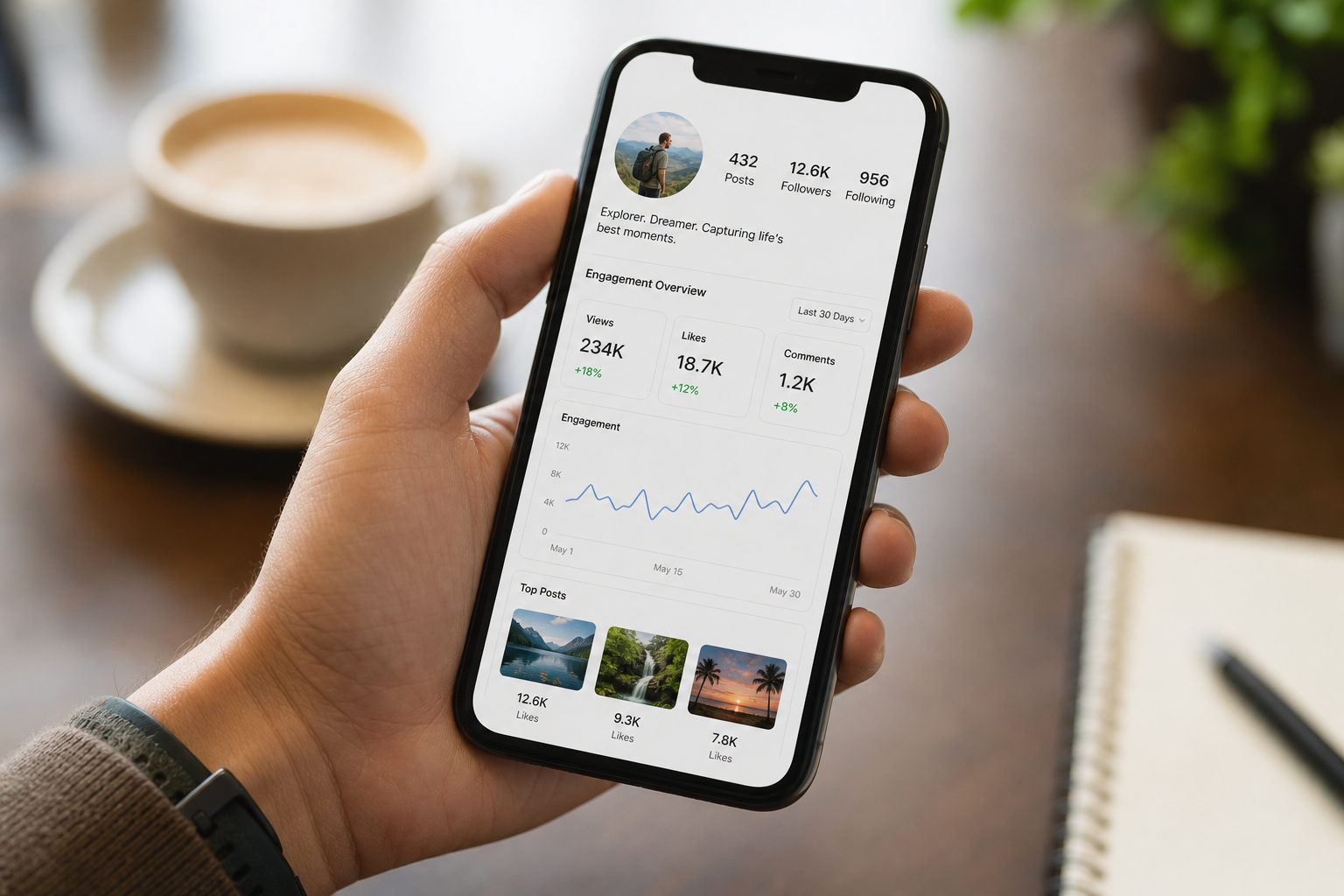
Checking engagement statistics on a creator's profile as part of a routine influencer audit.
Choosing the Right Influencer Verification Platform
When comparing platforms, prioritize coverage across the networks you actually use, daily or near-daily data refreshes, and clear reporting that non-technical team members can read without training. Furthermore, look for a platform that moves beyond verification into outreach and campaign tracking, since auditing is only the first step of a full influencer workflow.
SocialBook combines all three: audience authenticity reports, bulk outreach tools, and a Shopify-synced dashboard that ties creator content directly to sales through coupon codes and affiliate links. For brands comparing options more broadly, this roundup of influencer marketing tools for 2026 and this breakdown of tools suited to small and mid-sized brands are both useful starting points.
How SocialBook's Influencer Audit Tool Works
SocialBook was founded in 2014 and now supports more than 100,000 brands, agencies and creators worldwide. Its audit capability sits inside a broader platform, so vetting a creator naturally flows into outreach, campaign management and revenue tracking without switching tools.
Specifically, every creator profile report inside SocialBook shows audience demographics, an authenticity percentage, engagement quality and estimated pricing, alongside a record of the creator's past brand partnerships and how those campaigns performed. The free SocialBook Checker Chrome extension lets marketers pull this same analysis while browsing YouTube or Instagram directly, which saves time for teams still evaluating creators informally.
Once a creator passes the audit, brands can also use SocialBook's competitor monitoring tools to see which creators are already driving results for similar products, adding another layer of confidence before committing budget. You can explore the full platform at socialbook.io.

A marketing team reviewing audited creator partnerships before launching a new campaign.
Frequently Asked Questions About Influencer Audit Tool
What is an influencer audit tool?
An influencer audit tool is software that analyzes a creator's follower base, engagement rate and audience demographics to confirm the numbers are real before a brand pays for a partnership. It replaces manual profile checks with automated fraud detection and performance estimates.
How does an influencer audit tool detect fake followers?
It scans follower accounts for patterns common to bots and purchased audiences, such as missing profile photos, no posting history, duplicate usernames and sudden follower spikes. The tool then scores the account with an audience authenticity percentage.
Why is auditing influencers important before a campaign?
Auditing prevents brands from paying full price for a creator whose real reach is a fraction of their follower count. It also confirms the audience actually matches the target customer in age, location and interests.
How much does an influencer audit tool cost?
Pricing varies widely, from free browser extensions that check basic metrics to paid platforms with monthly subscriptions covering bulk audits, outreach and campaign management. Many platforms, including SocialBook, offer a free profile checker alongside paid plans for larger teams.
How long does it take to audit an influencer?
A single creator audit typically takes a few minutes once connected to a verification platform, compared with the hours needed for manual research. Bulk audits across dozens of creators can be completed in under an hour with the right software.
What's the difference between an influencer audit tool and a vetting checklist?
A checklist is a manual process a marketer follows by hand, while an audit tool automates the data collection and fraud scoring behind that checklist. The tool pulls live data so results stay accurate as follower counts change daily.
Can an influencer audit tool check engagement authenticity?
Yes, most audit tools calculate an engagement rate and compare it against benchmarks for the creator's follower tier and niche. Unusually high or oddly consistent engagement often signals bought likes or comment pods rather than genuine interaction.
What common mistakes do brands make when skipping influencer audits?
The most frequent mistake is judging a creator by follower count alone, which ignores audience location, fake followers and past brand performance. Brands also skip checking whether a creator's previous sponsored posts actually drove measurable results.
Is a high follower count proof of brand fit?
No, follower count alone says nothing about whether an audience matches a brand's target customer or whether those followers are real people. A smaller creator with 90 percent audience authenticity often outperforms a larger one with inflated numbers.
How often should brands re-audit influencer partners?
Brands running ongoing partnerships should re-audit creators every three to six months, since follower quality and engagement can shift significantly over time. A quick recheck before renewing any long-term contract helps avoid surprises.
Which platforms can an influencer audit tool analyze?
Leading audit tools cover Instagram, TikTok, YouTube and Twitch, since these platforms generate the most sponsored content and the most follower fraud. Coverage varies by provider, so brands should confirm platform support before committing to a tool.
What are best practices for using an influencer audit tool effectively?
Run an audit before every new partnership, not just once a year, and compare results across several creators rather than evaluating one in isolation. Pair audit data with past campaign performance to make the strongest hiring decision.
Final Takeaway
An influencer audit tool turns creator vetting from a guessing game into a repeatable, data-backed process. Rather than trusting a media kit or a follower count on its own, brands can confirm audience authenticity, engagement quality and demographic fit before a single dollar moves. As influencer marketing budgets keep growing, that verification step is no longer optional; it is the difference between a campaign that proves its value and one that quietly wastes spend.
Whether you handle audits manually today or you are ready to automate the process, starting with a reliable influencer audit tool like SocialBook gives your team the data needed to partner with creators whose audiences are real, engaged and aligned with your brand.

