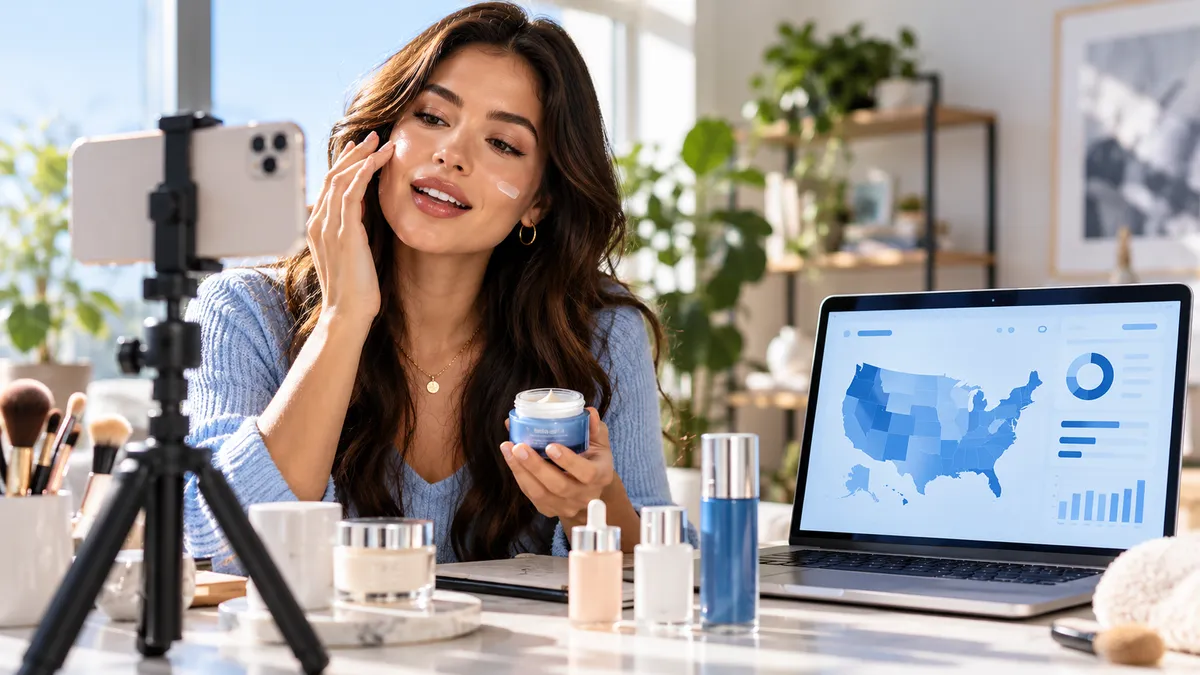
How to Find Beauty Influencers Whose Audience Is Mostly in the US
If you are hunting for beauty influencers US audience data above anything else, you need verified geographic proof before a single DM goes out — not a guess based on a creator's bio, accent, or filming location. In practice, that means pulling a real audience demographics report, checking what share of followers are genuine versus bought, and confirming the country breakdown actually skews American rather than assuming it from a hashtag or a pretty feed. This guide walks through the entire process, step by step, and goes further than most roundups by covering niches, platform data, real pricing tiers, and the red flags that quietly drain a beauty marketing budget.

Key Takeaways
- Audience location and creator location are different data points — always verify both before outreach.
- Filter by niche, platform, follower range, and audience country first to eliminate irrelevant profiles fast.
- A fake follower checker protects spend by flagging bots and bought engagement that inflate apparent reach.
- Audience authenticity above roughly 80–85% is generally considered a healthy benchmark for beauty partnerships.
- Pricing for US beauty campaigns ranges from under $100 for nano-creators to $30,000+ for mega-influencers.
- Discovery platforms like SocialBook search 300+ million creator profiles with daily-refreshed audience data.
What Does "Beauty Influencers US Audience" Actually Mean?
Finding a beauty influencers US audience match means confirming, with real data, that the majority of a creator's followers live in the United States — not assuming it because the creator posts in English or films from a US zip code. Influencer marketing as a discipline has matured well past the "big follower count equals big results" mindset, and audience geography is one of the main reasons why.
Consider this: a beauty creator filming from Los Angeles could easily have an audience that is 60% international, while a creator based overseas might have a US-majority following built through viral TikTok reach. Therefore, the only reliable way to confirm fit is to open the actual demographic breakdown attached to each profile — never the profile picture, the caption language, or the time zone of a posting schedule.
This distinction matters most in beauty marketing specifically because shade ranges, retail availability, shipping costs, and disclosure rules all differ by market. As a result, a lipstick brand that only ships within the US gains almost nothing from a creator whose followers are concentrated in Southeast Asia or South America, no matter how impressive the engagement rate looks on paper.
How to Find Beauty Influencers US Audience Data in 6 Steps
Brands and agencies that reliably find beauty influencers with a strong US following do not rely on one-off searches. Instead, they follow a repeatable sequence. Below is that process broken into six concrete steps, each of which you can run inside a dedicated discovery tool such as the SocialBook creator search.
- Filter by niche, platform, and country. Start by selecting the beauty and skincare category, choosing Instagram, TikTok, or YouTube, and setting the audience country filter to the United States so irrelevant profiles disappear immediately, saving hours of manual scrolling.
- Open the full audience demographics report. Review the age range, gender split, and country-by-country percentages for each creator's followers to confirm the US genuinely represents the largest geographic segment, not just a plausible-sounding one.
- Run a fake follower and authenticity check. Use a tool such as an Instagram fake follower checker to see what share of the audience is real and active, since inflated follower counts can quietly skew the apparent US percentage.
- Review past brand work in your category. Search for creators who have already promoted products like yours, since prior beauty partnerships signal both audience trust and comfort with the review format your brand needs.
- Evaluate engagement quality, not just rate. Read comment sentiment closely to judge whether the community actually responds to product recommendations with questions and purchase intent, rather than passively scrolling past sponsored posts.
- Shortlist, launch outreach, and track with codes. Group verified US-audience creators into a shortlist, send personalized outreach that references their actual content, and assign each one a unique coupon or affiliate link before the campaign goes live.
Consequently, this sequence turns a vague goal — "find more US beauty creators" — into a measurable workflow with a clear pass or fail checkpoint at every stage.
"Follower count tells you nothing about who is actually watching. Audience location, authenticity, and engagement quality are the three numbers that decide whether a beauty campaign pays off."
Top Beauty Influencer Niches With Strong American Followings
Not every beauty creator serves the same audience, and niche strongly affects where that audience lives. Below are the four categories that most consistently skew toward US-based followers, along with what makes each one useful for different campaign goals.
Makeup & GRWM (Get Ready With Me) Creators
GRWM content performs especially well with US viewers because it mirrors a familiar daily routine format popularized by American beauty YouTubers. These creators tend to have high purchase intent among followers, since the format itself is essentially a live product demo.
Skincare & Derm-Adjacent Creators
Skincare-focused accounts, including those run by estheticians or nurses, often attract a US-heavy audience interested in ingredient transparency and dermatologist-backed claims. However, this niche also draws tighter scrutiny, so disclosure and accuracy matter more than usual.
Haircare & Texture-Specific Creators
Creators who specialize in curly, coily, or color-treated hair routines frequently build tight-knit, US-concentrated communities because product availability and climate both shape hair routines regionally. As a result, these audiences convert particularly well for brands that ship exclusively within the US.
Men's Grooming & Clean Beauty Creators
This growing niche is still underserved by many brands, which makes it a useful gap to exploit. In particular, men's grooming and "clean beauty" creators in the US often have lower sponsorship saturation, meaning their audiences respond more strongly to a well-matched partnership.
Platform-by-Platform: Where US Beauty Audiences Concentrate
Platform choice should follow the audience data, not precede it. Still, each major platform has its own tendencies worth understanding before you start a search.
Instagram remains a strong channel for established beauty creators with loyal, long-term US followings, particularly through Reels and carousel tutorials. You can browse verified profiles directly inside the SocialBook Instagram creator database to filter by audience country before reaching out.
TikTok
TikTok drives discovery fastest, but its algorithm can push content to a global audience almost overnight. Consequently, TikTok creators require closer audience-location checks than any other platform, since viral reach does not guarantee a US-majority viewer base.
YouTube
YouTube beauty creators tend to have the most stable, well-documented audience demographics of any platform, largely because YouTube Analytics has offered detailed geographic breakdowns for years. This makes YouTube a dependable starting point for brands prioritizing long-form tutorial or review content.
Pricing Benchmarks: What US Beauty Influencer Campaigns Cost by Tier
Budgeting gets much easier once you know typical ranges by follower tier. The figures below reflect common US market rates for a single sponsored post or video.
| Tier | Follower Range | Typical US Rate per Post | US Audience Fit |
|---|---|---|---|
| Nano | 1K–10K | $50–$250 | Often high |
| Micro | 10K–50K | $250–$1,000 | Often high |
| Mid-tier | 50K–500K | $1,000–$10,000 | Varies — verify |
| Macro | 500K–1M | $10,000–$30,000 | Often mixed/global |
| Mega | 1M+ | $30,000+ | Verify carefully |
Notice the pattern: as follower counts rise, US audience concentration often becomes less predictable, not more. In other words, bigger is not automatically more American — it simply becomes more important to check.
Key Metrics That Prove a Creator's Audience Skews American
Several data points together prove audience location far better than any single metric alone. A country-by-country audience breakdown is the primary signal, but it should be read alongside engagement rate, average view duration, and the authenticity score of the account.
According to Influencer Marketing Hub's 2024 benchmark report, the global influencer marketing industry was valued at roughly $24 billion — a scale that has pushed far more platforms to publish detailed audience-location data as a standard feature rather than a premium add-on. In addition, the FTC's endorsement guidelines require clear disclosure of sponsored content in the US, so confirming a creator's US audience share also helps brands stay compliant with the regulations that actually apply to their buyers.
What Audience Authenticity Percentage Should You Look For?
Most experienced buyers treat 80–85% real, active followers as a healthy floor for a beauty creator. Anything noticeably lower is a warning sign, not necessarily a dealbreaker, but it should trigger a closer look at comment quality before any contract is signed.
Common Mistakes Brands Make When Targeting US Beauty Audiences
Even experienced marketers fall into predictable traps when trying to identify American beauty creators quickly. First, many assume a creator's posted location equals their audience's location, which is rarely true once an account grows past a few thousand followers.
Second, teams often skip the fake-follower check entirely because it feels like an extra step, yet this is precisely where wasted budget tends to originate. Similarly, some brands chase only mega-influencers with huge totals, overlooking micro-influencers whose smaller but tightly US-concentrated audiences often convert better per dollar spent. Finally, campaigns frequently launch without a way to track which creator actually drove a sale, which is why Shopify-synced coupon codes and affiliate links matter just as much as discovery.
Comparing Methods to Locate US-Based Beauty Influencers
Not every discovery method delivers the same accuracy or speed. The table below compares the four most common approaches brands use today.
| Method | Speed | Audience Accuracy | Best For |
|---|---|---|---|
| Manual hashtag search | Slow | Low | Very small one-off tests |
| Native platform tools | Moderate | Moderate | Single-platform campaigns |
| Dedicated discovery platform (e.g. SocialBook) | Fast | High | Cross-platform, recurring campaigns |
| Fully managed agency service | Moderate | High | Teams with limited bandwidth |
Platforms such as the SocialBook AI growth platform combine search, verification, outreach, and revenue tracking in one dashboard, which is why most growing beauty brands eventually move away from manual methods. For brands running affiliate-style programs, tools like the affiliate tracking features also tie each creator directly to the sales they generate.
Red Flags Checklist Before You Sign a Beauty Influencer Contract
Beyond the core metrics, a handful of warning signs should slow down any outreach process. Run through this checklist before you finalize a contract or send product.
- A sudden, unexplained spike in followers within days or weeks, rather than steady growth.
- A high follower count paired with suspiciously low or generic comments.
- Comments that read like emojis-only or repeated phrases copied across unrelated posts.
- An audience country breakdown that doesn't match the creator's stated niche or language.
- No visible history of FTC-compliant sponsored disclosures on past brand posts.
- Reluctance or refusal to share analytics or demographic screenshots on request.
Turning Discovery Into a Repeatable Channel
Above all, finding the right creators once is not the goal — building a process you can repeat every quarter is. In particular, pair your discovery workflow with a CRM-style tracker for contracts, shipping, and content approvals so nothing stalls in someone's inbox.
Research from Pew Research Center consistently shows that US social media usage skews heavily toward visual platforms among younger consumers, which is exactly the demographic most beauty brands are trying to reach. As a result, pairing accurate audience data with a fast, organized workflow — rather than treating each campaign as a separate project — is what separates brands that scale influencer marketing from those that abandon it after one disappointing launch. You can explore a full walkthrough of the discovery-to-revenue workflow on the SocialBook homepage.
Frequently Asked Questions About Beauty Influencers US Audience
What does "beauty influencers US audience" actually mean?
It means confirming, through demographic data, that the majority of a creator's followers are located in the United States rather than assuming this from the creator's own location, bio, or posting language.
How much does a beauty influencer campaign typically cost?
Costs vary widely by follower tier, ranging from roughly $50–$250 for a nano-influencer post to $30,000 or more for a mega-creator. See the pricing benchmarks table above for a full breakdown by tier.
How long does it take to verify an influencer's audience location?
Using a discovery platform, pulling a full demographic and authenticity report typically takes a few minutes per creator. Manually estimating this from public posts alone can take much longer and is far less reliable.
What's the difference between a creator's location and their audience's location?
A creator's location is simply where they live and film content, while their audience's location refers to where their followers actually reside. These two figures frequently diverge once an account reaches international visibility.
Can follower count alone tell you where an audience lives?
No, follower count says nothing about geography. Only a dedicated audience demographics report breaks down followers by country, age, and gender.
What is a fake follower checker and why does it matter?
A fake follower checker analyzes an account to estimate what percentage of followers are real, active people versus bots or purchased accounts. This matters because inflated audiences can distort both engagement rates and apparent country breakdowns.
Which platforms have the most US-based beauty audiences?
Instagram, TikTok, and YouTube all have significant US beauty audiences, though the exact concentration varies by creator rather than by platform alone. Therefore, platform choice should follow the audience data, not precede it.
What audience authenticity percentage should brands look for?
Most buyers treat 80–85% genuine, active followers as a reasonable minimum. Scores below that range deserve a closer manual review before committing budget.
How do micro-influencers compare to macro-influencers for US-focused campaigns?
Micro-influencers often have smaller but more tightly concentrated US audiences and higher engagement rates relative to cost. In contrast, macro-influencers offer broader reach but sometimes a more diluted, globally spread audience.
What's the difference between nano, micro, mid-tier, macro, and mega beauty influencers?
These tiers are generally defined by follower count: nano (1K–10K), micro (10K–50K), mid-tier (50K–500K), macro (500K–1M), and mega (1M+). Each tier carries different pricing, reach, and typical US audience concentration, as outlined in the pricing table above.
Do beauty influencers need to disclose sponsorships to their US audience?
Yes. The FTC requires clear, conspicuous disclosure of any paid or gifted partnership shown to US consumers, regardless of platform. Brands should check a creator's disclosure history before signing a contract.
Can international beauty creators still have a majority US audience?
Absolutely. A creator based outside the US can still build a US-majority following through viral reach, English-language content, or trending sounds. This is exactly why audience data matters more than a creator's home address.
What mistakes do brands commonly make when targeting US beauty audiences?
The most common mistakes are assuming creator location equals audience location, skipping fake-follower checks, and chasing only large accounts while ignoring highly targeted micro-influencers.
Should brands pay more for exclusive US-audience content?
Paying a premium can be justified when a creator's US audience percentage and engagement quality are both verified as strong. However, premiums should always be backed by data, not by follower count alone.
How can coupon codes help track influencer-driven sales?
Unique, Shopify-synced coupon codes and affiliate links attribute each purchase directly to the creator who generated it. As a result, brands can see exactly which US-audience influencers actually drove revenue, not just impressions.
What tools help confirm a beauty influencer's audience is mostly in the US?
A dedicated discovery platform that combines a demographic report, an authenticity checker, and pricing estimates in one dashboard is generally the fastest and most reliable option. Manual searching can work for very small, one-off tests but does not scale well.
How often should audience demographic data be refreshed?
Audience data should ideally be refreshed daily or at least monthly, since follower composition shifts as accounts grow or go viral. Platforms with daily-refreshed databases give the most current picture before outreach begins.
In summary, winning at beauty influencers US audience targeting comes down to replacing assumptions with verified data: filter by niche and country, read the audience demographics report, run a fake follower check, confirm engagement quality against your niche and pricing tier, and then track results through coupon codes or affiliate links tied to each creator. Brands that follow this sequence consistently spend less on mismatched partnerships and gain a much clearer answer when leadership asks which creators actually drove sales.

