Instagram Fake Follower Checker: Spot Fake Fans Fast
An Instagram fake follower checker is a tool that scans a creator's audience and reveals exactly what share of those followers are bots, abandoned profiles, or accounts purchased from a click farm instead of genuine fans. For any brand about to hand over marketing budget to an influencer, running this check before a contract is signed can mean the difference between a campaign that reaches real customers and one that silently burns cash on an audience that was never there to begin with.
Influencer marketing now sits alongside paid search and social ads as a core acquisition channel, which is exactly why it attracts so much manipulation. As a result, this guide goes further than a basic follower audit — it also covers how to catch fake likes, engagement pods, click-farm comments, and the tools that separate real reach from manufactured hype.
Quick answer: An Instagram fake follower checker analyzes an account's followers, comments, and growth history to score what percentage of the audience is real. Run one before paying any creator, and pair it with an engagement rate check for the clearest picture of true influence.
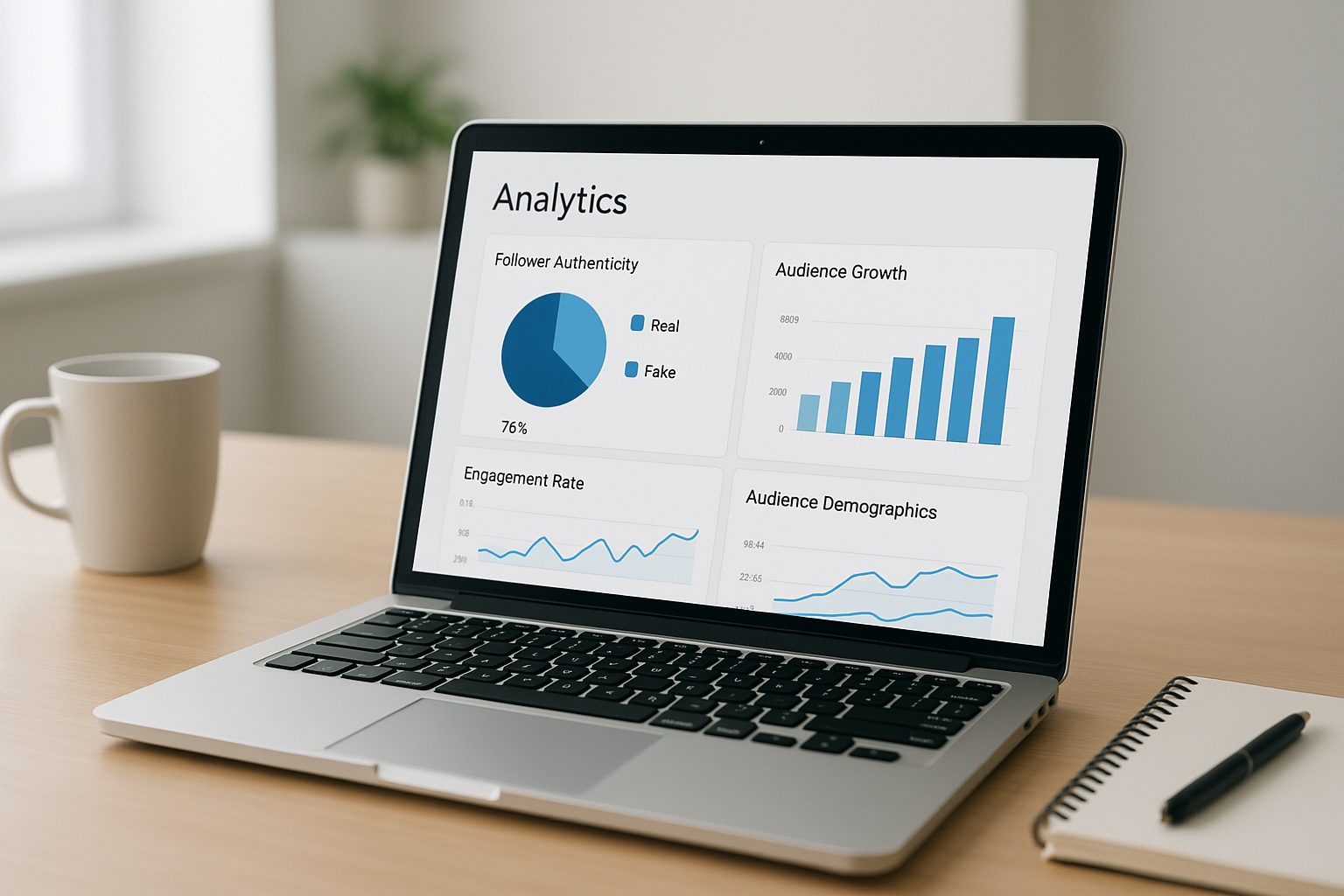
An Instagram fake follower checker breaks down audience quality before a campaign ever launches.
What Is an Instagram Fake Follower Checker?
In short, an Instagram fake follower checker is software that scans a creator's follower base and estimates what share of that audience is authentic. It typically returns an audience authenticity score, a breakdown of follower locations and ages, and warning flags for suspicious activity patterns.
Most tools work by comparing public signals such as follower-to-engagement ratios, account creation dates, posting history, and profile completeness. For example, an account with thousands of followers who have no profile photo, no posts, and no bio is a strong indicator of bot activity — an automated account programmed to mimic a real user. As a result, brands get a clear, data-backed answer instead of guessing based on a follower count alone.
This matters because, as explained by Wikipedia's overview of social bots, automated accounts are specifically designed to mimic real user behavior, which makes manual detection unreliable without the help of dedicated analysis tools.
Why Fake Followers — and Fake Likes — Still Cost Brands Money
Despite years of platform crackdowns, fake followers remain a persistent problem. A widely cited study by Cheq and the University of Baltimore estimated that influencer fraud costs advertisers roughly $1.3 billion annually worldwide, largely through inflated audiences and fabricated engagement.
Therefore, every dollar spent on a creator whose audience is mostly bots is a dollar that generates zero real impressions, zero genuine clicks, and zero actual customers. In addition, inflated metrics make it nearly impossible for marketing teams to accurately forecast campaign performance or report honest results to leadership. Fake likes compound the problem, since a post can look wildly popular while converting nobody.
Regulators have also taken notice. The U.S. Federal Trade Commission's disclosure guidance for social media influencers makes clear that misleading audience representations can carry real compliance risk for both creators and the brands that partner with them.
How to Check for Fake Instagram Followers
Checking an account does not have to be complicated. Here is a straightforward process marketers can follow before approving any influencer budget:
- Pull the growth history. Review follower growth over six to twelve months and look for spikes that do not match any viral moment, press mention, or paid promotion the creator ran.
- Run an authenticity report. Enter the handle into a dedicated checker to generate an audience authenticity percentage, a location breakdown, and an estimated bot-activity score.
- Compare engagement to followers. Calculate likes and comments as a percentage of total followers; a low ratio on a large account is a reliable red flag for purchased audiences.
- Scan comments manually. Look for generic phrases, emoji spam, or the same commenter names repeating across several recent posts, which often points to bot farms.
- Review past sponsored posts. Compare paid content performance against organic content to see whether the audience actually responds to that specific creator at all.
Notably, this process takes only a few minutes per creator once a verification tool is part of the workflow, which is far faster than manually auditing follower lists one profile at a time.
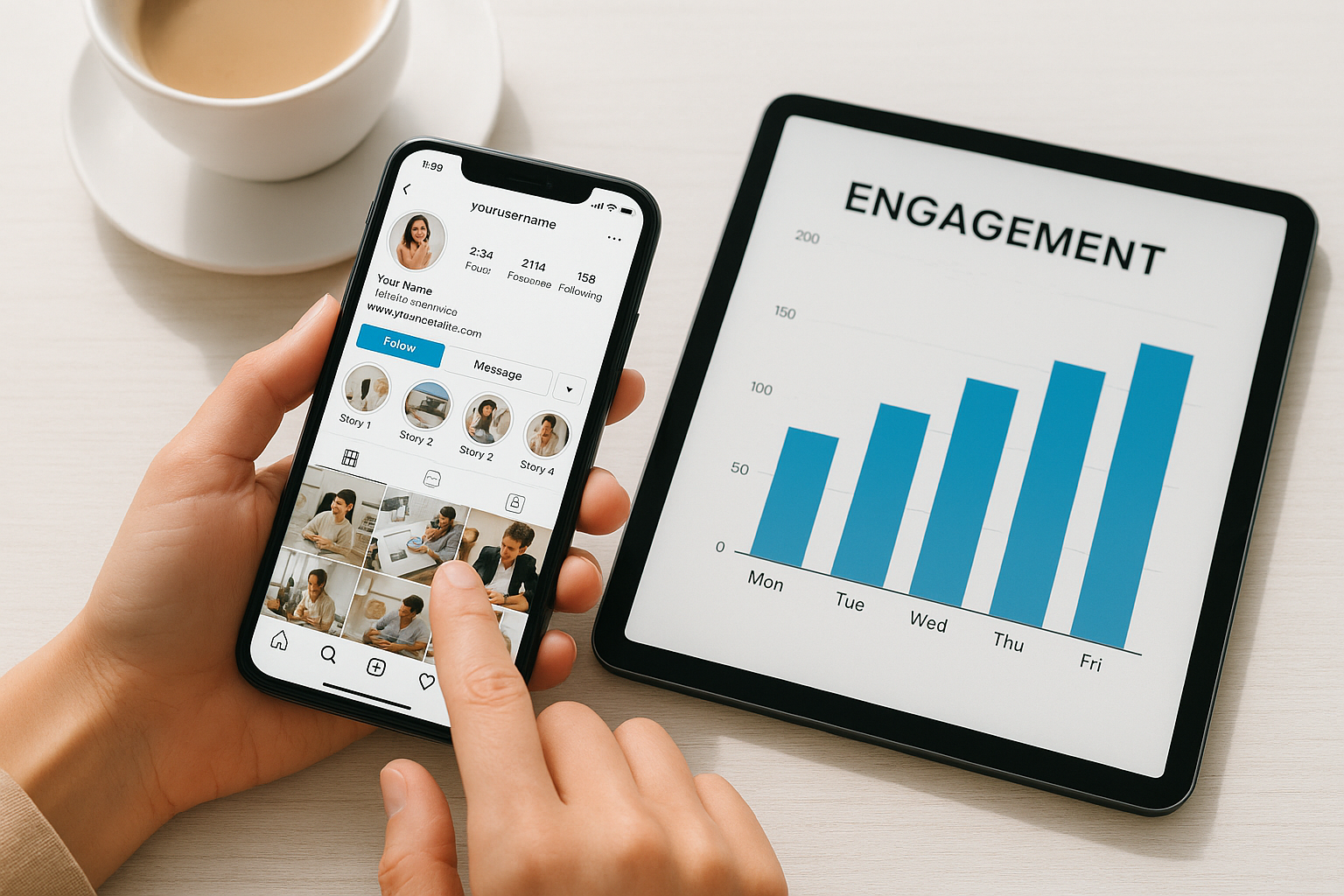
Comparing engagement rate against follower count is a quick way to spot inflated Instagram audiences.
How to Spot Fake Likes on Instagram
Fake followers get most of the attention, but fake likes are just as damaging because they make mediocre content look like a hit. In particular, purchased likes are typically delivered through a click farm — a group of low-paid workers or automated devices that tap "like" on command — or through bot networks that behave in oddly uniform ways.
Watch for these patterns when you suspect a post's likes are not organic:
- A like count that jumps far higher than the account's usual average within minutes of posting
- Likes from accounts with no profile photo, zero posts, or a username string of random numbers
- A like-to-comment ratio wildly out of step with the creator's normal content
- Video views that are far lower than the like count, which is nearly impossible organically
- The same small cluster of accounts liking every single post within seconds of publishing
What Are Engagement Pods — and Why They Skew the Data
An engagement pod is a private group of creators who agree to like and comment on each other's posts the moment they go live, tricking the Instagram algorithm into treating the content as popular. Unlike an outright bot purchase, pod activity is harder to flag because real human accounts are behind it — however, the comments are usually generic, oddly timed, and disconnected from the content itself.
Consequently, the most reliable way to tell real engagement from pod activity or purchased likes is to track whether that interaction translates into real outcomes. SocialBook's guide on how to know if an influencer's engagement is real breaks down the exact signals that separate a genuinely engaged community from a manufactured one.
Signs Your Influencer List Needs a Second Look
Certain patterns show up again and again in accounts with inauthentic audiences. If several of these appear at once, it is worth running a full check rather than taking the profile at face value.
- A large jump in followers over a short period with no corresponding spike in likes or comments
- An engagement rate consistently below 1% despite a sizable follower count
- A high percentage of followers located in countries unrelated to the creator's content or language
- Comment sections filled with generic phrases, emoji-only replies, or the same accounts repeating on every post
- Follower accounts with no profile picture, no posts, or usernames made of random letters and numbers
For a deeper breakdown of how to interpret these warning signs, SocialBook's guide on how to check if an influencer has fake followers walks through real examples side by side.

Teams that verify followers before outreach spend campaign budget with far more confidence.
Fake Follower Checker Tools: Manual Review vs. Automated Platforms
Not every verification method delivers the same depth of insight. Understanding the trade-offs helps a team choose the right level of scrutiny for the size of the campaign.
Manual Review
Scrolling a profile and eyeballing comments costs nothing, yet it is slow and easy to get wrong. A human reviewer can miss subtle patterns like a 40% follower spike buried in a year-long growth chart, which is exactly the kind of signal automated tools surface instantly.
Free Browser Extensions
Lightweight extensions can give a rough authenticity estimate in seconds. However, they typically analyze only a small sample of followers and rarely include engagement history, pricing estimates, or cross-platform data — fine for a quick gut check, but risky as the sole basis for a five-figure campaign decision.
Full Influencer Marketing Platforms
Platforms built for brands combine an Instagram fake follower checker with engagement analysis, demographic breakdowns, pricing benchmarks, and outreach tools in one place. This matters most when a team is vetting dozens of creators at once, since consistency across every profile check is what actually protects budget.
How SocialBook's Instagram Fake Follower Checker Works
SocialBook built its own Instagram fake follower checker into a larger creator vetting workflow, so brands never have to jump between separate tools. Every profile report inside the platform shows audience demographics, an authenticity percentage, engagement quality, and estimated pricing side by side.
Specifically, the tool flags inflated audiences on both Instagram and TikTok, while performance prediction estimates likely campaign cost and results before a brand ships a single product. Because the underlying database covers more than 300 million creator profiles across TikTok, Instagram, YouTube, and Twitch, teams can apply one consistent standard across an entire campaign roster instead of checking each platform separately.
Brands that want a quick credibility snapshot before deeper outreach can also explore SocialBook's dedicated fake influencer credibility tool, which pairs authenticity scoring with historical brand partnership data. For creators specifically on the platform, the Instagram creator search makes it simple to filter by niche, location, and verified engagement before reaching out.
Follower Authenticity vs. Engagement Rate: What Really Matters
Audience authenticity and engagement rate measure two different things, and brands often confuse the two. Follower authenticity tells you what portion of an audience is real, while engagement rate tells you how actively that audience interacts with content.
A creator can have a mostly authentic audience that simply is not very engaged, or a smaller but highly engaged following that converts extremely well. Consequently, the strongest vetting process looks at both metrics together rather than relying on either one alone. Brands researching competitor campaigns can also look at creators who have already promoted similar products, since proven category performance often says more than follower count ever could.
For a broader view of which creators are currently performing well across categories, SocialBook's top influencers rankings offer a useful starting point before narrowing a shortlist with authenticity checks.
The Real Cost of Ignoring Fake Followers
Beyond the immediate wasted spend, inflated audiences create downstream damage that is harder to see at first glance. For example, a marketing team that builds next quarter's forecast on a creator's fake reach will almost certainly miss its targets, and leadership will not know why.
In contrast, a brand that verifies audiences up front builds a reliable baseline for every future campaign. Above all, consistent verification turns influencer marketing from a gamble into a channel that can be measured, optimized, and scaled with confidence — exactly the standard paid search and paid social have been held to for years.
Frequently Asked Questions
What is an Instagram fake follower checker?
An Instagram fake follower checker is a tool that analyzes an account's follower base to estimate what percentage of fans are real people versus bots, inactive accounts, or purchased followers. It typically scores audience authenticity, geography, and activity patterns.
How does an Instagram fake follower checker work?
These tools scan follower lists for red flags such as accounts with no profile photo, no posts, or suspicious username patterns. They then combine those signals into an authenticity percentage and flag unusually low engagement relative to audience size.
Why do brands need to check for fake followers before an influencer campaign?
Brands check for fake followers to avoid paying for exposure that never reaches real customers. Inflated audiences waste campaign budget and skew performance data, making it impossible to judge true return on investment.
How much does it cost to check for fake Instagram followers?
Basic fake follower checks are often free through browser extensions, while full audience authenticity reports with demographics and pricing estimates are usually bundled into influencer marketing platform subscriptions. Costs vary depending on how many profiles a brand needs to vet each month.
How long does it take to verify an influencer's audience?
With an automated platform, a single audience authenticity report usually takes only a few seconds to generate. Manually reviewing follower lists by hand can take hours per account, which is why most teams rely on software instead.
What is a good engagement rate on Instagram?
A healthy Instagram engagement rate generally falls between 1% and 3.5% for accounts over 10,000 followers, though smaller niche accounts can see higher rates. A rate far below that benchmark, especially paired with rapid follower growth, is a common warning sign.
Can an influencer buy followers without being caught?
It is increasingly difficult, since fake follower checker tools cross-reference growth history, engagement ratios, and audience location data. Sudden follower spikes without matching jumps in likes or comments almost always expose purchased audiences.
What's the difference between a fake follower checker and an engagement rate calculator?
A fake follower checker specifically estimates what share of an audience is inauthentic, while an engagement rate calculator measures how actively the total audience interacts with content. Used together, they give a fuller picture of whether a creator's influence is genuine.
What are common mistakes brands make when vetting influencers?
The most common mistake is judging a creator by follower count alone instead of audience quality and relevance. Many brands also skip checking audience location and age range, which can mean paying a creator whose fans never actually see the product.
Is it legal to use bought followers on Instagram?
Buying followers does not violate a specific law in most countries, but it can breach Instagram's own platform policies and risks account suspension. In the United States, the FTC also requires honest representation in sponsored content, and inflated audiences can mislead advertisers about real reach.
What's the best practice for vetting influencers before a campaign?
Best practice is to run every shortlisted creator through an audience authenticity check, review past brand partnership performance, and compare engagement rate against follower count before outreach begins. Combining automated checks with a quick manual scan of recent comments adds another layer of confidence.
Can fake followers hurt an influencer's own account?
Yes, fake followers can suppress an account's organic reach because Instagram's algorithm favors content with strong engagement relative to audience size. Over time, this can make a creator's posts less visible even to their genuine fans.
Does SocialBook's checker work for TikTok and YouTube too?
SocialBook's audience verification tools extend beyond Instagram to cover TikTok, YouTube, and Twitch profiles within the same search across more than 300 million creator profiles. This allows brands to apply one consistent vetting standard across every platform in a campaign.
How do you spot fake likes on Instagram?
Look for a like count that spikes unnaturally fast, likes from empty or random-username accounts, a like-to-comment ratio that seems off, and video views lower than the like count itself. Any combination of these is a strong signal of purchased or bot-driven likes.
What is an engagement pod and how does it fake engagement?
An engagement pod is a private group of creators who like and comment on each other's posts immediately after publishing to trick the algorithm into boosting reach. Because the accounts involved are real people, pods are harder to detect than bots, but their comments tend to be generic and disconnected from the actual content.
Final Thoughts
Ultimately, an Instagram fake follower checker is no longer a nice-to-have for brands running creator campaigns; it is a basic requirement for protecting budget and reporting honest results. By combining audience authenticity scores, fake-like detection, engagement rate comparisons, and a quick manual review of comments, marketing teams can confidently separate creators with real influence from accounts built on bots and click farms.
As influencer fraud continues to cost the industry billions each year, platforms like SocialBook make it possible to vet, outreach to, and manage creators from a single dashboard, so every dollar spent goes toward an audience that is actually there.