Influencer marketplace pricing is the full cost of finding, hiring and managing creators through a platform, and it is rarely one number. It combines what the platform charges with what creators charge. Understanding both parts helps you budget accurately and avoid surprises.
Quick answer: Platforms usually charge a subscription, a commission on creator payments, or both. Creator fees come on top. Compare platforms by total cost per result, not by the monthly price alone.
What Is Influencer Marketplace Pricing?
It is the sum of platform costs and creator costs for a campaign. Platform costs pay for software, data and support. Creator costs pay for the content itself.
A marketplace, in this context, is a place where brands post campaigns and creators apply, or where brands search and contact creators directly. Some, like SocialBook, combine a marketplace with search, outreach and campaign management tools. That mix matters, because bundled tools can replace several separate subscriptions.
Common Pricing Models Explained
Most platforms fall into a few patterns. However, many mix them, so read the terms closely.
| Model | How it works | Best for |
|---|---|---|
| Subscription | Flat monthly or annual fee for software access | Teams running steady, ongoing campaigns |
| Commission | Percentage taken from each creator payment | Small tests with low upfront risk |
| Hybrid | Subscription plus a smaller commission or add-ons | Brands wanting payments handled in-platform |
| Managed service | Provider sources, negotiates and runs the campaign | Lean teams with budget but little time |
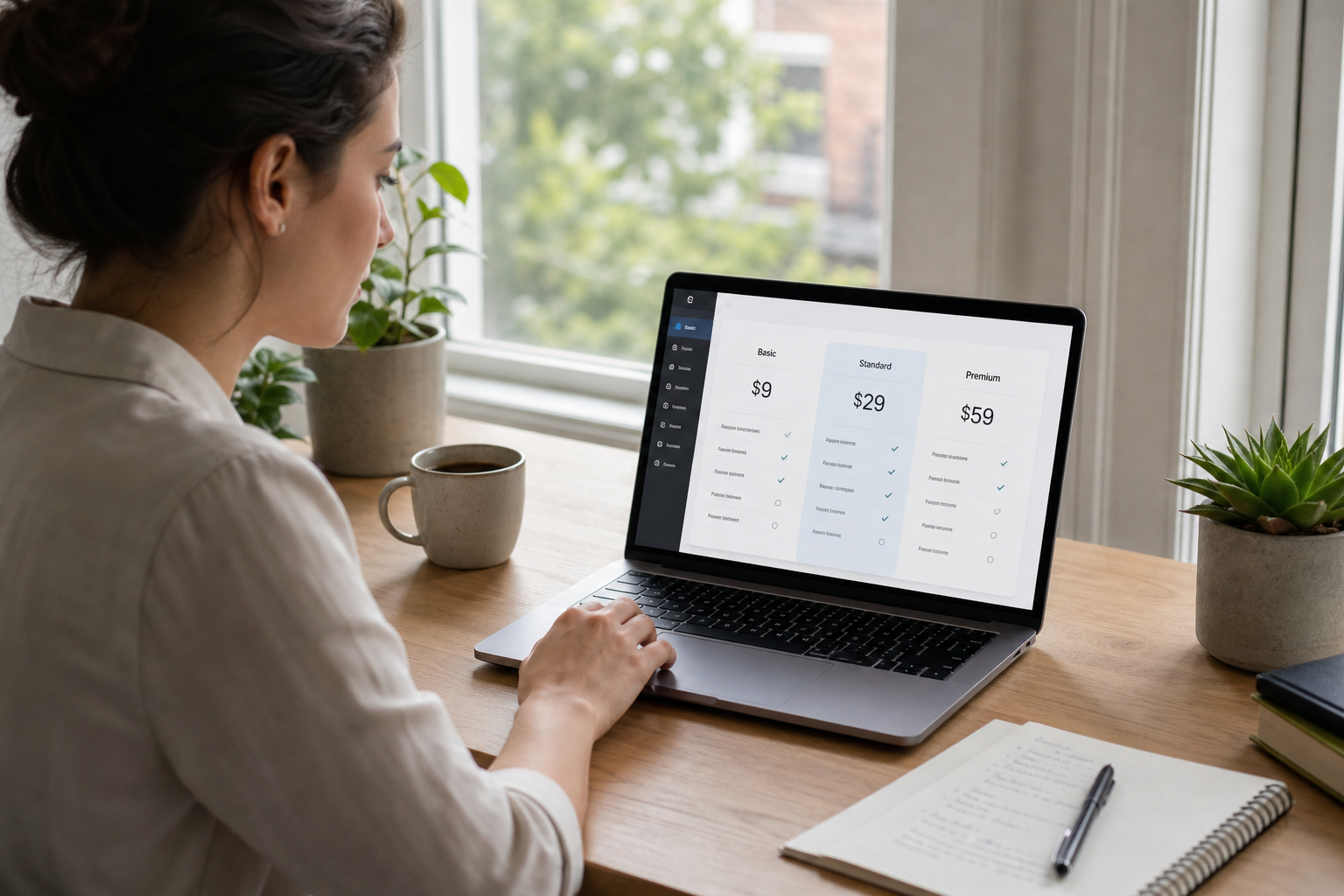
A marketer reviews influencer marketplace pricing options side by side.
What Drives Platform Cost Up or Down?
Several factors shape the price you are quoted. Knowing them helps you negotiate and choose the right tier.
- Team seats and client workspaces.
- Search and export limits on creator data.
- Outreach volume and automated follow-ups.
- Audience authenticity and fake follower checks.
- Sales tracking, such as coupon codes and affiliate links.
For deeper breakdowns, see our guides on influencer marketing SaaS pricing and influencer search platform costs.
Creator Fees: The Other Half of the Budget
Platform fees do not include what creators earn. Creator rates depend on platform, niche, audience size, engagement and usage rights. As a result, two campaigns on the same marketplace can cost very different amounts.
A pricing estimator gives you a realistic starting range before you negotiate. Our walkthrough on using a creator pricing estimation tool shows how. In addition, outreach software adds its own cost, covered in influencer outreach tool pricing.
Hidden Costs to Check Before You Sign
The sticker price can hide extras. Ask about each of these in writing.
- Payment processing or currency conversion fees.
- Onboarding or setup charges.
- Extra seats, exports or credits.
- Product shipping and returns for gifting campaigns.
- Content licensing and paid ad usage rights.
Also remember disclosure rules. In the United States, the Federal Trade Commission expects creators to clearly disclose paid relationships, so build review time into your process.
How to Compare Influencer Platform Costs Step by Step
Use the same process for every vendor so the quotes line up.
- Define your scope: creators, platforms, campaigns and seats for the next quarter.
- List every fee type: subscription, commission, processing and add-ons.
- Estimate creator costs, including shipping and usage rights.
- Add staff time for searching, vetting, outreach and reporting.
- Compare total cost per result, such as per sale or per content piece.

Comparing total campaign cost makes platform quotes easier to judge.
Why Cost Per Result Beats Sticker Price
A cheap plan can be expensive if it sends you to creators with fake followers or the wrong audience country. Therefore, features that protect spend deserve weight in your comparison. Audience authenticity reports, performance prediction and Shopify-synced coupon tracking all help tie creator posts to revenue.
SocialBook, for example, offers search across more than 300 million creator profiles, a fake follower checker, bulk outreach, a campaign CRM and sales tracking in one platform. It also offers fully managed campaigns for teams that prefer to hand off execution. For more on protecting returns, read influencer marketing pricing strategies that protect ROI.
Frequently Asked Questions
What is influencer marketplace pricing?
Influencer marketplace pricing is the total cost of using a platform that connects brands with creators. It covers platform fees, such as subscriptions or commissions, plus the payments made to creators.
Do influencer marketplaces charge a subscription or a commission?
Both models exist. Some platforms charge a flat monthly or annual fee, some take a percentage of each creator payment, and some combine the two.
Are creator fees included in the platform price?
Usually not. Creator fees are negotiated separately and paid on top of the platform cost, unless you buy a fully managed service that bundles them.
How much do influencers charge per post?
Rates vary widely by platform, niche, audience size, engagement and usage rights. A pricing estimator can give a starting range, but the final rate is negotiated.
What hidden costs should I watch for?
Common extras include payment processing fees, seat limits, export caps, onboarding fees, product shipping, content licensing and ad usage rights.
Is a free influencer marketplace worth using?
It can be, for testing a niche or running small gifting campaigns. Free tiers often limit search, outreach volume or analytics, so check whether those limits block your goals.
What is the difference between a marketplace and a managed service?
A marketplace gives you tools and access to creators, and your team runs the campaign. A managed service has the provider source, contact, negotiate with and manage creators for you, at a higher price.
How can I compare influencer marketplace pricing fairly?
Estimate your total cost for the same campaign on each platform, including fees, creator payments and staff time. Then compare cost per result, not just the sticker price.
Does a bigger creator database justify a higher price?
Not by itself. Database size matters less than data freshness, filter depth and audience authenticity checks.
How long does it take to see a return?
It depends on the product, sales cycle and campaign type. Many brands run a small test over several weeks and judge results with tracked coupon codes or affiliate links.
What are the most common pricing mistakes?
Buying on headline price, ignoring seat and usage limits, skipping fake follower checks, and failing to track sales back to creators are the usual errors.
Do agencies pay differently from brands?
Often yes. Agencies typically need more seats, more client workspaces and white-label reporting, which can change the plan they need.
Conclusion
Influencer marketplace pricing has two layers: what the platform charges and what creators earn. Check the model, list every fee, estimate creator costs and add your own time. Then judge each option by cost per result, and test a small campaign before you scale. To see how an all-in-one platform fits your budget, explore SocialBook.