Influencer campaign negotiation tools are software features that help brands research creator rates, send offers, track counteroffers, and lock in contract terms. Choosing the right ones can mean the difference between a fair, trackable deal and an overpaid post nobody can measure. This guide explains what to look for and how to negotiate step by step.
Quick answer: Good negotiation tools combine creator vetting, pricing benchmarks, outreach, and a CRM. Use data to set your offer, define scope in writing, and log every change in one place.
What are influencer campaign negotiation tools?
They are the parts of an influencer platform that support the deal itself. That includes pricing estimates, audience reports, outreach, message history, and contract tracking. In short, they replace scattered DMs and stale spreadsheets with one record of what was offered and agreed.
Negotiation rarely lives in a single feature. Therefore, most teams assemble it from a platform's discovery, vetting, and outreach and collaboration tools.
Why Negotiation Gets Messy Without a System
Many teams still negotiate one email at a time. As a result, rates live in inboxes, contracts sit in shared drives, and nobody remembers what was promised. Reply rates suffer, and follow-ups get missed.
Moreover, budget is often spent on creators with inflated audiences. If you negotiate before verifying quality, you may bargain hard over a rate that was too high to begin with.
Key Features to Look For in Creator Deal Software
Pricing benchmarks
Estimated creator pricing gives you a starting range. Pair it with past brand partnerships to see what similar deals looked like. For deeper context, read these influencer pricing strategies that protect ROI.
Audience vetting
Audience authenticity, demographics, and engagement quality tell you what a creator's reach is really worth. A fake follower checker is especially useful before you name a number.
Outreach and follow-up
Personalized bulk outreach from your own Gmail or Outlook keeps messages human. Automated follow-ups then chase creators who have not replied.
CRM for contracts and approvals
A CRM should hold notes, contracts, timelines, shipping, content status, and payments. Consequently, anyone on your team can see where a deal stands.
How to Negotiate an Influencer Deal in 6 Steps
- Vet the creator. Check authenticity, demographics, and engagement before discussing money.
- Benchmark the rate. Use pricing estimates and past partnerships to set a budget range.
- Define deliverables. List formats, deadlines, usage rights, and exclusivity.
- Send a personalized offer. Explain why you chose the creator and share a clear range.
- Counter and log changes. Trade value, such as product or commission, and record every revision.
- Confirm in writing. Sign a contract covering payment, approvals, and disclosure before shipping product.
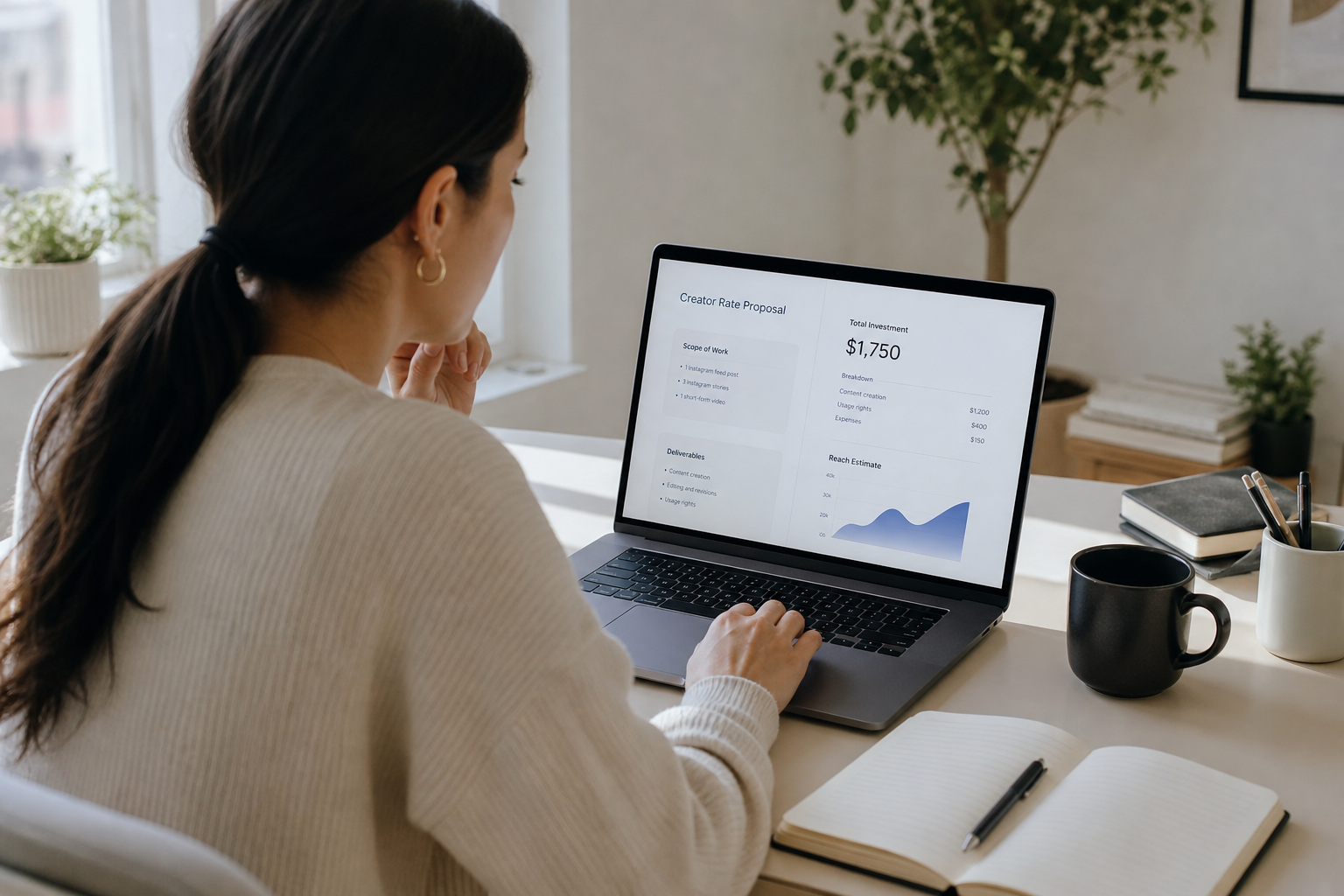
A marketer reviews a creator's proposed rate before replying.
Flat Fee, Commission, or Both?
Each model fits a different goal. The table below summarizes the trade-offs.
| Model | Best for | Trade-off |
|---|---|---|
| Flat fee | Guaranteed content and timing | Cost is fixed regardless of sales |
| Commission or affiliate | Performance-focused ecommerce | Creators may expect a higher upside |
| Hybrid | Balancing risk for both sides | More terms to track |
Tracking matters here. Shopify-synced coupon codes and affiliate links show which creators actually drove sales, so you can renegotiate with evidence next time.
Common Negotiation Mistakes to Avoid
- Agreeing on price before defining scope and usage rights.
- Paying based on follower count alone.
- Skipping written terms for "small" deals.
- Forgetting disclosure. The Federal Trade Commission expects clear disclosure of paid relationships.
Choosing a Platform for Your Team Size
Smaller teams need speed and simplicity, while agencies need shared records. Our roundup of influencer marketing tools for small and mid-sized brands can help you compare options. For a wider view of the workflow, see this influencer campaign management guide.
SocialBook is one option. It is an AI-powered platform for brands, ecommerce companies, and agencies. It offers search across 300 million+ creator profiles on TikTok, Instagram, YouTube, and Twitch, plus audience vetting, a creator pricing estimator, bulk outreach, a CRM, and campaign tracking. It also provides fully managed campaigns, including sourcing, outreach, and negotiation, for teams that prefer to hand off the work.

Written terms keep deliverables, payment, and approvals clear for both sides.
Frequently Asked Questions
What are influencer campaign negotiation tools?
Influencer campaign negotiation tools are software features that help brands research creator pricing, send offers, track counteroffers, and record agreed terms. They keep rates and deliverables in one system.
Do I need dedicated software to negotiate with influencers?
No, but it helps once you work with more than a handful of creators. Spreadsheets and inboxes become hard to track at scale.
How do I know what to pay an influencer?
Start with the creator's estimated pricing, engagement quality, and past brand deals. Then adjust for usage rights, exclusivity, and content format.
What should an influencer agreement include?
It should cover deliverables, deadlines, payment terms, usage rights, exclusivity, approval steps, and disclosure requirements.
Is it better to pay a flat fee or commission?
It depends on your goal. Flat fees secure content, while commission or affiliate pay ties cost to sales. Many deals combine both.
How can I negotiate without offending a creator?
Be transparent about budget and offer value beyond cash, such as product or a longer partnership. Respectful, specific offers get better replies.
Why check for fake followers before negotiating?
Fake followers inflate reach, so a rate based on follower count may overpay. Verifying authenticity first gives you a fair baseline.
What is a common mistake in influencer negotiations?
A common mistake is agreeing on price without defining scope. Vague deliverables lead to disputes over revisions and usage rights.
How long does a typical negotiation take?
Simple deals can close in a few days, while larger campaigns with contracts may take a couple of weeks. Clear briefs and templates speed things up.
Do influencer campaign negotiation tools handle contracts and payments?
Some do. Look for a CRM that stores contracts, timelines, approvals, and payment status alongside the conversation history.
Do I have to disclose paid partnerships?
Yes. In the United States the Federal Trade Commission expects clear disclosure of material connections between brands and endorsers.
How does SocialBook support creator negotiations?
SocialBook offers creator search, audience vetting, pricing estimates, bulk outreach from your own Gmail or Outlook, and a CRM for contracts and approvals.
Conclusion
Strong deals start with verified audiences, fair pricing benchmarks, and clearly defined scope. The best influencer campaign negotiation tools tie those pieces together with outreach, a CRM, and sales tracking, so every rate you agree to can be defended and measured. Vet first, negotiate on value, and put every term in writing.