An influencer campaign bid platform is an online marketplace where brands post campaign briefs and creators apply with a pitch and a proposed rate. It replaces long email chains with a structured way to compare offers. This guide explains how bidding works, what to check, and how to run your first campaign.
Quick answer: Post a clear brief, let creators bid, vet each applicant's audience, then pick on fit and value, not price alone. Track sales with coupon codes or affiliate links.
What Is an Influencer Campaign Bid Platform?
It is a two-sided marketplace. Brands publish briefs, and creators respond with applications that include pricing. In other words, the creator comes to you instead of you chasing them.
This model is closely related to an influencer marketplace. The difference is emphasis. Bidding puts price and pitch at the center of the decision.
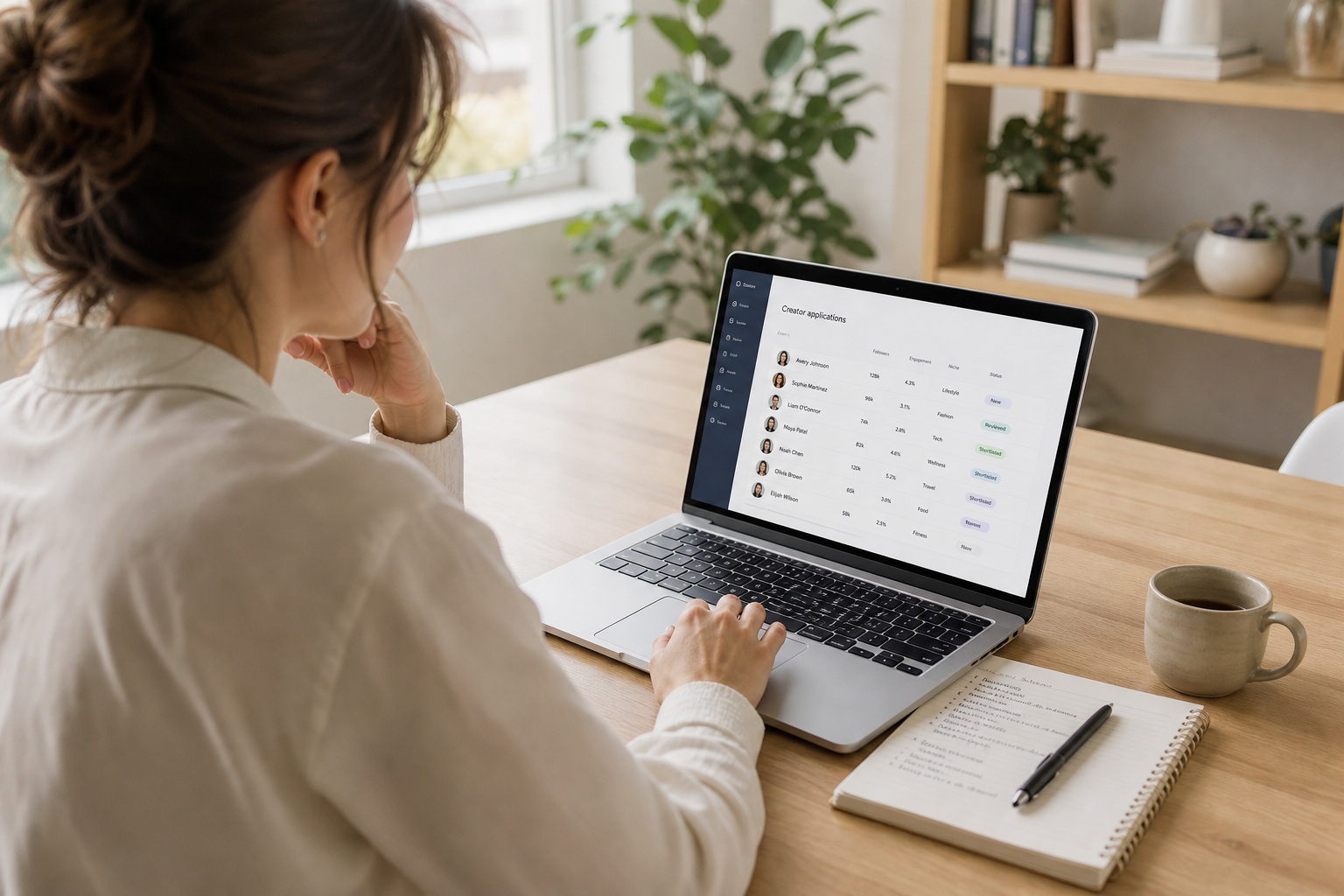
A marketer compares creator applications on an influencer campaign bid platform.
How Creator Bidding Works Step by Step
The flow is simple. However, each step affects the quality of your results.
- Write a clear brief. State your goal, deliverables, platforms, timeline, budget range and disclosure rules.
- Publish the campaign. Let matching creators apply, and invite a few hand-picked ones directly.
- Vet every applicant. Check audience demographics, authenticity and past brand work before price.
- Negotiate and contract. Accept, counter or decline, then confirm rights, payment and deadlines in writing.
- Track and measure. Use coupon codes or affiliate links to see which creators drive sales.
Bidding vs. Direct Outreach
Bidding brings inbound interest. Direct outreach gives you control over who you contact. Therefore, the best teams combine them.
| Factor | Bidding | Direct outreach |
|---|---|---|
| Who starts | Creator applies | Brand reaches out |
| Pricing | Stated up front | Negotiated later |
| Targeting | Self-selected | Precise |
| Best for | Speed and volume | Specific, high-fit creators |
For the outreach side, see this guide to influencer campaign management.
What to Look for in a Bid-Based Platform
Audience verification
A low bid means little if the audience is inflated. Look for authenticity scores, location data and a fake follower checker. Otherwise you may pay for reach that does not exist.
Pricing guidance
A creator pricing estimator helps you judge whether a bid is fair. It gives you a benchmark before you negotiate.
Workflow and tracking
Contracts, content approvals, shipping and payments should sit in one place. In addition, sales tracking should be built in, ideally through coupon codes or affiliate links.

Teams review creator content and briefs before approving bids.
Where SocialBook Fits
socialbook.io offers an influencer marketplace where brands post campaigns and influencers apply. It also provides search across 300+ million creator profiles on TikTok, Instagram, YouTube and Twitch, bulk outreach, an Instagram fake follower checker, and campaign analytics. Brands that prefer hands-off help can use fully managed campaigns.
If you are comparing tools, the influencer management platform buyer's guide covers selection criteria. For smaller budgets, read about finding micro-influencers.
Common Mistakes to Avoid
- Writing vague briefs that attract mismatched bids.
- Choosing the cheapest creator without vetting the audience.
- Skipping disclosure terms. The Federal Trade Commission expects clear disclosure of brand relationships.
- Launching before tracking codes or links are ready.
For background on the wider field, see the overview of influencer marketing on Wikipedia.
Frequently Asked Questions
What is an influencer campaign bid platform?
It is an online marketplace where brands post campaign briefs and creators apply with a proposed rate or pitch. Brands compare applicants and pick the best fit.
How does bidding work for creators?
Creators browse open briefs, apply with a price and a short pitch, and wait for the brand to accept, counter or decline. Accepted creators move into contracts and delivery.
Is a bid platform better than direct outreach?
Neither is better in every case. Bidding brings inbound applicants fast, while direct outreach lets you target specific creators. Many brands use both.
How much does an influencer campaign cost?
Cost varies widely by platform, audience size, niche and deliverables. Use a pricing estimator and several bids to set a realistic budget rather than relying on a single average.
How do I avoid creators with fake followers?
Check audience authenticity, engagement quality and audience location before accepting a bid. A fake follower checker makes this fast.
What should a campaign brief include?
Include goals, deliverables, platforms, timeline, budget range, usage rights and disclosure requirements. Clear briefs attract better-matched bids.
How long does a bid-based campaign take to launch?
Many briefs receive applications within days, and a small campaign can launch in a couple of weeks. Timing depends on your approvals, shipping and creator availability.
Should I choose the lowest bid?
Not automatically. The lowest bid may come with weak audience fit or poor content quality. Compare price against authenticity, past results and relevance.
Do creators need disclosure on sponsored posts?
Yes. In the United States, the FTC expects clear disclosure of material connections between brands and endorsers. Put disclosure rules in your brief and contract.
How do I measure results from bids?
Use unique coupon codes, affiliate links and campaign analytics to tie posts to sales. Track engagement and cost per result as well.
Can small brands use an influencer campaign bid platform?
Yes. Bidding suits small budgets because creators state their prices up front, and micro-creators often apply for product-based or low-fee deals.
What are common mistakes brands make with bids?
Common mistakes include vague briefs, skipping audience vetting, choosing on price alone and failing to set up tracking before launch.
Conclusion
An influencer campaign bid platform gives brands speed, price transparency and a wider pool of applicants. It works best when you write a precise brief, verify every audience, and weigh fit over cost. Finally, set up tracking before launch so you know which creators earn their fee. To explore bidding, search and campaign tools in one place, visit SocialBook.