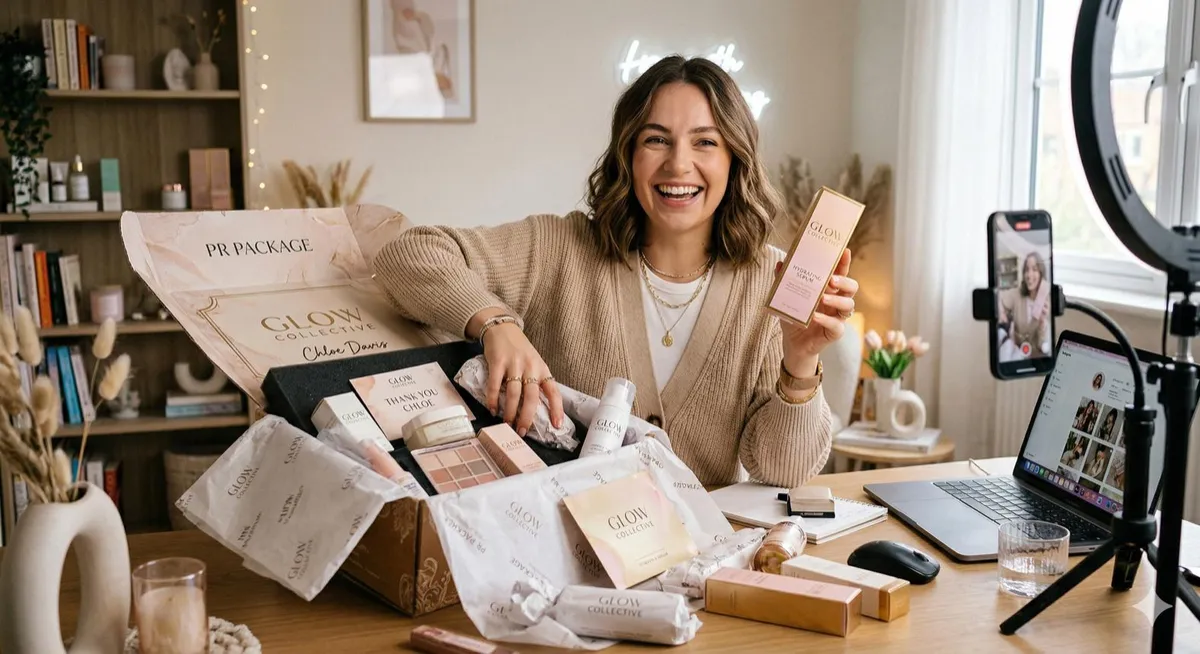
How to Turn Influencer Gifting Into a Growth Strategy
An influencer gifting program turns free product sends into a repeatable marketing channel, but only when it's built with the right creators, a clear goal, and a system for measuring what actually happens after the box ships. Too many brands treat gifting as an afterthought: find a few creators, mail out samples, and hope something sticks. That approach wastes inventory, burns outreach time, and rarely produces content worth the cost.
The truth is that a well-run influencer gifting program isn't luck, it's a process. In this guide, you'll find everything the competition leaves out: a complete seven-step build framework, a real cost breakdown, FTC disclosure rules explained in plain language, a side-by-side comparison of gifting versus paid partnerships, outreach templates you can copy today, and the exact metrics that separate a profitable program from a pile of unopened packages.
Whether you're launching your first creator collaboration or scaling an existing one, this is the only resource you'll need to build an influencer gifting program that produces authentic content, real relationships, and measurable return.
What Is an Influencer Gifting Program?
An influencer gifting program is a structured marketing strategy in which brands send free products to selected influencers or content creators in exchange for the chance, not the guarantee, of authentic content, product reviews, social exposure, and eventual sales. It's also called influencer product seeding or PR gifting, and the terms are frequently used interchangeably across the industry.
Unlike a traditional paid sponsorship, gifting doesn't always involve payment or a guaranteed post. The creator receives the product and decides whether to feature it, depending on the terms of the collaboration. For example, a skincare brand launching a new moisturizer might send units to beauty creators who already publish skincare routines. A home appliance brand might target creators who film home-improvement content. When the product fits naturally into existing content, the creator has a genuine reason to introduce it to their audience.
However, the value of gifting extends well past the single post. Brands use it to discover promising creators, collect honest product feedback, generate social proof, and identify candidates for future paid campaigns or affiliate partnerships. In short, gifting works best as a structured, repeatable system, not a one-time giveaway.
Influencer Gifting vs. Influencer Seeding vs. Paid Partnerships
These terms overlap, but it helps to separate them clearly. Influencer gifting typically refers to an individual product send with no payment and no guaranteed deliverable. Product seeding usually describes the broader, ongoing strategy of distributing products across many creators to build awareness over time. A paid partnership, by contrast, involves compensation in exchange for a defined deliverable, a specific post, usage rights, and an agreed timeline. Understanding the distinction matters because it changes what you can legally expect from a creator, and it changes how you should measure success.
Why Build an Influencer Gifting Program in the First Place?
Influencer marketing has become increasingly competitive, and established creators often receive more collaboration requests than they can accept. For brands with limited budgets, paying every creator for a first-time collaboration simply isn't practical. That's precisely where a gifting strategy earns its place in the marketing mix.
1Introduce Your Product to Relevant Audiences
A product recommendation feels far more natural coming from a creator whose content already matches the product category. For instance, a fitness accessory brand will typically benefit more from gifting creators who regularly share workout routines than from a general lifestyle influencer with a bigger following but little audience overlap. The goal isn't simply to reach more people, it's to reach people who are likely to care.
2Generate Authentic User-Generated Content (UGC)
Product demonstrations, unboxing videos, tutorials, and honest first impressions all help potential customers understand how a product actually works. This type of creator-generated content, often called user-generated content, can also inspire your own social posts, product pages, email campaigns, or future ad creative. That said, receiving a free product does not automatically grant a brand permission to reuse a creator's content in paid ads. Always secure usage rights in writing before repurposing anything.
3Test Creator Partnerships Before Scaling Spend
Gifting can act as the initial relationship-building stage before a bigger collaboration. A creator who genuinely enjoys your product and communicates well with your team may become a strong candidate for a paid campaign, affiliate deal, or long-term ambassador role. This lets brands evaluate fit before making a larger financial commitment, a step many paid-first programs skip entirely.
4Build Long-Term Brand Advocacy
The strongest gifting programs never treat creators as disposable contacts. When a creator has a positive experience, a thoughtful follow-up can open the door to future launches, repeat seeding, and deeper partnerships. Over time, this builds a network of creators who genuinely understand your products, and that network becomes one of your most valuable long-term marketing assets.
How to Build an Influencer Gifting Program in 7 Steps
Here is the complete, repeatable framework for building an influencer gifting program that produces real results rather than a stack of unopened packages.
1Define Your Campaign Goal Before Sending Products
Before contacting a single creator, decide exactly what you want the campaign to accomplish. Different goals require different creator selection criteria and success metrics. If you're launching a new product, prioritize relevant reach, awareness, and content volume. If you want stronger social proof, focus on genuine reviews and useful UGC. If sales are the priority, combine gifting with trackable discount codes, affiliate links, or a follow-up paid collaboration.
For example, a home appliance brand entering the U.S. market might set three initial objectives:
- Introduce the product to creators in the home, cleaning, and lifestyle categories.
- Generate authentic demonstrations showing everyday use.
- Identify creators who could become long-term marketing partners.
Avoid treating every metric as equally important. Instead, choose one primary objective and a few supporting KPIs so the campaign has a clear direction from day one.
2Choose Products That Creators Can Naturally Feature
Not every product is equally suited to gifting. The best candidates usually have a clear use case, a visual demonstration, a distinctive feature, or a natural place in a creator's existing content. A beauty product might work well in a tutorial; a kitchen appliance could fit into a recipe video; a portable power station might appeal to outdoor creators who film camping trips.
Before selecting products, ask three questions: Is the product relevant to the creator? Can the product tell a story? And can you support the campaign operationally, checking availability, shipping costs, packaging, and fulfillment capacity before confirming your creator list?
Calculate the full cost of gifting, including product cost, packaging, shipping, fulfillment, and the time spent sourcing and communicating with creators. A free product is never a cost-free campaign.
3Find Influencers Who Actually Fit Your Brand
Creator selection is the single biggest factor influencing whether your influencer gifting program succeeds or fails. A creator can have impressive follower numbers and still be a poor fit if their audience rarely engages with your product category.
Start by evaluating five characteristics:
- Audience relevance: Does the creator reach people in your target country, age group, or interest category?
- Content quality: Can they demonstrate your product in a way that feels natural and useful?
- Engagement quality: Do their posts generate meaningful comments, saves, and shares, not just likes?
- Brand alignment: Does their tone, aesthetic, and past content fit your positioning?
- Collaboration potential: Have they featured similar products or expressed interest in brand partnerships before?
Nano and micro-influencers can be especially useful here because they often serve tightly focused communities. However, smaller creators aren't automatically better, the right choice depends entirely on your product and objectives.
To make discovery faster, brands can use SocialBook's influencer search tool to explore creators and build a shortlist based on relevant discovery criteria, rather than manually scrolling through hundreds of profiles. If you're also comparing full-scale platforms for ongoing creator management, our 2026 buyer's guide to influencer management platforms breaks down what to look for. Still, a search result is only a starting point, evaluate every shortlisted creator individually before committing budget.
4Contact Creators Before Shipping the Gift
One of the most common mistakes is shipping products without confirming interest first. The creator might not need the item, might not accept gifting collaborations, or might simply be unavailable. The result is wasted inventory and wasted shipping spend. A short, personalized outreach message solves this before it becomes a problem.
Here is a simple influencer gifting outreach template you can adapt today:
Subject: We'd love to send you something from [Brand]
Hi [Creator Name], I've been enjoying your content about [specific topic], especially your recent post about [specific detail]. We're [Brand Name], and we make [brief product description]. I thought our [product name] might be a great fit for the kind of content you share.
We'd love to send one over for you to try, with no obligation to post. Would you be interested? Thanks, [Your Name]
If your campaign requires specific deliverables, such as a TikTok video or Instagram Reel, be transparent about that from the start. For a deeper playbook on sending personalized messages to dozens of creators without sounding robotic, see our guide on how to reach out to influencers at scale without it feeling spammy. Establish scope, timeline, usage rights, and any compensation in writing before you ship anything.
5Make the Gifting Experience Worth Talking About
Getting the product into a creator's hands is only the beginning. The experience surrounding the product influences whether they use it, remember it, and decide to share it. Personalization doesn't require expensive packaging, a few thoughtful details are usually enough. Include a short note explaining why you selected the creator, and offer a color, size, or variation choice whenever practical.
A lightweight creator brief should include:
- A short introduction to the product and its main benefits.
- Relevant specifications or usage instructions.
- A few optional content ideas, without scripting the creator's opinion.
- Your brand's social handles and campaign hashtag, if applicable.
- A discount code or affiliate link, if the collaboration includes one.
- Clear disclosure guidance and any requested content usage rights.
The goal is to remove friction without removing creative freedom. Instead of asking a creator to repeat a list of product features, suggest showing how the product solves a common problem in their daily routine.
6Follow Up Without Turning Gifting Into Pressure
After the product ships, send tracking information and confirm delivery where possible. Once the creator has had time to try it, send a brief follow-up asking whether everything arrived safely. For a product-only gift, avoid repeatedly asking when they'll post, if there was no posting obligation, respect that agreement. If a creator does publish content, thank them, engage with the post, and ask permission before reusing it elsewhere.
As your creator list grows, keeping track of who received what, who responded, and who's worth re-engaging becomes difficult in a spreadsheet. That's typically the point where brands adopt a dedicated system, our guide on how brands manage creators with an influencer CRM in 2026 explains how to organize these relationships at scale.
7Measure Results and Build Your Next Creator List
A gifting campaign shouldn't end when the first posts go live. Review the results to understand where your budget went, which creators responded, and what to change next time. Track these five metrics:
- Creator acceptance rate, the percentage of contacted creators who agree to receive the product.
- Content publication rate, the percentage of recipients who publish within your measurement window.
- Cost per published post, total campaign cost divided by number of posts generated.
- Reach and engagement, views, comments, shares, and saves compared against your original objective.
- Attributed traffic and sales, tracked through unique links, discount codes, or affiliate attribution.
Don't judge every creator by the same standard, one may generate excellent product education, while another drives measurable purchases. After the campaign, prioritize creators who showed genuine interest or delivered results; they become the starting point for your next gifting round.
How Much Does an Influencer Gifting Program Cost?
The cost of an influencer gifting program depends on your product, shipping destinations, packaging, creator list size, and the time required to manage the campaign. Consider a hypothetical campaign sending products to 100 creators:
| Expense | Cost |
|---|---|
| Product cost: $30 × 100 | $3,000 |
| Shipping: $12 × 100 | $1,200 |
| Packaging: $5 × 100 | $500 |
| Campaign management | $500 |
| Total campaign cost | $5,200 |
In this example, the average cost per recipient is $52. If 20 creators publish content, the cost per published post is $260. If 40 publish, that figure drops to $130, assuming the same total campaign cost. These are illustrative numbers, not industry benchmarks, actual results vary by category, creator interest, and campaign design.
The lesson is simple: sending more products doesn't automatically improve efficiency. Better targeting, opt-in outreach, and a genuinely relevant product offer help your budget go further than volume alone ever will.
FTC Disclosure Rules Every Influencer Gifting Program Must Follow
Legal compliance is one of the most overlooked parts of gifting, and getting it wrong can expose both the brand and the creator to real risk. In the United States, the FTC's endorsement guidance generally requires creators to clearly disclose material connections with a brand, including receiving free products, whenever they endorse or discuss them. A gifting arrangement should never be presented as an independent, unpaid endorsement if the creator received something of value in return.
In practice, this means creators should use clear, unambiguous disclosure language, such as "#ad," "#gifted," or a plain statement like "this product was sent to me for free", placed where viewers can't miss it. Vague or buried disclosures, such as hashtags hidden at the bottom of a long caption, typically don't meet the standard. Brands operating internationally should also check the advertising disclosure rules specific to each market, since requirements differ between the United States, the United Kingdom, the European Union, and other regions. Building disclosure expectations into your creator brief from the start, as outlined in Step 5 above, removes most of this risk before it becomes a problem.
Influencer Gifting vs. Paid Influencer Marketing: Which Should You Choose?
Neither approach is universally better, each serves a different stage of your influencer marketing strategy. The table below compares them directly so you can decide which fits your current goal.
| Factor | Influencer Gifting | Paid Influencer Marketing |
|---|---|---|
| Cost structure | Product + shipping only | Flat fee or commission plus product |
| Guaranteed deliverable | No, unless agreed in writing | Yes, contractually defined |
| Best for | Discovery, UGC, relationship-building | Launches, guaranteed timelines, reach goals |
| Content control | Low to moderate | High |
| Scalability | High, limited by product cost | Limited by budget |
In practice, many of the most successful brands run both in parallel: gifting to discover and warm up new creators, and paid partnerships to lock in guaranteed deliverables with proven performers.
Common Influencer Gifting Mistakes to Avoid
Even a well-funded campaign underperforms when the basic execution is weak. Watch for these seven mistakes:
- Choosing creators based on follower count alone. A large audience doesn't guarantee relevance, engagement, or sales.
- Sending generic messages at scale. Creators recognize copy-and-paste pitches instantly.
- Assuming every gift guarantees a post. Without defined deliverables, gifting isn't a content purchase.
- Sending mismatched products. A poor fit makes genuine content far less likely.
- Failing to track campaign costs. Without full cost visibility, you can't compare gifting to other channels.
- Ignoring content usage rights. A public post isn't automatically available for your paid ads.
- Failing to follow up with successful creators. A creator who already likes your product is often a stronger candidate than someone brand new.
Avoiding these mistakes is what turns gifting from an isolated experiment into a repeatable creator acquisition strategy.
How SocialBook Helps You Find Influencers for Gifting Campaigns
Finding the right creators is often the most time-consuming part of building an influencer gifting program, especially for brands entering overseas markets. SocialBook helps marketers discover and evaluate potential influencers through its influencer search platform, giving you a starting point for building a shortlist, reviewing relevant profiles, and planning outreach.
For a structured workflow, follow this five-part approach:
- Define your target market and creator profile. Identify the country, content niche, audience, and product category that matter most.
- Research relevant creators. Use SocialBook to explore potential influencers and identify profiles worth reviewing, prioritizing relevance over raw follower count.
- Build a qualified shortlist. Review recent content, audience alignment, engagement quality, and prior brand collaborations before contacting anyone.
- Personalize your outreach. Explain why the product fits the creator and make the gifting terms clear before shipping.
- Track results outside the discovery stage. Record acceptance, delivery, publication, costs, and attributed sales, then keep top performers on your list for future rounds.
SocialBook supports the creator discovery and research stage, while your team's workflow handles fulfillment, communication, content permissions, and performance measurement. This approach is especially useful for brands testing a new market or building an initial creator network before investing in larger paid campaigns. Explore the broader SocialBook platform to see how discovery, outreach, and reporting fit together.
Ready to find creators who fit your brand? Start exploring SocialBook's influencer search and build a more focused shortlist for your next gifting campaign.
Frequently Asked Questions About Influencer Gifting Programs
What is the difference between influencer gifting and influencer seeding?
The terms are often used interchangeably. Both generally refer to sending free products to creators to encourage discovery, authentic content, and brand awareness. Some marketers use product seeding to describe the broader, ongoing strategy, and influencer gifting to describe individual product sends.
Do influencers have to post when they receive free products?
Not necessarily. In a product-only gifting arrangement with no posting obligation, creators can choose whether to publish content. If your campaign requires a specific deliverable, communicate the terms clearly and agree on them in writing before shipping.
How do you get influencers to post gifted products?
Start with creators whose interests and audiences genuinely match your product. Contact them before shipping, explain why you selected them, offer relevant product options, and make the experience easy to share. A thoughtful follow-up helps, but avoid pressuring creators when posting was never agreed upon.
Are nano and micro-influencers good for gifting campaigns?
They can be an excellent starting point, especially when their audience is concentrated around a relevant niche. However, size alone doesn't determine success, evaluate audience fit, content quality, and engagement authenticity for your specific product.
How do you measure the ROI of influencer gifting?
Track the full campaign cost, creator acceptance rate, published content, reach, engagement, and attributed sales. For a sales-focused campaign, use unique discount codes or trackable links. If the primary goal is UGC, assess the quantity, quality, and permitted uses of the content generated.
Is influencer gifting better than paid influencer marketing?
Neither approach is universally better. Gifting helps brands introduce products, discover new creators, and build relationships on a flexible budget. Paid partnerships suit situations needing agreed deliverables, defined timelines, or greater creative control. Many brands run both together.
How can brands find influencers for gifting campaigns?
Brands can research creators manually on social media or use influencer discovery platforms such as SocialBook. Start with your target market and niche, review creator content and audience relevance, and build a shortlist before beginning personalized outreach.
How many creators should a brand include when it launches an influencer gifting program?
There's no universal number, but most brands launching their first influencer gifting program start with a small test batch of 15 to 30 creators. This size is large enough to reveal patterns in acceptance and content publication rates, yet small enough to manage personally before scaling to 100 or more creators in later rounds.
What should a brand include in a gifting agreement with a creator?
Even informal gifting arrangements benefit from a simple written agreement covering the product being sent, whether a post is expected, any requested disclosure language, content usage rights, and the timeline, if one applies. This protects both sides and prevents misunderstandings later.
Can influencer gifting work for B2B brands?
Yes, though it looks different than consumer gifting. B2B brands typically gift software trials, physical demo units, or branded merchandise to industry creators, analysts, or niche LinkedIn and YouTube voices who cover relevant tools, rather than targeting broad lifestyle audiences.
Final Thoughts
An effective influencer gifting program is about far more than getting products into creators' hands, it's about creating a strong match between your product, the creator, and the audience you want to reach. Start with a clear goal, select products worth featuring, identify relevant creators, confirm interest before shipping, and measure what happens afterward. Then use the results to refine your creator list and build longer-term relationships.
With a focused strategy and a repeatable process, influencer gifting can become a practical, scalable part of your broader influencer marketing plan, not just another round of PR packages that disappear without a trace.
Looking for creators for your next campaign? Explore SocialBook's influencer search platform to start researching potential partners for your brand.