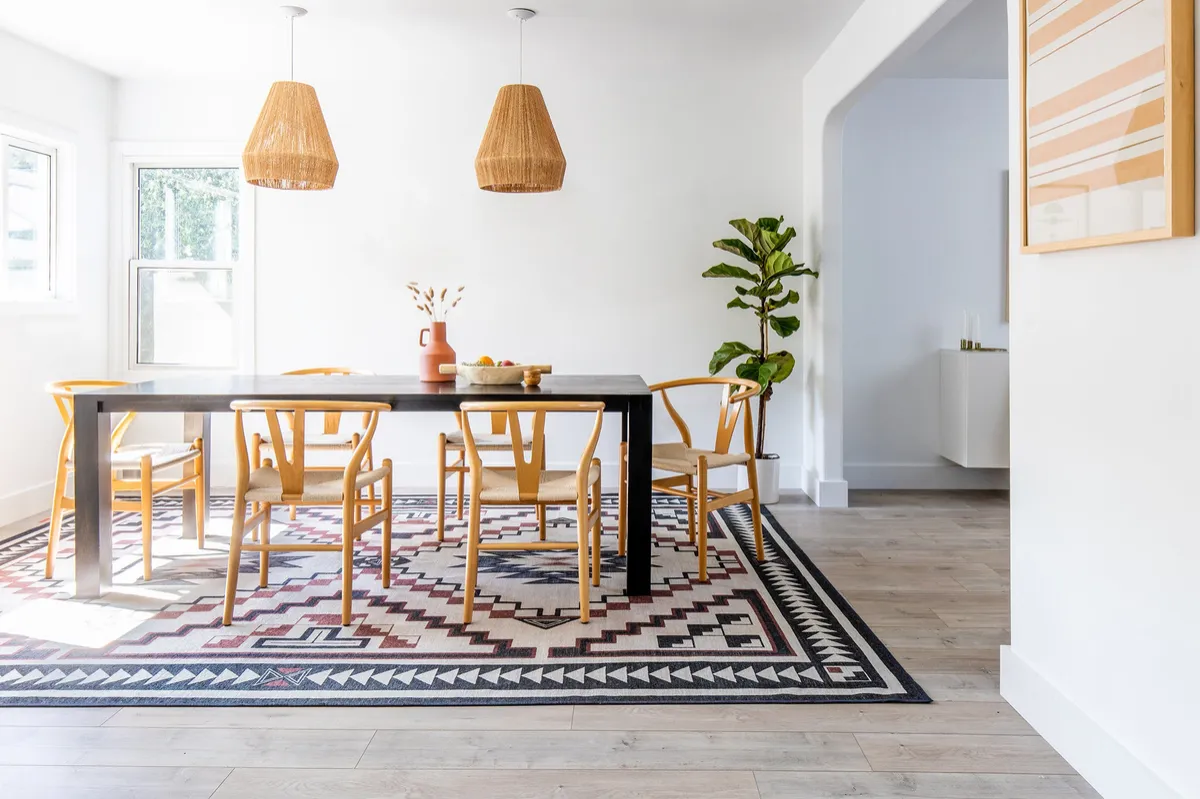
Why Millennials Are Obsessed With Ruggable: The Washable Rug Brand That Built a $300M Business
For most people, rugs aren't particularly exciting.
They're simply part of the home—a finishing touch that adds warmth, comfort, and style to a room. Whether it's a living room, bedroom, hallway, or nursery, rugs have become a staple in modern households.
And that's exactly why the category is so competitive.
In the United States alone, the rug and carpet market is projected to generate nearly $18 billion in revenue in 2024. For decades, established brands dominated the industry with products that were beautiful, durable—and notoriously difficult to clean.
Then came Ruggable.
Founded by entrepreneur Jeneva Bell, the company emerged from a surprisingly relatable frustration. After dealing with pet accidents and the challenge of cleaning traditional rugs, Bell began asking a simple question:
Why can't a rug be washed like clothing?
That idea eventually evolved into one of the most disruptive innovations the home décor industry has seen in years.
Today, Ruggable has grown from a startup with a unique concept into one of the most recognizable direct-to-consumer home brands in North America. According to industry estimates, the company generated more than $310 million in net sales in 2024.
Its success story offers valuable lessons not only for home brands but for any company looking to transform a common consumer frustration into a scalable business.
Reinventing the Rug
At the heart of Ruggable's success is a surprisingly simple innovation.
Traditional rugs are difficult to maintain. Coffee spills, muddy footprints, pet accidents, and everyday wear can quickly turn an expensive rug into a source of stress.
For families with children or pets, this problem is even more pronounced.
Ruggable solved it by splitting the rug into two components:
- A removable, machine-washable rug cover
- A reusable non-slip rug pad
When the rug gets dirty, users simply detach the top layer, place it in the washing machine, and reattach it after cleaning.
What sounds like a small product improvement fundamentally changes the ownership experience.
Instead of worrying about stains, consumers gain peace of mind.
Instead of paying for professional cleaning services, they can handle maintenance at home.
The product removes a major barrier that has existed in the category for decades.
Selling Flexibility, Not Just Cleanliness
While machine washability is Ruggable's most famous feature, it's not the only reason customers keep coming back.
The company's modular design introduces another powerful benefit: customization.
Since rug covers can be swapped while keeping the same rug pad, customers can easily change their home's appearance without purchasing an entirely new rug.
A neutral design for everyday living.
A festive pattern for the holidays.
A bold statement piece for a room makeover.
The flexibility turns rugs from static home décor items into interchangeable design elements.
This aligns perfectly with the preferences of younger consumers, particularly Millennials and Gen Z homeowners, who increasingly view home décor as an extension of personal identity.
For these customers, the appeal isn't simply practicality.
It's the ability to refresh their space whenever they want.
Solving the Trust Problem Through Content
Innovative products often face a common challenge:
Consumers don't immediately believe the promise.
When shoppers first encounter Ruggable, their reaction is usually the same:
"Can a rug really go into a washing machine?"
That's where the brand's content strategy becomes critical.
Rather than relying heavily on traditional advertising, Ruggable focused on demonstrating its product in real-world situations.
Across Instagram, TikTok, Pinterest, and YouTube, the company consistently showcases one thing:
Proof.
A spilled glass of wine.
A muddy dog running through the house.
A toddler dropping snacks on the floor.
Then comes the satisfying part: the rug cover is removed, washed, and returned looking brand new.
These demonstrations do more than explain the product.
They eliminate skepticism.
Consumers don't have to imagine how the product works.
They can see it.
And in today's digital landscape, visual proof is often more persuasive than any marketing claim.
Turning Everyday Problems Into Viral Content
One reason Ruggable performs exceptionally well on social media is because its content revolves around situations people instantly recognize.
Everyone understands the frustration of cleaning a stain.
Everyone has experienced a household accident.
Everyone has worried about ruining something expensive.
The brand transforms these moments into highly shareable content.
Instead of focusing on technical specifications, Ruggable focuses on emotional relief.
The story isn't about a rug.
It's about removing stress from everyday life.
That narrative is far more compelling—and far more likely to be shared.
The Influencer Strategy Behind the Growth
Like many successful DTC brands, Ruggable has embraced influencer marketing.
But the company approaches it differently from brands chasing celebrity endorsements.
Rather than focusing solely on mega influencers, Ruggable works with a broad mix of creators across several niches:
- Home décor creators
- Interior designers
- Pet influencers
- Parenting creators
- Lifestyle bloggers
- DIY enthusiasts
The reason is simple.
The product naturally fits into their audiences' lives.
Pet owners understand the challenge of fur and accidents.
Parents know the inevitability of spills.
Home enthusiasts appreciate design flexibility.
When creators demonstrate Ruggable in authentic situations, the content feels less like advertising and more like a recommendation from a friend.
This dramatically increases credibility.
Why Mid-Tier Influencers Outperform Celebrities
One of Ruggable's smartest decisions has been investing heavily in mid-tier and micro influencers rather than relying exclusively on large celebrity campaigns.
These creators often generate:
- Higher engagement rates
- Greater audience trust
- More authentic storytelling
- Better cost efficiency
A parenting creator showing how they cleaned up after a toddler's snack disaster often resonates more than a polished celebrity advertisement.
The relatability factor matters.
Consumers want to see products solving real problems for real people.
That's exactly what Ruggable delivers.
The strategy has helped the brand generate massive social visibility while maintaining efficient customer acquisition costs.
From Product Marketing to Lifestyle Marketing
Perhaps the most impressive aspect of Ruggable's growth is that the company doesn't market rugs.
It markets a lifestyle.
The brand's messaging consistently focuses on:
- Living beautifully with pets
- Raising children without stress
- Creating stylish homes
- Simplifying everyday life
The rug simply becomes the tool that enables those experiences.
This shift—from selling products to selling outcomes—is one of the defining characteristics of successful modern consumer brands.
The Bigger Lesson for Consumer Brands
Ruggable's rise demonstrates an important principle for brands entering crowded markets.
Innovation doesn't always require inventing something entirely new.
Sometimes, it means rethinking a familiar product through the lens of a common consumer frustration.
The company identified a problem millions of people accepted as unavoidable.
Then it solved that problem in a way that was simple, understandable, and easy to demonstrate online.
Combined with a content strategy built around trust, authenticity, and relatable storytelling, the result was a brand capable of standing out in a highly mature category.
Final Thoughts
Ruggable didn't build a $300 million business by selling rugs.
It built a $300 million business by eliminating anxiety.
By making rugs washable, customizable, and easy to maintain, the company transformed a traditional household product into a modern lifestyle solution.
More importantly, it showed how powerful content can be when it doesn't just showcase a product—but proves its value.
For brands looking to grow in competitive international markets, the lesson is clear:
Consumers rarely buy features.
They buy solutions to problems they experience every day.
And when a brand can solve those problems while fitting naturally into people's lives, extraordinary growth often follows.
