How Fishwife Turned Canned Fish Into a Lifestyle Brand and Landed in 1,800+ Retail Stores
For many consumers, canned food isn't exactly exciting.
It's often associated with convenience, emergency pantry supplies, or budget-friendly meals. In most grocery stores, canned seafood sits quietly on the shelf, competing primarily on price rather than brand identity.
But in recent years, a new generation of food brands has begun challenging that perception.
One of the most remarkable examples is Fishwife.
Founded in 2020, the premium tinned seafood company has transformed canned fish from a forgotten pantry staple into a highly shareable lifestyle product. In just a few years, the brand has achieved rapid revenue growth, expanded into more than 1,800 retail locations across North America, and secured distribution with major retailers such as Whole Foods.
Its success raises an interesting question:
How do you turn one of the most traditional food categories into a modern consumer obsession?
The answer lies in branding, storytelling, and cultural relevance.
Reimagining an Old Category
The global canned food industry is enormous and remarkably resilient.
As consumers increasingly seek convenient, protein-rich, and shelf-stable foods, seafood remains one of the fastest-growing segments within the category. Yet despite its popularity, canned fish has historically suffered from an image problem.
Consumers often view it as practical rather than aspirational.
Fishwife saw an opportunity.
Instead of competing on price or convenience alone, the company repositioned canned seafood as a premium lifestyle product—one that combines sustainability, design, craftsmanship, and personal identity.
Even the brand's name reflects this approach.
Historically, the term "fishwife" referred to women who sold fish at local markets, but over time it evolved into a derogatory term in English slang. The founders intentionally reclaimed the word, transforming it into a symbol of female entrepreneurship, resilience, and independence.
That narrative became the foundation of the brand.
Rather than hiding behind corporate messaging, Fishwife embraced a distinct point of view—one that celebrates women, craftsmanship, and sustainable food production.
Turning Packaging Into Content
One of Fishwife's most powerful growth engines is its design.
Traditional canned seafood packaging often prioritizes utility over aesthetics.
Fishwife took the opposite approach.
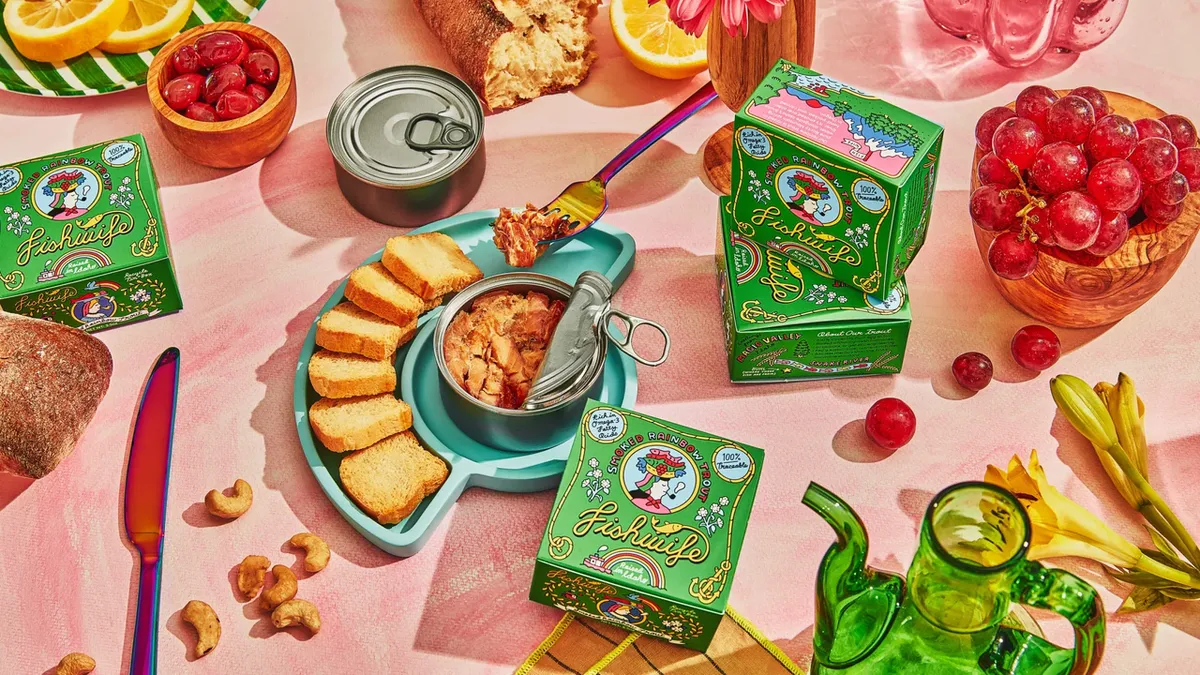
Its products feature vibrant colors, playful illustrations, vintage-inspired typography, and bold female-centric artwork. The packaging feels more like something you'd find in a boutique design store than in the canned food aisle.
The result is immediate differentiation.
Consumers don't just buy the product.
They photograph it.
They share it.
They display it on kitchen shelves and dinner tables.
In an era where social media influences purchasing decisions, this matters enormously.
Many customers intentionally include Fishwife tins in food photography, picnic setups, charcuterie boards, and kitchen content because the packaging itself enhances the visual experience.
In this way, Fishwife transformed packaging from a functional necessity into a marketing asset.
The product became content.
Selling Sustainability Alongside Taste
Beyond aesthetics, Fishwife built credibility through sourcing and transparency.
The company works with responsibly sourced seafood suppliers and emphasizes traceability throughout its supply chain.
Whether it's smoked trout from U.S. farms or salmon sourced from carefully selected fisheries, every product comes with a story.
Consumers increasingly want to know:
- Where their food comes from
- How it was produced
- Whether it aligns with their values
Fishwife provides those answers.
This combination of quality, transparency, and sustainability allows the brand to command premium pricing, often selling products at two to three times the cost of conventional canned seafood.
Yet customers continue to buy because they're purchasing more than food.
They're buying participation in a value-driven lifestyle.
From Sharing Canned Fish to Sharing a Lifestyle
Fishwife understands something many food brands overlook:
People don't share products.
They share identity.
That's why the company's content strategy rarely focuses on traditional product promotion.
Instead, it focuses on culture, aesthetics, and experience.
Across Instagram, TikTok, and other social platforms, Fishwife showcases colorful tablescapes, weekend picnics, creative recipes, and beautifully curated food moments.
The canned fish becomes part of a larger story.
The content communicates a lifestyle that feels:
- Creative
- Sustainable
- Modern
- Slightly nostalgic
- Effortlessly cool
Consumers aren't simply seeing seafood.
They're seeing the type of person who eats it.
That distinction is critical.
Because lifestyle branding creates emotional connections that product features alone cannot.
Educating Consumers Through Storytelling
Another challenge Fishwife faced was consumer perception.
Many younger consumers had never considered canned fish a premium product.
The brand needed to change that narrative.
Instead of relying on technical explanations, Fishwife adopted an educational storytelling approach.
It regularly highlights:
- Fishing methods
- Production processes
- Ingredient sourcing
- Culinary traditions
- Sustainability practices
But rather than presenting these topics in a formal or corporate way, the brand packages them through humor, visual storytelling, and personality.
A typical Fishwife social post feels more like a conversation than an advertisement.
This tone makes educational content significantly more engaging and shareable.
Over time, it helps consumers view canned seafood through an entirely new lens.
The Influencer Strategy That Fueled Growth
Fishwife's success also demonstrates the power of strategic creator partnerships.
Rather than pursuing generic influencer campaigns, the brand collaborates with creators whose audiences naturally align with its positioning.
One of its most notable collaborations came in 2023 through a partnership with celebrity chef and content creator Alison Roman.
The campaign centered around holiday cooking and entertaining, seamlessly integrating Fishwife products into Thanksgiving-inspired recipes and gatherings.
The collaboration extended across multiple channels, including video content, social media activations, and community engagement initiatives.
What made the campaign successful wasn't aggressive selling.
It was contextual relevance.
The product appeared naturally within moments consumers were already interested in.
The result was millions of impressions, extensive user engagement, and significant traffic growth to the brand's direct-to-consumer channels.
How Shark Tank Accelerated Retail Expansion
A major turning point for Fishwife came when the brand appeared on Shark Tank.
The exposure dramatically increased brand awareness, search volume, and sales momentum.
But perhaps more importantly, it strengthened the brand's credibility with retailers.
Following the appearance, Fishwife expanded its retail footprint from approximately 1,300 stores to more than 1,800 locations, while securing additional partnerships with major grocery chains.
The Shark Tank appearance served as a catalyst, but the groundwork had already been laid through years of content creation, community building, and brand storytelling.
The television exposure amplified an existing movement rather than creating one from scratch.
Building a Community, Not Just a Customer Base
Another factor that differentiates Fishwife is the visibility of its founders.
Co-founder Becca Millstein regularly appears in content, sharing the company's journey, discussing product development, and engaging directly with customers.
This humanizes the brand.
Consumers don't feel like they're interacting with a corporation.
They feel like they're participating in a community.
That authenticity has become increasingly valuable as consumers grow more skeptical of traditional advertising.
People trust people.
Fishwife understands that principle exceptionally well.
The Bigger Lesson for Consumer Brands
Fishwife's rise offers a blueprint for brands entering mature and highly competitive categories.
The company didn't invent canned fish.
It reinvented what canned fish represents.
By combining strong visual identity, cultural storytelling, sustainability, founder-led branding, influencer partnerships, and retail expansion, Fishwife transformed a low-interest commodity into a high-interest lifestyle product.
The lesson extends far beyond food.
Modern consumers rarely purchase products based on functionality alone.
They purchase products that reflect their values, aspirations, and identities.
Brands that understand this shift can create extraordinary growth opportunities—even in categories that appear fully saturated.
Final Thoughts
Fishwife isn't really selling canned seafood.
It's selling a new perspective on everyday food.
Through thoughtful branding, community-driven content, and strategic partnerships, the company has shown how an overlooked category can become culturally relevant again.
Its success proves that even the most ordinary products can become extraordinary when paired with a compelling story.
And in today's consumer economy, stories often travel much further than products ever could.
