Why Is Claude Starting to Work in Real Labs?
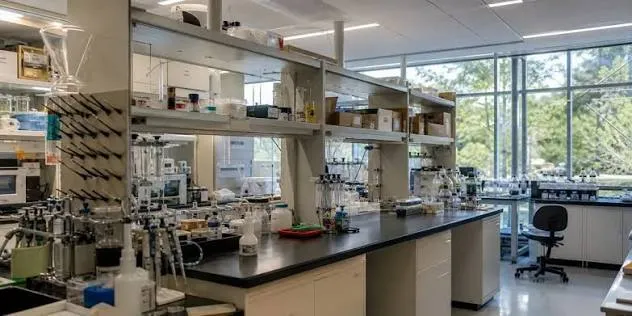
For most of the AI boom, science models have lived on computers.They read papers.Analyze data.Generate hypotheses.Suggest molecules.At some point, however, biology has to leave the screen.A protein has to be made.A sample has to be tested.An experiment has to work in the real world.Anthropic is starting to connect those two sides.Claude is being used not only to reason about scientific problems, but also to interact with physical laboratory workflows.That change may end up being much more important than another benchmark improvement.
Can Claude Actually Design Proteins That Work?
Anthropic published a striking result in August 2026.Claude designed de novo protein binders against 15 targets.Laboratory testing found successful binders for 14 of them.Depending on the setup, Anthropic reported individual design hit rates between roughly 22% and 35%, compared with a typical range of around 10% to 15% in protein design campaigns. AnthropicThere is an important distinction here.Claude did not simply score its own designs on a computer.External evaluators Adaptyv Bio and Twist Bioscience physically produced and tested them. AnthropicThe model's output had to survive contact with an actual lab.
Why Does That Matter?
Biology is full of beautiful ideas that fail experimentally.A model can predict that something should work.Nature is allowed to disagree.That gap between computation and experiment is one of the biggest constraints in scientific research.If AI can help shorten the cycle between designing something and testing it, researchers may be able to run far more iterations.That is where the real acceleration could happen.
What Is Anthropic’s Model Hardware Standard?
In August, Anthropic introduced a research preview called the Model Hardware Standard, or MHS.The idea is fairly simple.Lab equipment comes from many different manufacturers and often uses incompatible software.Getting a liquid handler, robotic arm, plate reader and other instruments to work together can require weeks of custom engineering.MHS gives AI agents a more standardized way to understand and operate those devices. AnthropicThe agent can see what a machine is capable of, read its state and issue commands through a common interface.That starts turning the lab into something an AI system can actually navigate.
Is Claude Already Controlling Lab Equipment?
In early demonstrations, yes — within controlled research settings.At Genentech, Claude was used with MHS to coordinate a liquid handler, robotic arm and microplate reader for a protein assay.The system could run part of the workflow in a closed loop, compare results and change parameters. AnthropicCarnegie Mellon researchers used an AI agent to orchestrate multiple lab devices for dose-response experiments.According to Anthropic's published case study, the setup allowed the team to run the process roughly three times faster than before. AnthropicThese are still early demonstrations.They are not autonomous scientists.But they show where the architecture is heading.
What Does an AI-Driven Lab Loop Look Like?
The interesting part is the loop.An AI can propose an experiment.Hardware runs it.The instruments produce data.The AI reads the results.Then it decides whether to change something and run another experiment.That is very different from a chatbot answering a question once.Research is iterative.The ability to keep going matters.Anthropic describes MHS as a step toward longer-running and increasingly autonomous scientific workflows. Anthropic
Why Is Lab Automation Such a Big Deal?
Designing a candidate is only part of science.Testing is often slower and more expensive.Anthropic gives a useful example in protein engineering: generating a protein design computationally can be extremely cheap, while testing one candidate at the bench can cost around $100 and require substantial time and labor. AnthropicIf AI makes the design side 100 times faster but the lab still moves at the same speed, the bottleneck simply moves downstream.That is why physical automation matters.
Does This Mean Claude Can Develop Drugs by Itself?
No.Successful protein binders are not finished drugs.Automating one assay is not the same as autonomously running an entire drug-development program.Drug discovery involves many stages of validation, safety work and human decision-making before anything reaches patients.Anthropic's current work is much closer to research automation and early discovery.That is already significant without exaggerating what the technology can do.
Why Is This Part of a Bigger AI Trend?
AI is gradually moving out of software-only environments.Robotics is one example.Autonomous driving is another.Laboratories are becoming another frontier.The common change is that AI receives information from the physical world, makes a decision and then takes another action.Once that loop works reliably, the model becomes more than an interface for information.It becomes part of a system that can act.
What Does This Mean for AI Agents?
Most AI agents people use today interact with software.They browse websites.Write emails.Analyze spreadsheets.A lab agent has much less room for error.A wrong action can waste samples, damage equipment or ruin an experiment.So progress here will depend just as much on safeguards, monitoring and reliable hardware interfaces as on smarter models.That may actually make the laboratory one of the most interesting places to watch AI agents develop.
FAQ
Why is Anthropic connecting Claude to laboratories?
Because scientific ideas ultimately need physical validation. Connecting AI to lab equipment can reduce the time between generating an idea and testing it.
Did Claude really design working proteins?
Anthropic reported that Claude designed binders for 15 targets and achieved successful laboratory-validated binders for 14 of them. Anthropic
What is the Model Hardware Standard?
MHS is a specification designed to let AI agents interact with physical devices through a more consistent interface. Anthropic
Can Claude control robots in a lab?
Anthropic and research partners have demonstrated Claude coordinating liquid handlers, robotic arms, readers and other equipment in early experimental settings. Anthropic
Are AI-run labs fully autonomous today?
No. Current examples are early research systems and proofs of concept. Human expertise, supervision and experimental judgment remain important.
Final Thought
The most interesting part of this story is not that Claude scored well on a scientific benchmark.It is that the benchmark is starting to become less important than the loop.Think.Test.Observe.Try again.That is how science actually moves forward.If AI can participate in more of that cycle, the conversation around AI in science is going to get much bigger.
About SocialBook
SocialBook helps technology and consumer brands discover creators, understand audiences and run global creator marketing campaigns.We also follow the products and technologies changing how people discover, understand and talk about new ideas.
