Why Are People Attacking Delivery Robots?
If I told you the thing most likely to get attacked on American streets isn't a person—but a delivery robot—would you believe me?
TikTok is full of videos showing people kicking, blocking, or messing with delivery robots.
People often assume the biggest reason is that robots are replacing delivery workers. That's certainly part of the story.
Ironically, a new job has even appeared: robot wrangler.
These workers rescue, maintain, and assist delivery robots. Some were once delivery drivers themselves and now spend their days taking care of the machines that replaced them. But as robots continue to improve, even that job may not last forever.
Delivery workers aren't the only ones frustrated.
Residents have their own reasons.
The first is simple: robots block sidewalks.
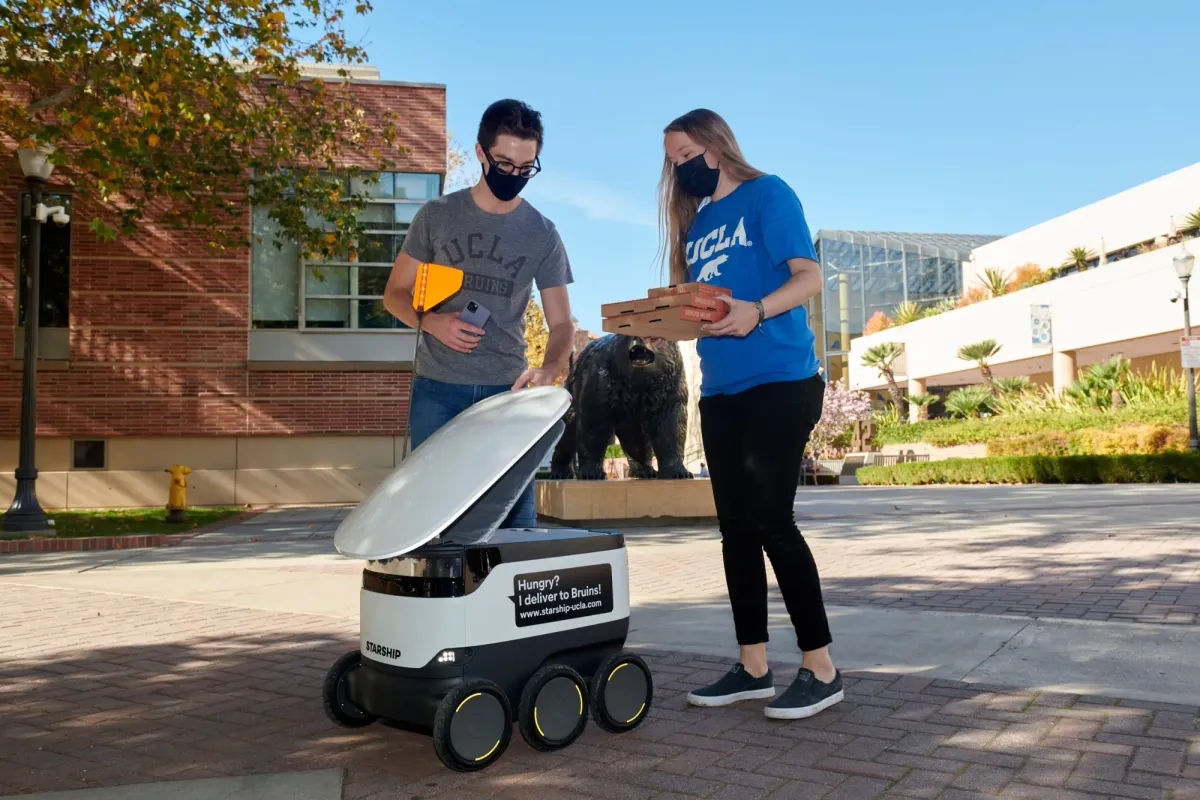
When delivery robots first appeared, many people thought they were cute. But because they travel on sidewalks, they sometimes stop in the middle of the path when they encounter construction or unexpected obstacles, forcing pedestrians to wait behind them.
One Chicago resident even launched a petition asking the city to pause delivery robot operations. The petition collected thousands of signatures and was covered by the BBC.
The second reason is safety.
In 2023, a Starship delivery robot knocked over an elderly woman, leaving her permanently disabled. The lawsuit is still ongoing.
In 2025, a Serve robot repeatedly blocked the path of a wheelchair user with cerebral palsy. The video quickly surpassed ten million views on TikTok.
There have also been reports of robots getting stuck on train tracks, blocking intersections, and delaying emergency vehicles.
The third reason may be the most interesting.
Robots don't fight back.
They don't argue.
They don't chase people.
To many young people, they feel like real-life NPCs.
Kick one.
Block one.
Record it.
Upload it.
Maybe it goes viral.
Once one video becomes popular, others begin copying it.
Meanwhile, the robots continue getting smarter.
Coco, one of the fastest-growing delivery robot companies, recently launched its second-generation robots.
These robots no longer require remote operators. They can navigate independently, avoid pedestrians, cross streets, travel in bike lanes at speeds of up to 13 mph, continue operating during bad weather, and carry food in waterproof storage compartments.
Even more impressive, if one robot encounters construction or an obstacle, it records the information so that every nearby robot can automatically avoid the same area.
The more they drive, the smarter the entire fleet becomes.
Coco's robots have already completed more than 500,000 deliveries.
They also work with navigation tools for visually impaired users by providing updated information about construction zones and street obstacles.
It's a genuinely meaningful application of robotics.
But it also raises a difficult question.
As robots become more capable, what happens to people?
McKinsey estimated that by 2030, approximately 11.8 million lower-wage jobs in the United States could be displaced by automation.
Perhaps that's why so many people appear to be attacking robots.
They're not necessarily angry at the machine itself.
They're expressing anxiety about the future.
So here's the question:
If a robot hasn't done anything wrong, but its existence makes people feel like they're running out of opportunities...
Who are we really blaming?
The robot?
The company that built it?
Or the era we're living through?
The more I think about it, the more I realize brands face a similar challenge.
You can build an incredible product, but if you don't understand how trust is built, you'll struggle to gain acceptance.
That's why we help brands connect with creators who can build trust through authentic voices.
Because earning trust is often just as important as building great technology.
