The $750M Wearable With No Screen — And Why That’s Exactly the Point
If you want to track your workouts, your first instinct is probably a smartwatch—something like the Apple Watch or devices from Samsung and Huawei. They do everything: messages, calls, music, notifications, apps. In many ways, they’ve become tiny smartphones you wear on your wrist. And that’s exactly the problem.
Because when every device is trying to do everything, they all start to feel the same. The data they track is highly standardized, battery life is still a constant annoyance, and over time, the experience becomes less about improving your health and more about managing yet another screen. For casual users, that might be fine. But for people who take performance seriously—people who want deeper insights into recovery, sleep, and training load—these devices often fall short.
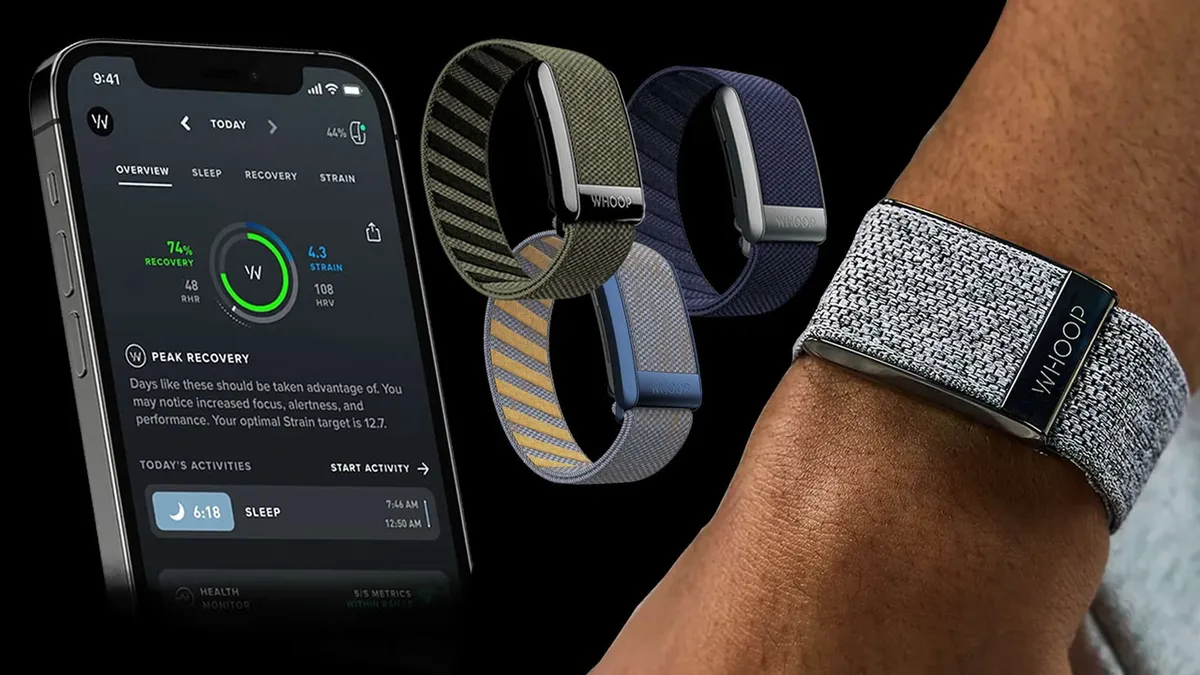
That gap is precisely where WHOOP found its opportunity. Instead of competing head-on with tech giants, WHOOP went in the opposite direction and built something radically different: a wearable with no screen at all.
At first glance, that sounds like a step backward. No display, no notifications, no instant feedback—just a simple strap. But that design choice is actually the core of its entire philosophy. By removing the screen, WHOOP removes distraction. There are no buzzing alerts pulling your attention away, no dopamine loops encouraging you to constantly check your stats. All your data lives in the app, which you check intentionally, not compulsively. In a world overloaded with information, that kind of restraint feels almost rebellious.
And it turns out, it’s exactly what a certain type of user wants.
WHOOP isn’t designed for the average consumer looking to count steps. It’s built for people who are deeply invested in optimizing their bodies—athletes, high performers, and anyone obsessed with getting better. Instead of overwhelming users with endless metrics, it focuses on three core pillars: recovery, strain, and sleep. Every morning, the system analyzes physiological signals like heart rate variability, resting heart rate, and sleep performance to generate a recovery score. It then translates that into clear, actionable guidance—whether you should push harder, take it easy, or prioritize recovery.
That ability to turn complex data into simple decisions is what elevates WHOOP from a tracking device to something closer to a personal performance coach. It’s not just telling you what happened; it’s helping you decide what to do next.
The lack of a screen also unlocks practical advantages. Without the power demands of a display, the device can run longer and support true 24/7 monitoring. It can also take on more flexible forms—integrated into clothing like sports bras, shirts, or even socks—making it easier to collect data passively without disrupting daily life. In other words, the technology fades into the background, which is exactly where it’s most effective.
But the product is only half the story. WHOOP’s business model is just as unconventional. Instead of selling hardware upfront and offering an optional subscription, it flips the model entirely: the device itself is essentially free, but access to the platform requires an ongoing membership. You’re not really buying a gadget—you’re subscribing to a service.
This approach does more than generate recurring revenue. It fundamentally shifts the relationship between the brand and the user. Rather than a one-time transaction, WHOOP becomes part of a long-term routine. It also naturally filters its audience. People who are unwilling to commit to a subscription tend to drop off early, leaving behind a core group of users who are more serious, more engaged, and ultimately more valuable.
Of course, this model isn’t without criticism. Even in markets where subscriptions are widely accepted, some users push back against the idea of paying continuously for a wearable. But that tension actually reinforces WHOOP’s positioning. It’s not trying to appeal to everyone. It’s designed for a specific kind of user—someone who sees health and performance not as a casual interest, but as a long-term investment.
The same level of focus shows up in its marketing. Instead of relying on traditional advertising, WHOOP built credibility through elite adoption and content. Early on, it seeded devices to top-tier athletes like Michael Phelps and LeBron James, letting them use the product naturally rather than pushing scripted endorsements. That kind of organic visibility carries far more weight than a typical ad campaign, especially when the audience is performance-driven.
At the same time, the company invested heavily in content, particularly through its podcast hosted by founder Will Ahmed. By bringing in scientists, coaches, and elite performers to discuss data-driven health insights, WHOOP positioned itself as more than a product—it became a voice of authority in the performance space. Instead of selling features, it educates its audience, shaping how they think about training, recovery, and sleep.
Over time, this approach has helped WHOOP evolve into something closer to a community than a customer base. Users share their recovery scores, training routines, and personal experiments, effectively turning themselves into advocates for the brand. Campaigns like “The Best Obsess” tap into this dynamic by reframing obsession—not as something unhealthy, but as a commitment to improvement. It’s a message that resonates deeply with the kind of user WHOOP is designed for.
What makes this story so compelling isn’t just the product, but the clarity behind it. In a market where most companies are adding more features, WHOOP succeeded by stripping things away. No screen, no distractions, no attempt to be everything for everyone. Instead, it focused on a specific audience, delivered a distinct value proposition, and built an entire ecosystem—product, business model, and marketing—around that focus.
And that’s the real takeaway. Growth doesn’t always come from doing more. Sometimes, it comes from doing less—but doing it with precision, intention, and a deep understanding of who you’re building for.
