U.S. Q4 Marketing Calendar: From Halloween to Black Friday and Christmas
For brands selling in the U.S., Q4 is much bigger than Black Friday.
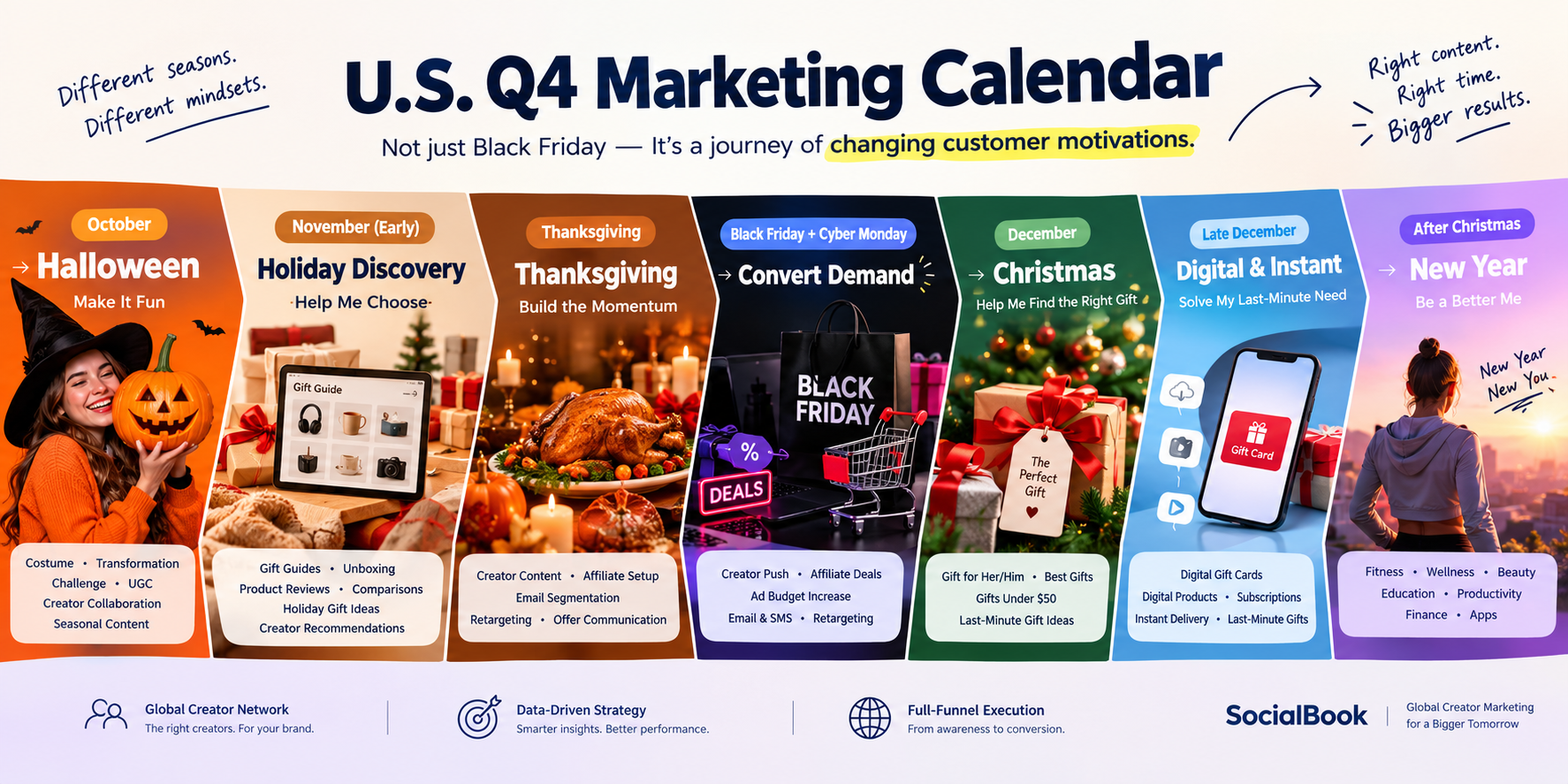
From Halloween and Thanksgiving to Black Friday, Cyber Monday, Christmas and New Year, consumer motivations change throughout the quarter.
A useful U.S. Q4 marketing calendar looks something like this:
Halloween sells fun. Holiday discovery helps people choose. Black Friday sells deals. Christmas sells gifts. New Year sells a fresh start.
The product may stay the same.
The reason to buy it changes.
October: Halloween Marketing
Halloween is one of Q4's most social-friendly marketing moments.
It works particularly well for categories such as fashion, beauty, food and beverage, home, gaming and entertainment.
Instead of immediately leading with discounts, brands can focus on content people actually want to participate in:
Transformations, costumes, challenges, UGC, creator collaborations and seasonal content.
A useful question for brands is:
Can consumers use our product to create something they actually want to post?
For Halloween, participation can be more valuable than another promotional code.
Early November: Switch to Holiday Gift Discovery
Once Halloween ends, the content should change quickly.
Consumers begin thinking about holiday shopping, and brands can move toward:
Gift Guides
Unboxings
Product Reviews
Comparisons
Creator Recommendations
Holiday Gift Ideas
This is also where more specific content becomes powerful.
Think:
Best Gifts for Gamers
Gifts for Mom
Best Tech Gifts
Holiday Gifts Under $50
These formats can work across creators, Google, TikTok, YouTube and AI-powered search experiences because they answer real shopping questions.
Thanksgiving: Get Ready to Convert
Thanksgiving is an important transition into the biggest promotional period.
By this point, brands should have creator content prepared, affiliates activated, email audiences segmented and retargeting campaigns ready.
The job of marketing is beginning to change.
Earlier in the quarter, you were creating awareness and desire.
Now you're preparing to capture it.
Black Friday and Cyber Monday: Sell
By Black Friday, consumers already expect deals.
This is not the ideal time to introduce your entire brand story from scratch.
Creators publish.
Affiliates push offers.
Paid media scales.
Email and SMS accelerate.
Retargeting follows high-intent shoppers.
The objective becomes simple:
Convert the demand you've already built.
December: Move From Deals to Gifts
Cyber Monday ends.
Holiday shopping doesn't.
What changes is the question in the consumer's head.
During Black Friday:
“Where can I get the best deal?”
During December:
“What should I buy this person?”
That means content should shift toward:
Gifts for Her
Gifts for Him
Gifts for Gamers
Gifts for Travelers
Gifts Under $50
Last-Minute Christmas Gifts
The product may be exactly the same.
The story around the product needs to change.
Late December: Watch the Shipping Deadline
As Christmas approaches, physical delivery becomes part of the marketing strategy.
If a product can no longer arrive on time, brands can shift attention toward:
Digital Gift Cards
Subscriptions
Digital Products
Instant-Delivery Offers
Last-Minute Gifts
Good seasonal marketing responds to the consumer's current problem—not the campaign calendar created three months earlier.
After Christmas: Start Selling the New Year
December 25 isn't necessarily the end of the opportunity.
Now consumer psychology changes again.
Before Christmas:
“What should I buy for someone else?”
After Christmas:
“What do I want to change about myself?”
That creates a natural transition into New Year, New Me.
Fitness, wellness, beauty, education, productivity and many consumer apps can begin positioning around goals, habits and fresh starts.
What Is the Best Q4 Marketing Strategy?
Don't treat every holiday as a disconnected campaign.
Think of Q4 as one changing consumer journey:
Halloween → Make it fun
Holiday Discovery → Help me choose
Black Friday → Give me a reason to buy now
Christmas → Help me find the right gift
New Year → Help me become better
Brands that understand these transitions can keep the same product relevant for multiple buying moments throughout the quarter.
U.S. Q4 Marketing FAQ
What are the biggest U.S. Q4 marketing dates?
Major periods include Halloween, Thanksgiving, Black Friday, Cyber Monday, Christmas, year-end promotions and New Year.
Is Black Friday the most important Q4 marketing opportunity?
It is a major conversion period, but brands can build demand before Black Friday and continue selling through Christmas and New Year.
When should influencer marketing start for Q4?
Creator outreach and production should begin before the relevant sales window because creator selection, negotiation, product shipping, content production and approvals require time.
What creator content works for Christmas marketing?
Gift Guides, reviews, unboxings, “Best Gifts” lists, gifts by audience and price-point content can all support holiday discovery.
How should marketing change throughout Q4?
Content and offers should follow changing consumer intent—from entertainment around Halloween, to deals around Black Friday, gifting around Christmas and self-improvement around New Year.
At SocialBook, we help global brands identify, reach and activate creators across major cultural and shopping moments through creator intelligence and global campaign execution.


Empower your brand with cutting-edge tools and strategies to master influencer marketing, build a loyal audience, and drive real growth.


For Brands
For Influencers
RESOURCES
Growth Tools
© 2026 SOCIALBOOK. ALL RIGHTS RESERVED