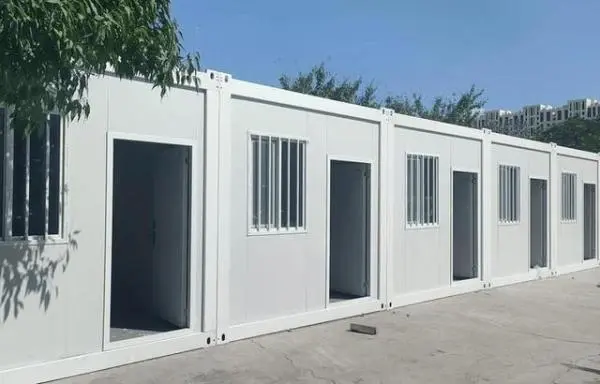
Why Are Americans Buying Prefab Homes Online?
Americans are increasingly exploring prefab and modular homes because factory-built housing can reduce on-site construction, labor requirements, and building time.Some models sold through global ecommerce platforms cost less than $20,000 before shipping and local installation. One widely viewed American buyer reportedly purchased a prefab home on Alibaba for approximately $15,800, with the total reaching roughly $28,000 after shipping, tariffs, and other costs.That does not mean anyone can simply order a house online, place it on an empty lot, and immediately move in.Local zoning, permits, utilities, foundations, inspections, taxes, and installation requirements still matter.But the bigger trend is worth watching:Housing itself is becoming a product that can increasingly be manufactured, shipped, and assembled.
What Is a Prefab Home?
A prefab home, short for prefabricated home, is a house in which some or most components are manufactured in a factory before being transported to the final site.The category can include:
- Modular homes
- Panelized homes
- Expandable container-style homes
- Manufactured homes
- Tiny homes
- Portable or movable housing unitsThese products are not all regulated in the same way.A modular home permanently installed on a foundation may be treated much like a conventional house, while other movable structures may fall under different local classifications.That distinction matters for permits, financing, insurance, and taxation.
Why Are Prefab Homes Attracting U.S. Buyers?
Three factors are driving interest.
Traditional Construction Is Expensive
Building a home in the United States involves much more than lumber and concrete.Costs may include:
- Construction labor
- Materials
- Site preparation
- Foundation work
- Plumbing
- Electrical work
- Permits
- Inspections
- Utility connections
- Architecture and engineering
- Local transportationEven a relatively small home can quickly become a six-figure project.In expensive markets such as Silicon Valley and the San Francisco Bay Area, housing and construction costs can be dramatically higher.This makes a $15,000–$30,000 factory-built structure immediately attention-grabbing, even when additional local costs still need to be added.
Factory Production Can Reduce On-Site Work
The core advantage of prefab construction is not simply that the house is “cheap.”It is that much of the work traditionally completed at the building site is moved into a controlled factory environment.Walls, windows, bathrooms, kitchens, wiring, insulation, and interior finishes may already be partially completed before shipment.Instead of building everything from scratch on-site, the process becomes closer to:manufacture → ship → install → connect → inspect.This is a fundamentally different production model.
Construction Time Can Be Shorter
Some Chinese prefab manufacturers advertise production cycles of roughly one month, followed by several weeks of ocean freight.Once the structure reaches its destination, certain expandable units can be physically unfolded or assembled very quickly.Again, this does not mean the entire legal housing project takes one day.Site preparation, permitting, utility work, and inspections may take significantly longer.But the structure itself can arrive far more complete than a conventionally built home.
How Much Can an Imported Prefab Home Cost?
Entry-level prefab structures may be advertised for approximately $7,000 to $20,000, depending on size, materials, finishes, specifications, and manufacturer.But buyers should separate three different numbers:<!--br {mso-data-placement:same-cell;}--> td {white-space:nowrap;border:0.5pt solid #dee0e3;font-size:10pt;font-style:normal;font-weight:normal;vertical-align:middle;word-break:normal;word-wrap:normal;}
| Cost Stage | What It May Include |
| Factory price | The physical structure |
| Delivered/import cost | Freight, tariffs, customs and transportation |
| Move-in cost | Site work, utilities, foundation, permits, labor and inspections |
A $15,000 online listing is therefore not necessarily a $15,000 finished home.One widely discussed American case reportedly started at around $15,800 and reached roughly $28,000 after international shipping and import-related costs.The final cost of legal occupancy can vary significantly by location.
Do Prefab Homes Avoid Property Tax?
Not automatically.This is one of the most misunderstood parts of the prefab housing conversation.Depending on local laws and how a structure is installed, a prefab or manufactured home may be classified differently from a conventional permanently attached house.That may affect how it is taxed.However:There is no universal U.S. rule saying prefab homes do not pay property tax.Tax treatment varies by state, county, property classification, foundation type, land ownership, and other factors.Anyone considering a prefab home should check local regulations before purchasing.
Why Is Alibaba Becoming Part of the Housing Conversation?
Alibaba and other global B2B marketplaces were traditionally associated with electronics, machinery, consumer products, packaging, and industrial equipment.Now buyers can also browse:
- Tiny homes
- Expandable houses
- Container homes
- Modular buildings
- Cabins
- Offices
- Hotels
- Dormitory unitsThat represents an important shift.Cross-border ecommerce is moving from shipping products inside buildings to, in some cases, shipping the building itself.Videos featuring terms such as “Alibaba house,” “prefab house from China,” and “expandable home” have generated substantial interest on YouTube, TikTok, and other platforms.The reason is obvious: a house arriving on a truck and unfolding like a consumer product is inherently visual.
Why Are Prefab Home Videos So Popular on Social Media?
Prefab housing has several qualities that work particularly well for creator content.
Strong Curiosity“Can you really buy a house online?” is an immediate hook.
Visible Transformation
Audiences can watch a compact structure unfold into a finished living space.
Price Comparison
Housing is already an emotionally charged topic.Comparing a sub-$30,000 prefab structure with traditional U.S. housing costs creates immediate discussion.
ControversyViewers naturally debate:
- Is it legal?
- Is it safe?
- Would you live in it?
- What about hurricanes?
- What about permits?
- What about taxes?
- Is it really cheaper?That creates comments, shares, and follow-up content.
Prefab Housing Is Bigger Than Individual Homeowners
The modular construction model also extends into larger commercial projects.Factory-built modules can be used for:
- Hotels
- Senior housing
- Student housing
- Workforce housing
- Temporary accommodation
- Offices
- Resorts
- Emergency housingThe economics become even more interesting at scale because repeatable factory production can reduce the complexity of building dozens of similar units individually on-site.
What Does the Prefab Housing Trend Mean for Brands?
The most interesting lesson may extend beyond real estate.Prefab housing illustrates a larger shift in global commerce:Products that were once considered too large, too complex, or too local to sell online are becoming standardized enough to enter digital marketplaces.That creates opportunities for manufacturers in areas such as:
- Building materials
- Smart-home technology
- Solar energy
- Furniture
- Appliances
- HVAC
- Security systems
- Outdoor living
- Home improvement
- Construction technologyIt also creates a major content opportunity.For complicated products, buyers often need to see the product being used before they understand it.That makes creators, product demonstrations, installation videos, customer stories, and long-form educational content particularly important.
How Should Prefab and Construction Brands Market in the U.S.?
Brands entering the U.S. market should avoid relying only on low prices.A stronger strategy is to demonstrate:
- What the product actually is
- How it arrives
- How installation works
- What is and is not included
- Which local requirements buyers must handle
- How previous customers use it
- What makes the product different from traditional constructionCreator content can be especially effective because housing is a high-consideration purchase.A real buyer documenting the entire process can often provide more credibility than a polished advertisement.
FAQ
Can you really buy a prefab house on Alibaba?
Yes. Alibaba and other global B2B marketplaces list prefab, modular, expandable, container-style, and tiny homes from multiple manufacturers.
How much does a prefab house from China cost?
Some factory prices begin below $10,000, while larger or better-finished models may cost $20,000 or more. Shipping, tariffs, installation, utilities, permits, foundations, and local work can significantly increase the final cost.
Can you legally live in an imported prefab home in the United States?
Potentially, but legality depends on local zoning, building codes, permits, inspections, property classification, and installation requirements.
Are prefab homes property-tax free?
Not necessarily. Tax treatment varies by location and how the structure is classified.
Why are prefab homes becoming popular?
Affordability, faster factory production, labor savings, housing shortages, construction delays, and highly visual social-media content are all contributing to consumer interest.
Final Takeaway
The biggest story is not that consumers can suddenly buy a complete American home for $20,000.That is an oversimplification.The real story is that housing production is becoming more industrialized, modular, digital, and global.When a building can be manufactured like a product, marketed through ecommerce, demonstrated by creators, shipped internationally, and assembled locally, the definition of cross-border commerce starts to change.And that makes prefab housing a category worth watching.
About SocialBook
SocialBook is an influencer marketing platform and agency helping brands discover creators, build creator partnerships, and execute influencer marketing campaigns across global markets.For complex products such as home, technology, automotive, AI, and consumer electronics, creator-led demonstrations and real customer stories can play an important role in helping audiences understand new categories.
