
Trying to find the right B2B influencers for your brand can feel a bit like searching for a missing sock in the laundry—frustrating and sometimes confusing. There’s no one-size-fits-all answer, and what works for one company might not work for another. But if you take it step by step, you’ll have a much better shot at connecting with people who actually move the needle for your business. Instead of chasing after big names, it’s smarter to look for folks who really know your industry and actually talk to the audience you want to reach. Here’s how you can start your search and avoid some common traps along the way.
Key Takeaways
- Start your search by looking manually on platforms like LinkedIn, Twitter, and YouTube to find people who are active in your niche.
- Always check for fake engagement—watch out for influencers with suspiciously high follower counts but low genuine interaction.
- Don’t forget about less obvious places like Substack newsletters or your own customer base; sometimes your best B2B influencers are already connected to you.
- Use tools like SocialBook to help speed up the process and get extra data, but don’t rely on them alone—your own judgment still matters.
- Look at what your competitors are doing and use lookalike tools to find similar influencers who might be a good fit for your brand.
Begin With Manual Searches on Each Platform
Before you even think about fancy tools or AI, it's a good idea to get your hands dirty with some old-fashioned searching. Think of it like window shopping before you commit to buying. You need to get a feel for who's out there and what they're talking about.
Start by heading over to the platforms where you think your potential B2B influencers hang out. For many, this means LinkedIn, but don't forget about YouTube, industry-specific forums, and even niche blogs. You're looking for people who consistently share insights related to your industry or product. The key is relevance, not just follower count.
Here’s a basic rundown of what to look for:
- Content Quality: Does their content offer real value? Is it well-researched, insightful, and original?
- Audience Engagement: Are people actually interacting with their posts? Look for thoughtful comments and discussions, not just likes.
- Consistency: Do they post regularly? A consistent presence shows dedication and keeps them top-of-mind.
- Brand Alignment: Does their tone and message fit with your brand's values and image?
It can feel a bit like detective work. You might spend time scrolling through LinkedIn feeds, watching YouTube videos, or reading blog posts. You're trying to spot those individuals who are genuinely respected and listened to within your target market. Sometimes, you'll find great people just by seeing who is frequently mentioned or shared by others in your field. It's a good way to build an initial list of potential candidates before you even consider using any software to help you out. You might even find some great people by looking at who your own customers are following or talking about. This initial legwork helps you understand the landscape and what makes an influencer tick on each specific platform, giving you a better foundation for your search. For instance, you might discover that while one person is a star on LinkedIn, another has a more dedicated following on a specialized industry forum. It's all about understanding the nuances of each space. You can start by looking at who is being quoted in industry publications or speaking at relevant conferences, as these are often indicators of established credibility. This manual approach, while time-consuming, helps you build a more intuitive understanding of the influencer ecosystem. You can also check out platforms like Favikon to get a broader overview of influencer activity across multiple channels.
Don't underestimate the power of simply observing. See who is driving conversations and who your target audience is paying attention to. This organic discovery process can uncover hidden gems that automated tools might miss.
Be Wary of Inauthentic Engagement
It’s easy to get excited when you see an influencer with thousands, even millions, of followers. But hold on a second. Not all that glitters is gold, as they say. A big follower count doesn't automatically mean a big, engaged audience. We need to be smart about this.
You've got to look past the numbers and check the actual interaction. Are people leaving thoughtful comments, asking questions, and genuinely discussing the content? Or is it just a bunch of generic comments like "Great post!" or a string of emojis? Those can be signs of bots or purchased engagement, which won't do your brand any good. It's like having a huge party where nobody actually talks to each other – it looks busy, but nothing meaningful is happening.
Here’s what to look for:
- Comment Quality: Are comments relevant to the post? Do they show understanding or ask follow-up questions?
- Follower-to-Engagement Ratio: A massive follower count with very few likes or comments per post is a red flag.
- Audience Demographics: Does the influencer's audience actually match your target customers? Tools can help check this, but sometimes you just have to look at who's commenting.
- Consistency: Does the influencer consistently produce quality content, or are there big gaps or sudden spikes in activity?
Sometimes, a smaller influencer with a highly dedicated and interactive community is way more valuable than a mega-influencer with a lot of fake followers. Think quality over quantity, always.
It’s also worth noting that while influencer fraud is decreasing, it hasn't disappeared. So, a little digging goes a long way to make sure you're investing your marketing budget wisely.
Locating Influencers on YouTube
YouTube is a goldmine for B2B content, and finding the right Influencers on YouTube can make a big difference for your brand. Think about it: professionals often turn to video for tutorials, deep dives into complex topics, and expert opinions. It's not just about entertainment; it's about learning and problem-solving.
When you're looking for these video creators, don't just focus on subscriber counts. That number can be misleading. Instead, pay close attention to the engagement on their videos. Are people leaving thoughtful comments? Are they asking follow-up questions? This shows a real connection with the audience, which is what you want.
Here’s a quick way to approach your search:
- Identify Your Niche: What specific industry or problem does your brand solve? Search for channels that consistently talk about these topics.
- Look for Expertise: Does the creator seem genuinely knowledgeable? Do they offer unique insights or just repeat what others say?
- Check Audience Relevance: Who is watching their videos? Look at the comments section – do the commenters seem like the professionals you want to reach? Sometimes creators will even share audience demographics in their channel's "About" section.
- Review Content Quality: Are the videos well-produced? Is the audio clear? While a high budget isn't always necessary, a certain level of professionalism matters.
Remember, a smaller YouTube channel with a highly targeted and engaged audience is often far more effective for B2B than a massive channel with a general audience. You're looking for credibility and relevance, not just broad reach.
Consider creators who regularly produce content related to your product or industry. This could be anything from software review channels to industry analysis or even how-to guides for specific professional tools. The key is that their content aligns with what your potential customers are searching for and learning about.
Substack Is a Different Beast
Okay, so you've probably heard of Substack, right? It's that platform where writers can send out newsletters directly to their subscribers. Think of it like a personal magazine, but digital. For B2B influencers, this is a pretty big deal. Many of them aren't just posting on LinkedIn or Twitter anymore; they're building dedicated communities on Substack.
Finding these folks requires a slightly different approach than just scrolling through a social feed. Because Substack is all about the content and the direct connection with readers, you need to look at what kind of newsletters they're putting out. Are they sharing deep dives into industry trends? Are they offering practical advice that your target audience would actually pay for (or at least read every week)?
Here's the thing: a writer with a popular Substack isn't just a writer; they're a curator of information and a trusted voice for their subscribers. Their audience isn't just passively scrolling; they're actively choosing to get updates from them. That's a powerful signal.
So, how do you actually find them?
- Look for writers who are already active and respected in your industry. Check out who's being mentioned in industry publications or who's speaking at relevant conferences. Often, these people will have a Substack.
- Search directly on Substack. Use keywords related to your industry or the problems your business solves. See who pops up and check out their newsletter's focus and subscriber count (if they share it).
- See who your target audience is already reading. Ask your customers or look at industry forums. People often share the newsletters they find most useful.
Don't just look at the subscriber numbers. A smaller, highly engaged list of people who genuinely care about the writer's niche can be way more valuable than a huge list of folks who barely skim the content. It's about the quality of the connection, not just the quantity of eyeballs.
It's a bit like finding a hidden gem. You have to dig a little deeper than usual, but when you find a Substack writer whose audience perfectly matches yours, it can be a really strong partnership.
Leverage Google or ChatGPT for Suggestions
Okay, so you're looking for B2B influencers, and maybe you're thinking, "Can't I just ask Google or ChatGPT to do this for me?" It's a fair question, and the short answer is: yes, but with some serious caveats. Think of these tools less like a magic matchmaking service and more like a really smart research assistant.
AI tools can give you a starting point, but they can't replace human judgment. They're great for getting a general lay of the land, especially if you're new to a particular industry or topic. You can ask ChatGPT things like, "What are the main topics discussed by experts in sustainable packaging?" or "Who are some prominent voices in cybersecurity thought leadership?" This can help you get up to speed quickly and identify some keywords or areas to focus on. It’s a good way to start building a list of potential names or companies to investigate further.
However, relying solely on AI for influencer selection is a bit like picking a date based only on a dating app algorithm. You might get a match, but is it the right match? AI often misses the subtle stuff – the genuine credibility, the specific niche expertise, or the actual relationship potential an influencer has with their audience. It's hard for an algorithm to truly gauge that human connection.
Here’s how you can use these tools more effectively:
- Brainstorming Keywords and Topics: Use AI to understand the language and key themes within your industry. This helps you refine your search terms.
- Identifying Potential Areas: Ask for lists of "top voices" or "key influencers" in a broad category. Treat these as suggestions, not final answers.
- Getting Industry Overviews: If you're entering a new market, AI can quickly summarize who the major players and thought leaders are.
Remember, these AI suggestions are just that – suggestions. You still need to do the real work of vetting them. Look at their actual content, check their audience engagement, and see if they align with your brand's values. For instance, if you're looking for people who talk about specific marketing tactics, you might use Google to find Instagram profiles that fit. It’s about using AI to augment your own research, not replace it entirely. You'll still need to put in the effort to find someone who truly fits your brand.
Examine Your Current Customers
You know who already likes what you do, right? Your customers! They're a goldmine for finding influencers. Think about it: who are the people already buying from you, using your services, or talking about your brand online? These folks are already aligned with your business. They understand your value proposition because they've experienced it firsthand.
Start by looking at your most engaged customers. Who are the ones leaving detailed reviews, participating in your forums, or sharing your content on social media? These individuals often have a genuine passion for your product or service. They might not have a massive following, but their recommendations carry a lot of weight because they're seen as authentic.
Here’s how to approach it:
- Identify your brand advocates: Look for customers who consistently praise your brand or offer helpful feedback.
- Check their online presence: See if they have a blog, a podcast, or a strong social media profile where they share their thoughts.
- Assess their audience: Do their followers seem like the kind of people you'd want to reach? Are they in the right industries or roles?
Sometimes, your own employees can also be great B2B influencers. Think about your technical experts or sales team members who are active online and share industry insights. They already know your company inside and out.
Don't underestimate the power of a recommendation from someone who genuinely uses and believes in your product. It's often more impactful than a paid endorsement from a stranger.
This approach can help you find influencers who are not only relevant but also deeply credible. You can even use tools to help you search within your existing customer base and find similar creators discover relevant creators. It's a smart way to build a network of authentic voices.
A Smart Tactic Involving Your LinkedIn Archive
Okay, so you've probably heard that LinkedIn is the place to be for B2B stuff, right? And it is. But digging through it to find the perfect person can feel like searching for a needle in a haystack. Here’s a little trick that might help: download your own LinkedIn archive.
Think about it. Who have you interacted with the most? Who has engaged with your content? Who have you connected with on topics relevant to your brand? Your archive is basically a record of your own professional network's activity.
Here’s how to use it:
- Download your data: Go to your LinkedIn settings and find the option to download your data. It usually comes as a zip file.
- Look for connections and interactions: Once you've got the files, sift through them. Pay attention to who you've messaged, who has commented on your posts, and who you've recently connected with.
- Identify common ground: See if there are patterns. Are certain people consistently commenting on posts related to your industry? Did you have a good back-and-forth with someone about a specific topic?
This isn't about just finding anyone. It's about finding people who have already shown some level of interest or engagement with you or your network. It's a more organic starting point than just blindly searching hashtags.
It’s a bit of manual work, sure, but it can uncover some surprisingly relevant individuals you might have overlooked. It’s like finding hidden gems right in your own backyard.
Use a Tool Like SocialBook to Speed Everything Up
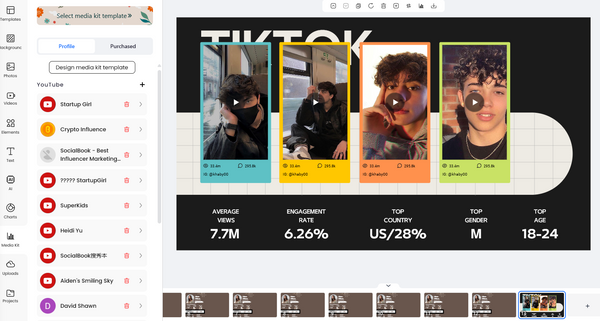
Trying to find the perfect B2B influencers can feel overwhelming – every sector is different, and there’s no single place where all the best voices hang out. Platforms like SocialBook offer a fast fix for this messy process. Instead of jumping from LinkedIn to YouTube to Reddit, you can use one dashboard to see influencer stats, audience size, and past content all at once. This can save you hours every week.
Here’s how SocialBook and similar tools clear away the chaos:
- Instantly filter influencers by industry, audience, and engagement rate.
- See real engagement data to spot real influence (not just big numbers).
- Review their topic areas and previous brand partnerships without deep-diving everywhere else.
- Quickly build shortlists and compare people side by side.
- Easily spot influencer red flags, like odd follower bumps or irrelevant content.
It’s worth noting that while automation can speed things up, there’s still a place for human review. No tool is perfect with context or subtlety, and sometimes, what’s really going on behind those numbers takes a closer look. Still, if you’re aiming for efficiency, especially in a slow-moving landscape like SEO within B2B marketing, using the right platform is a total gamechanger.
These tools won’t magically pick the best influencer for you, but they take care of the mindless searching and sorting. That frees you up to focus on reviewing, reaching out, and building actual relationships—the stuff that really moves projects forward.
SocialBook The Authenticity Score Feature
Finding the right B2B influencers is all about trust. SocialBook, as a platform for matching brand goals with influencer personalities, has a feature that can really help: the Authenticity Score. Instead of guessing which influencer has genuine followers, this tool gives a clearer picture, measuring if their audience is actually real and engaged, not just a bunch of bots.
The score gets right to the point: is this influencer’s reach what it looks like, or is it smoke and mirrors? This number can be a game-changer, especially if you’re tired of sorting through big followings that don’t bring meaningful engagement. Here’s how SocialBook’s Authenticity Score simplifies your search:
- Cuts down on hours spent double-checking influencer profiles for fake likes or comments.
- Gives peace of mind that your brand’s message goes to a real, interested audience.
- Lets you compare different influencers by more than just their follower count, focusing on what actually matters.
Feature | Why It Matters |
|---|---|
Authenticity Score | Shows if followers are real, not fake |
Engagement Quality Check | Measures if fans respond to the content |
Easy Comparisons | Ranks influencers side-by-side |
With SocialBook’s authenticity score, you can stop worrying about scammers and focus on finding partners who actually care about your brand.
You can check out more about how SocialBook connects brands with authentic influencers on their influencer marketing platform.
The Lookalike Tool for Competitor Influencer Research
So, you've been looking at what your competitors are doing, right? It's smart to see who they're working with. But instead of just copying their list, imagine finding influencers who are similar to the ones they're already partnering with. That's where a lookalike tool comes in handy.
Think of it like this: if your competitor is successfully working with a certain type of expert, a lookalike tool can help you find other experts who have a similar audience and content style. It's not about finding the exact same people, but rather finding those who have the same kind of influence over a comparable group of professionals.
Here's how it generally works:
- Input Competitor Data: You feed the tool information about the influencers your competitors are using. This could be their names, social media handles, or even just the general topics they cover.
- Analyze Similarities: The tool then looks at various factors like audience demographics, engagement patterns, content themes, and platform activity to identify other influencers who share these characteristics.
- Generate a New List: You get a list of potential influencers who are like the ones your competitors are already tapping into, but who you might not have found otherwise.
This is a fantastic way to discover untapped talent that already aligns with the kind of audience you're trying to reach. It saves you a ton of guesswork and helps you build a more robust influencer network by looking beyond the obvious choices.
It's like getting a cheat sheet for finding influencers, but instead of just seeing the answers, you're shown a whole new set of equally good questions to ask. This approach helps you stay ahead by identifying potential partners who are already proven to connect with a relevant professional audience, without directly copying your rivals.
Managing Campaigns Inside the Tool
If you’re serious about B2B influencer marketing, managing everything in a dedicated platform saves an absurd amount of time and headaches. Running campaigns inside the tool feels less like juggling plates and more like sorting through a tidy stack of documents. Even if you're new to influencer outreach, these platforms make it pretty simple to stay on top of deliverables and results.
Here’s what it typically looks like:
- Assign and track tasks for both your team and influencers
- See live performance stats on posts, videos, or webinars
- Monitor engagement—likes, shares, comments, and even new leads
- Download or share reports with just a few clicks
If you’re using automated tools, you can often follow metrics such as reach, clicks, and conversions, plus manage payments or content approvals in one spot. Here’s a quick breakdown:
Campaign Feature | What You Get |
|---|---|
Real-time analytics | Track post engagement and leads |
Workflow management | Assign, review, approve content |
Report generation | Export results for stakeholders |
Influencer collaboration | One place to chat, share, review |
Good tools, when set up right, mean less chaos and more clarity for your campaigns. If you’re balancing several influencer programs at once, that peace of mind is worth it.
Many platforms also store influencer and campaign history, making it easier to tweak your strategy next time around. To see how other B2B teams shape their programs and drive results, check out effective strategies for connecting with your ideal audience and maximizing influencer collaborations.
Wrapping It Up
So, finding the right B2B influencers isn't just about picking someone with a big following. It's more like matchmaking, really. You need to know who you're trying to talk to and where they hang out online. Then, you look for those genuine experts who actually connect with that audience. It takes some digging, sure, and you've got to check if they're a good fit for your brand's vibe. But when you get it right, it's way more effective than just shouting into the void. Building these relationships takes time, but they can really pay off for your business.
Frequently Asked Questions
Why is influencer marketing important for B2B businesses?
Influencer marketing is super helpful for B2B companies because people trust people they look up to. When an expert or a well-respected person in your industry talks about your brand, it makes your business seem more believable and can help you reach more potential customers. It’s like getting a recommendation from a friend, but from someone who really knows their stuff.
How do I find the right B2B influencers?
Finding the right B2B influencers means looking beyond just follower counts. You need to find people who are experts in your specific industry and whose audience is made up of the types of people you want to reach. Think about people who regularly share helpful information, speak at industry events, or write articles that your target customers read. It's more about who they know and what they know than how many people follow them.
What's the difference between B2B and B2C influencers?
B2C influencers often focus on lifestyle or entertainment and might have huge followings. B2B influencers, on the other hand, are usually experts in a specific field, like technology or finance. Their goal is to share knowledge and build trust within a professional community, rather than just promoting products for fun. Their audience is looking for serious advice and insights.
How can I tell if an influencer has a real, engaged audience?
To check if an influencer's audience is real, look at how people interact with their posts. Are they asking smart questions and having real conversations? Or are the comments just generic or sound like robots? A smaller group of people who are genuinely interested and talking about the topics is way better than a massive crowd that doesn't really care. Also, watch out for too many followers but very few likes or comments.
Should I worry about fake followers or engagement?
Yes, you definitely should! Some influencers might buy followers or likes to look more popular than they really are. This is called fake engagement. It's important to check for this because if an influencer has fake followers, they can't actually help you reach real customers. Always look for genuine interactions and a healthy balance between follower numbers and actual engagement.
What are the best platforms for B2B influencer marketing?
While platforms like Instagram and TikTok are popular for everyday consumers, B2B influencer marketing often works best on professional networks like LinkedIn. YouTube is also great for in-depth content, and industry-specific blogs or podcasts can be very effective. The key is to be on the platforms where your target professional audience spends their time and looks for information.