How Nugget Turned a Kids’ Couch Into a $24 Million Brand: Why Parents Are Buying More Than Just Furniture
In the massive global furniture industry, children's furniture has long been treated as a niche category.
Compared to the trillion-dollar home furnishing market, products designed specifically for kids often receive little attention from investors, retailers, and even consumers. Yet a quiet shift has been taking place over the past decade.
As millennial and Gen Z parents prioritize experiences over possessions, children's furniture is evolving from purely functional products into tools for creativity, learning, and family connection.
This transformation is creating a fast-growing opportunity.
According to industry research, the U.S. Kids Play Couch market is projected to reach approximately $1.4 billion by 2030, growing at a compound annual growth rate of 5.7%. While not the largest category in home furnishings, it represents a segment with strong long-term demand and growing consumer willingness to pay premium prices.
Few brands illustrate this trend better than Nugget.
What started in 2014 as a simple crowdfunding idea—a couch designed for both sitting and playing—has grown into one of the most recognizable names in children's furniture. During the pandemic, demand surged so dramatically that products sold out for months at a time. Today, third-party estimates place the company's annual revenue at more than $24 million, and it has been recognized as one of America's fastest-growing manufacturing companies.
Nugget's success isn't the result of massive advertising budgets or celebrity endorsements.
Instead, it comes from a powerful combination of product innovation, community building, and storytelling.
Turning Furniture Into a Toy
At first glance, Nugget doesn't look like a traditional couch.
That's because it isn't.
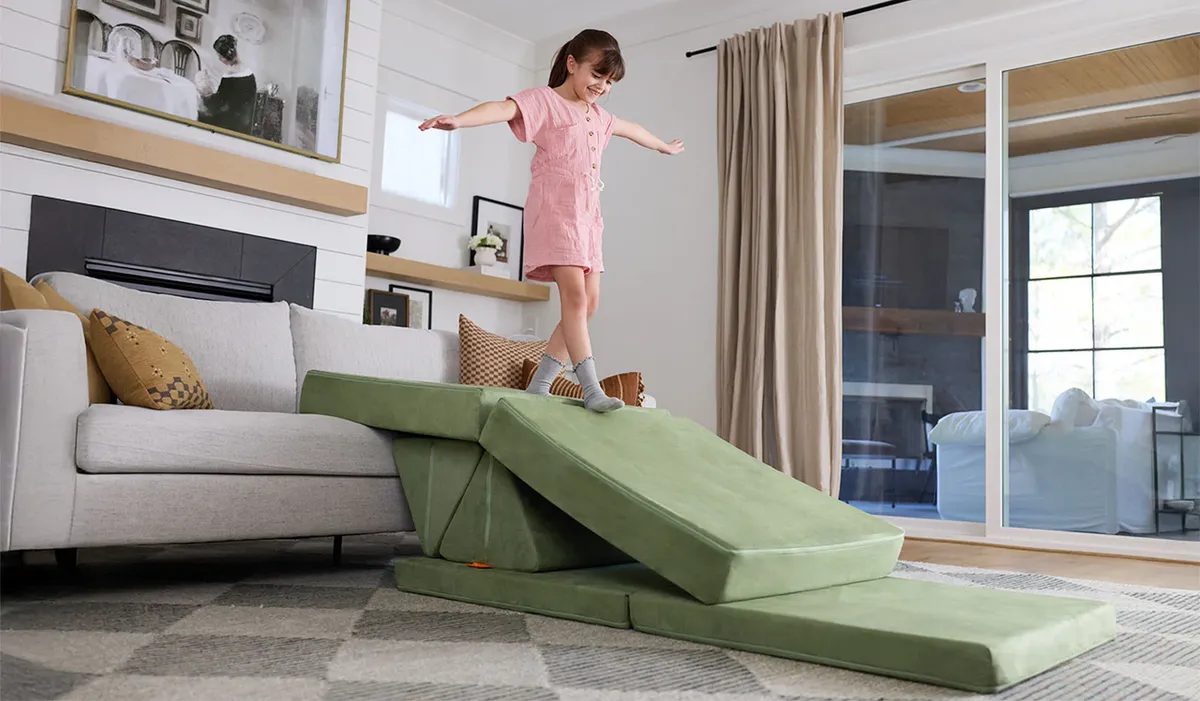
The product consists of four modular foam pieces that can be assembled into countless configurations. Depending on a child's imagination, it can become a couch, a fort, a castle, a slide, a train, or even a stage for imaginative play.
Rather than selling furniture, Nugget sells possibility.
Its brand messaging reflects this philosophy perfectly: the product is positioned not as an object but as a new way for families to interact and spend time together.
This resonates deeply with modern parents.
Today's families want products that blend seamlessly into their homes while encouraging creativity and reducing screen time. Parents aren't simply looking for a place where their children can sit—they're looking for ways to enrich everyday experiences.
Nugget delivers both.
Solving a Major Pain Point in Children's Furniture
One of the biggest challenges in the children's furniture category is obsolescence.
Babies outgrow cribs.
Toddlers outgrow activity centers.
Young children eventually abandon play tables and specialized furniture.
Every developmental stage often requires another purchase.
Nugget breaks this cycle.
A three-year-old might use it to build forts and obstacle courses. A seven-year-old can transform it into a reading nook or gaming corner. Parents can even use it as additional seating when guests visit.
The modular design extends the product's lifespan dramatically, increasing its perceived value and reducing purchase hesitation.
For consumers, it's a smarter investment.
For the brand, it's a powerful differentiator.
When Furniture Becomes Collectible
Another reason Nugget stands out is its understanding of modern aesthetics.
Unlike traditional children's furniture that often prioritizes bright colors and cartoon themes, Nugget embraces contemporary design trends.
The brand frequently launches limited-edition colors inspired by seasonal palettes and modern interior design styles.
For many families, purchasing a Nugget isn't simply about functionality.
It's also about style.
Some customers proudly share photos of multiple Nugget collections online, showcasing different color combinations much like sneaker enthusiasts display rare footwear or collectors showcase luxury handbags.
Colorways have become part of the brand's identity—and a key driver of social sharing.
This strategy transforms a low-frequency purchase category into an ongoing lifestyle experience.
Building a Brand Without Celebrities
Many home brands struggle on social media because furniture is inherently difficult to make exciting.
Nugget solved this challenge by shifting the focus away from the product itself.
Instead of marketing couches, the company markets childhood.
From Product Demonstrations to Family Stories
Scroll through Nugget's social channels and you'll notice something unusual.
You won't find endless product shots or highly polished advertisements.
Instead, you'll see real families.
Children building pirate ships.
Kids turning their living rooms into rocket launches.
Parents capturing everyday moments of imagination and play.
The couch often plays a supporting role rather than starring in the content.
This approach works because parents don't typically share products online—they share memories.
Nugget understands that its customers aren't trying to show off a purchase.
They're documenting their children's growth.
By positioning the product as part of those memories, the brand creates emotional relevance that traditional furniture marketing rarely achieves.
Influencer Marketing That Doesn't Feel Like Advertising
Nugget's influencer strategy is equally distinctive.
Rather than partnering with celebrity creators or sales-driven influencers, the brand focuses on family-focused content creators, parenting bloggers, educators, and lifestyle creators.
These partnerships prioritize storytelling over direct selling.
A great example comes from family creator Jacqui Saldaña.
Known primarily for sharing family-friendly recipes and activities with her daughters, Jacqui integrated Nugget naturally into her content.
In one particularly successful post, she created healthy spinach-themed popsicles inspired by the green Nugget couch in her home. The family sat together enjoying the treats while the couch appeared naturally in the background.
The most memorable moment came when her daughters intentionally dropped popsicles onto the couch, allowing Jacqui to demonstrate the removable, washable covers in a realistic and relatable way.
The content didn't feel like an advertisement.
It felt like real life.
That authenticity generated strong engagement, demonstrating how effective contextual storytelling can be compared to traditional product promotion.
The Power of User-Generated Content
Perhaps Nugget's greatest marketing advantage is its community.
The brand actively encourages customers to share their creations online and frequently features user content across its own channels and website.
For parents, being featured by the brand creates a sense of recognition and belonging.
For Nugget, it creates an endless stream of authentic content.
Over time, this has evolved into a genuine co-creation ecosystem where customers become both users and marketers.
Industry analyses suggest that a significant majority of Nugget-related content originates from customers themselves rather than the brand's internal marketing team.
This user-generated content strategy delivers multiple benefits:
- Lower content production costs
- Higher authenticity
- Stronger customer loyalty
- Greater social proof
- Increased organic reach
More importantly, it transforms customers into advocates.
Lessons for Modern Consumer Brands
Nugget's success offers a valuable lesson for brands far beyond the furniture industry.
The company didn't win by offering the cheapest product.
It didn't win through aggressive advertising.
And it didn't rely on celebrity endorsements.
Instead, it built a business around a simple but powerful insight:
Parents aren't buying a couch.
They're buying opportunities to connect with their children.
By transforming furniture into a platform for imagination, turning customers into creators, and positioning family moments at the center of its marketing, Nugget created something much larger than a product.
It built a community and a cultural movement.
In an increasingly crowded marketplace, that may be the most durable competitive advantage of all.
